
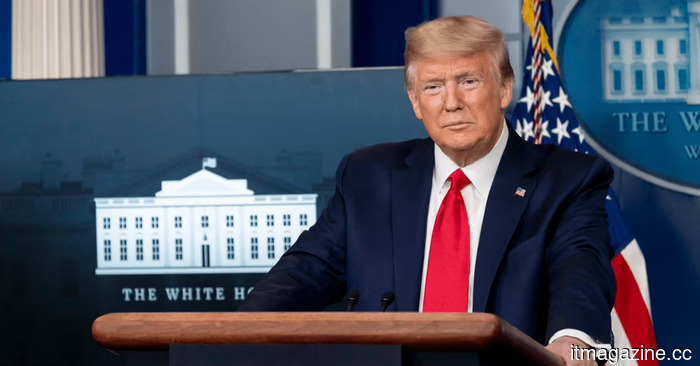
US legislators urge Trump to initiate a trade investigation into European Union technology regulations.
A group of US lawmakers has called on President Donald Trump to initiate a formal trade investigation concerning the European Union’s two principal technology laws, claiming that enforcement has unfairly affected American companies and justifies retaliation under US trade authority. This request, outlined in a letter issued on Tuesday, suggests the possibility of a Section 301 inquiry, the same legal framework that Washington has previously utilized to support tariff threats against trading partners.
The focus of the complaint is the Digital Markets Act and the Digital Services Act, two regulations that Brussels employs to regulate competition and content on major online platforms. The lawmakers argue that these regulations disproportionately impact US companies such as Apple, Google, Meta, and Amazon, a viewpoint that the European Commission has consistently disputed. This letter follows more than a year of rising tensions over the EU's digital regulations.
In February 2025, Trump signed a memorandum instructing agencies to examine foreign regulations that he claimed were discriminatory towards US technology, specifically naming both the Digital Markets Act and the Digital Services Act. Tensions escalated in April 2025 when the Commission imposed fines of 500 million euros on Apple and 200 million euros on Meta for violations of the Digital Markets Act, marking the first penalties under this legislation. By April 2026, CNBC reported that the EU’s fines on major technology firms had exceeded 7 billion dollars over two years.
The lawmakers are urging the administration to recognize this record as a valid trade barrier. A Section 301 investigation, conducted by the Office of the US Trade Representative, could result in tariffs or other restrictions if determined that a foreign practice is unreasonable or discriminatory. This is the same statute that Washington employed to justify tariffs on Chinese products during Trump’s initial term. The lawmakers referred to the EU regulations as a de facto tax on American success.
Challenging Brussels would not be the first time the trade office has utilized this mechanism this year. The USTR has launched several Section 301 investigations in 2026 across various countries and sectors, a record that supporters of the letter highlight as evidence that a case concerning digital regulations is feasible. House Judiciary Committee chairman Jim Jordan has been particularly outspoken, seeking briefings from EU officials regarding the enforcement of the Digital Markets Act.
Lawmakers in this group argue that the laws favor Chinese competitors and present data-security issues, claims that the Commission contests. This request aligns with the stance of the administration’s trade team. US Trade Representative Jamieson Greer has warned that Washington will employ all available tools against EU-style digital regulations, and think tanks involved in the discussion have openly advocated for a Section 301 response.
Brussels has remained firm, with the European Commission asserting that both laws are applied equally to all companies operating within the single market, regardless of their country of origin, and describing the regulation of its own economy as a sovereign right. It has also connected its stance to commitments made under the EU-US Turnberry trade agreement.
Both Apple and Meta have contested their fines, with Apple asserting that the regulations necessitate design modifications that could compromise user privacy. The companies continue to challenge these decisions in EU courts, even as the broader political conflict intensifies. At the time of reporting, neither the White House nor the trade representative’s office had made a formal comment on the letter. The EU delegation in Washington has previously maintained that while they engage with US concerns, they defend the integrity of their regulations.
Whether the administration will take action remains uncertain. Initiating a Section 301 case would represent a considerable escalation, transforming the dispute from verbal rhetoric and fines into a more serious trade conflict, and would test the delicate truce achieved between the two sides regarding tariffs.
Other articles
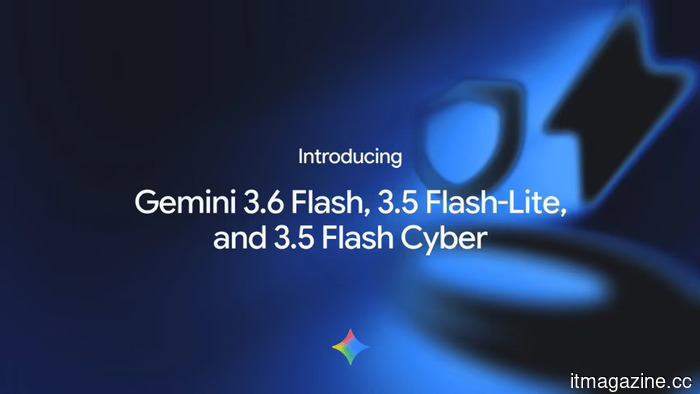 Google introduces Gemini 3.6 Flash and a competitor to Mythos.
Google has introduced Gemini 3.6 Flash, 3.5 Flash-Lite, and a cyber model targeted at Anthropic’s Mythos, though the flagship 3.5 Pro remains delayed. There are hints of Gemini 4.
Google introduces Gemini 3.6 Flash and a competitor to Mythos.
Google has introduced Gemini 3.6 Flash, 3.5 Flash-Lite, and a cyber model targeted at Anthropic’s Mythos, though the flagship 3.5 Pro remains delayed. There are hints of Gemini 4.
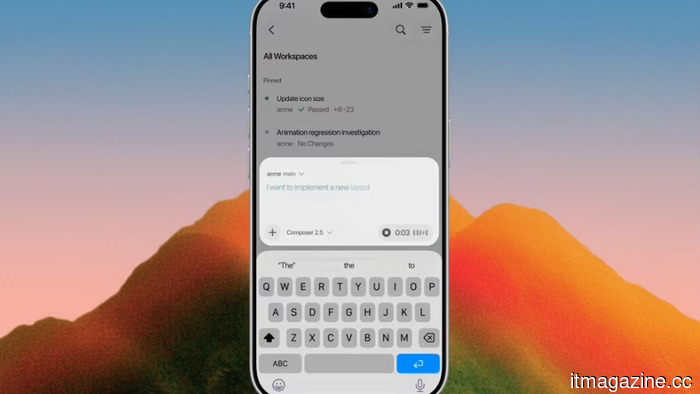 Study reveals that AI coding agents continue to break free from their sandboxes.
Researchers successfully navigated the sandboxes of Cursor, Codex, Gemini CLI, and Antigravity without causing any damage. Three companies implemented patches, while Google downgraded its two.
Study reveals that AI coding agents continue to break free from their sandboxes.
Researchers successfully navigated the sandboxes of Cursor, Codex, Gemini CLI, and Antigravity without causing any damage. Three companies implemented patches, while Google downgraded its two.
 Vibecoded applications are overwhelming Apple's App Store, and users are becoming increasingly frustrated with them.
This year, submissions to the App Store have increased twofold, thanks to AI tools simplifying the development process. However, download rates haven't matched this growth, as users are becoming fatigued from sifting through low-quality, AI-generated applications.
Vibecoded applications are overwhelming Apple's App Store, and users are becoming increasingly frustrated with them.
This year, submissions to the App Store have increased twofold, thanks to AI tools simplifying the development process. However, download rates haven't matched this growth, as users are becoming fatigued from sifting through low-quality, AI-generated applications.
 X has finally revamped its overlooked Android app, and it took a whole year to complete.
X has dedicated almost a year to completely redeveloping its Android app, vowing improved scrolling, quicker loading times, more dependable notifications, and a better framework for future enhancements.
X has finally revamped its overlooked Android app, and it took a whole year to complete.
X has dedicated almost a year to completely redeveloping its Android app, vowing improved scrolling, quicker loading times, more dependable notifications, and a better framework for future enhancements.
 Electra is set to establish an $850 million factory in Ohio for its ultra-short hybrid aircraft.
Electra, an aircraft startup, is expected to invest approximately $850 million in a manufacturing facility in Ohio for the production of its nine-seat EL9 hybrid-electric ultra-short takeoff aircraft.
Electra is set to establish an $850 million factory in Ohio for its ultra-short hybrid aircraft.
Electra, an aircraft startup, is expected to invest approximately $850 million in a manufacturing facility in Ohio for the production of its nine-seat EL9 hybrid-electric ultra-short takeoff aircraft.
 Volkswagen's latest e-bike features a rearview camera, radar technology, and advanced smart glasses designed for fighter pilots.
The e-bike designed by VW features a rear camera and radar situated between the handlebars, is compatible with an LED smart helmet, and provides HUD glasses for navigation notifications.
Volkswagen's latest e-bike features a rearview camera, radar technology, and advanced smart glasses designed for fighter pilots.
The e-bike designed by VW features a rear camera and radar situated between the handlebars, is compatible with an LED smart helmet, and provides HUD glasses for navigation notifications.
US legislators urge Trump to initiate a trade investigation into European Union technology regulations.
US legislators have called on President Trump to initiate a Section 301 trade investigation into the EU’s Digital Markets Act and Digital Services Act.