

Major tech companies are concealing $1.65 trillion in AI-related debt that isn't reflected on their balance sheets.
Examining the official debts of Alphabet, Microsoft, Amazon, Meta, and Oracle reveals figures that seem substantial yet manageable. However, when looking beyond the surface, a larger, concealed debt becomes apparent. A study by Nikkei estimated this hidden amount at $1.65 trillion, which has increased nearly eightfold over the past four years, surpassing the $1.35 trillion these companies publicly report.
The situation mirrors the Enron scandal, as much of this money is tied to off-balance-sheet vehicles similar to those Enron used to obscure debt prior to its downfall 25 years ago. In Enron's case, it was fraud; currently, tighter regulations and increased transparency render such practices legal.
Analyst Gil Luria noted, “Enron’s wrongdoing wasn’t utilizing special purpose vehicles, but rather concealing them.”
The mechanism is straightforward: a company bundles its debt from chips, servers, and energy into a distinct legal entity, often a joint venture, so that the expenses don't appear on its own financial statements. For instance, Meta’s Hyperion data center in Louisiana saw both Meta and Blue Owl Capital contribute equity into a separate structure that took on $27 billion in debt. Although Meta is the only tenant, it claims it isn’t responsible for recording that debt, as it isn’t required to find replacement tenants.
Oracle faces $260 billion in future lease obligations, all of which will eventually be reflected on its balance sheet. Nvidia has $119 billion in purchase commitments, while Alphabet and Microsoft also maintain off-the-books vehicles.
The magnitude of this situation is significant, with Meta's off-balance-sheet debt alone nearing $420 billion—almost three times its reported debt. Oracle's off-balance-sheet obligations have similarly surged approximately thirtyfold over four years. This is all part of a larger trend, as the industry anticipates spending over $3 trillion through 2028 on constructing and outfitting AI data centers, much of which is financed against the chips housed within them.
The timing is particularly sensitive, as four of the five companies will announce earnings in the upcoming two weeks, presenting a tidy picture of reported debt. However, the $1.65 trillion lurking in the footnotes is unlikely to steal the spotlight.
The real concern arises later. Once a data center becomes operational, its lease suddenly appears on the balance sheet. Should AI demand not meet expectations, the facility's value may be reduced, with the financial burden falling on the lenders and insurers who financed it.
Some experts are already recognizing this risk. S&P has downgraded Oracle’s credit rating due to excessive leverage, and both Morgan Stanley and Moody’s have raised alarms about the broader issue. Accounting consultant Tom Selling posed a critical question: “What if one of these companies turned out to be a house of cards, maintaining its facade through such accounting practices?”
While none of this is illegal and the companies assert that future earnings will sufficiently cover their obligations, the disclosures are buried in the fine print for those willing to look. Thus, investors reviewing this week's results may be perceiving less than half of the actual leverage. In a year filled with discussions of potential bubbles, the true figures remain obscured off the page.
Other articles
 Another study suggests that AI is detrimental to elections, and the situation continues to deteriorate.
ChatGPT and Gemini struggled to consistently align voters with Hungarian political parties, serving as another cautionary example as campaigns and manipulators discover how easily AI responses can be influenced.
Another study suggests that AI is detrimental to elections, and the situation continues to deteriorate.
ChatGPT and Gemini struggled to consistently align voters with Hungarian political parties, serving as another cautionary example as campaigns and manipulators discover how easily AI responses can be influenced.
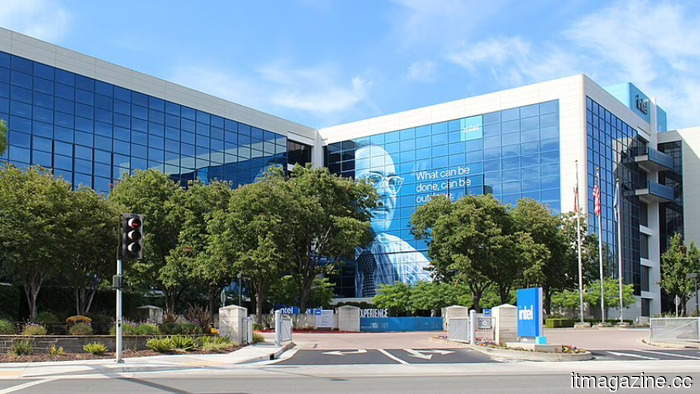 Intel has announced additional layoffs in its data center division as its stock rises on signs of a turnaround.
Intel is reducing its workforce in the data center division as CEO Lip-Bu Tan restructures the company, resulting in a nearly 8 percent increase in shares just two days ahead of earnings announcements.
Intel has announced additional layoffs in its data center division as its stock rises on signs of a turnaround.
Intel is reducing its workforce in the data center division as CEO Lip-Bu Tan restructures the company, resulting in a nearly 8 percent increase in shares just two days ahead of earnings announcements.
 Aligned Data Centers was sold for $40 billion in a record-setting transaction.
A consortium formed by BlackRock and MGX has finalized its $40 billion acquisition of Aligned Data Centers, marking the largest deal in history, and subsequently invested an additional $5 billion to enhance AI capabilities.
Aligned Data Centers was sold for $40 billion in a record-setting transaction.
A consortium formed by BlackRock and MGX has finalized its $40 billion acquisition of Aligned Data Centers, marking the largest deal in history, and subsequently invested an additional $5 billion to enhance AI capabilities.
 Poolside has launched the Laguna S 2.1, an open-weight coding model presented as the Western counterpart to DeepSeek and Qwen.
The 118B-parameter Laguna S 2.1 from Poolside competes with larger models in coding benchmarks, operates on a single desktop, and is aimed at businesses looking to self-host.
Poolside has launched the Laguna S 2.1, an open-weight coding model presented as the Western counterpart to DeepSeek and Qwen.
The 118B-parameter Laguna S 2.1 from Poolside competes with larger models in coding benchmarks, operates on a single desktop, and is aimed at businesses looking to self-host.
 Gritt secures $32 million to develop AI robots that attach to current construction machinery, aiming to expedite the construction of solar farms.
Gritt secured $32 million in funding, led by Obvious Ventures, to develop AI robots that can be attached to current construction machinery, enabling the installation of solar panels four times more quickly.
Gritt secures $32 million to develop AI robots that attach to current construction machinery, aiming to expedite the construction of solar farms.
Gritt secured $32 million in funding, led by Obvious Ventures, to develop AI robots that can be attached to current construction machinery, enabling the installation of solar panels four times more quickly.
Major tech companies are concealing $1.65 trillion in AI-related debt that isn't reflected on their balance sheets.
A Nikkei study revealed that Alphabet, Microsoft, Amazon, Meta, and Oracle have $1.65 trillion in off-balance-sheet debt related to AI, exceeding their reported figures. This practice is entirely legal.