
Sila secures $300 million to accelerate gigascale anode manufacturing and strengthen battery supply chains in the United States.
Sila has secured $300 million to enhance its silicon anode plant in Moses Lake, offering U.S.-produced battery materials as a substitute for Chinese supply chains. The battery materials firm, previously known as Sila Nanotechnologies, raised these funds in a private equity round led by Atreides Management and Sutter Hill Ventures, with participation from 8VC, Bessemer Venture Partners, Matrix Partners, and T Rowe Price, among others, including existing investor In-Q-Tel, the U.S. intelligence community’s venture arm. This funding increases the company’s total to over $1 billion, having delivered its battery material in a single consumer item, the WHOOP fitness band.
Silicon anode technology substitutes silicon for graphite in traditional lithium-ion batteries, allowing about 20% more energy storage by weight. Sila’s Titan Silicon was the first silicon anode material to be made available to consumers, debuting in the WHOOP device in 2021. Mercedes-Benz has announced that its electric EQG will be the first vehicle to utilize this material, although no automotive batteries incorporating Titan Silicon have yet been distributed.
The Moses Lake facility, which covers 160 acres, commenced operations in the fall of 2025 with Phase 1 production capacity of 2 gigawatt-hours. The newly raised $300 million will fund the Phase 2 expansion, with Sila aiming to scale output to 250 gigawatt-hours within five years, potentially positioning it as one of the largest battery material manufacturing plants constructed. However, achieving this goal remains uncertain, as prominent automakers have faced challenges in ramping up production in line with their initial forecasts for U.S. battery plants.
The emphasis on supply chain innovation is vital to this funding round. According to the figures referenced by the company from the Department of Energy and International Energy Agency, China dominates over 90% of global anode material processing and over 80% of battery cell production. Sila advocates that its Moses Lake plant offers a domestic solution by producing silicon anode materials from silane gas provided by REC Silicon under a long-term agreement, eliminating reliance on Chinese graphite.
Gene Berdichevsky, the co-founder and CEO of Sila, was one of Tesla’s early employees and started the company in 2011 to innovate silicon anode chemistry as an alternative to the prevalent graphite anodes in lithium-ion batteries. In June 2024, the company raised $375 million from investors including Coatue and the Canada Pension Plan Investment Board. In-Q-Tel’s involvement indicates that U.S. defense and intelligence sectors regard domestic battery material supply as a matter of national security.
This funding comes at a time when cutting-edge battery technologies are drawing increased investment from automakers and financial stakeholders, with substantial capital entering areas such as solid-state, silicon anode, and sodium-ion chemistries. The key question now is whether Sila can transition from a wearable product to automotive-scale production at a rate that justifies its fundraising efforts, as no silicon anode company has yet successfully moved from a 2 gigawatt-hour pilot to the production capacity needed to be a viable alternative to Chinese supply chains.
Published July 21, 2026 - 6:15 pm UTC
Other articles
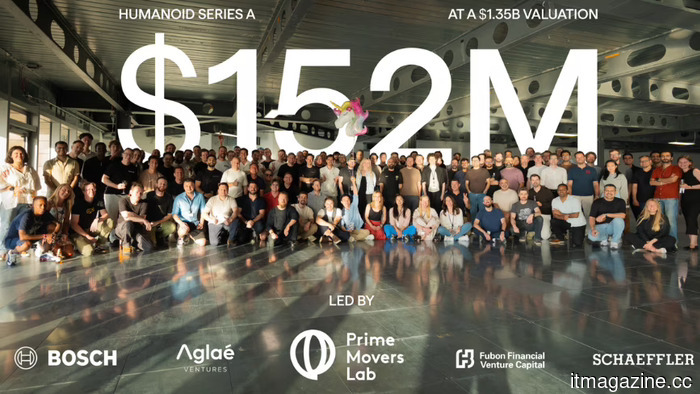 London-based robotics startup Humanoid has secured $152 million in Series A funding, with Bosch poised to manufacture its wheeled robots on a large scale.
Humanoid secured $152 million in funding, spearheaded by Prime Movers Lab, achieving a valuation of one billion dollars. Bosch is serving as the contract manufacturer, and there are reported pre-orders totaling 34,000.
London-based robotics startup Humanoid has secured $152 million in Series A funding, with Bosch poised to manufacture its wheeled robots on a large scale.
Humanoid secured $152 million in funding, spearheaded by Prime Movers Lab, achieving a valuation of one billion dollars. Bosch is serving as the contract manufacturer, and there are reported pre-orders totaling 34,000.
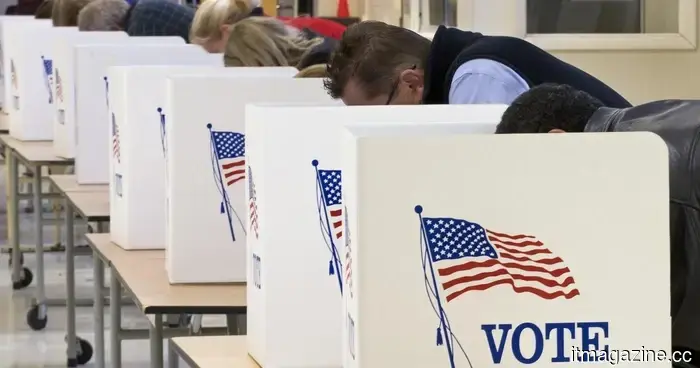 Another study indicates that AI has negative implications for elections, and the situation continues to deteriorate.
ChatGPT and Gemini struggled to consistently align voters with Hungarian parties, highlighting a concern as campaigns and manipulators discover how easily AI responses can be influenced.
Another study indicates that AI has negative implications for elections, and the situation continues to deteriorate.
ChatGPT and Gemini struggled to consistently align voters with Hungarian parties, highlighting a concern as campaigns and manipulators discover how easily AI responses can be influenced.
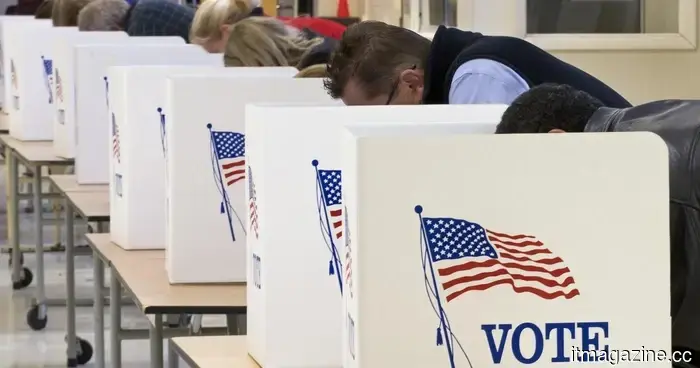 Another study indicates that AI has negative implications for elections, and the situation continues to deteriorate.
ChatGPT and Gemini were unable to consistently connect voters with Hungarian parties, serving as a further alert as campaigns and manipulators discover how easily AI-generated responses can be influenced.
Another study indicates that AI has negative implications for elections, and the situation continues to deteriorate.
ChatGPT and Gemini were unable to consistently connect voters with Hungarian parties, serving as a further alert as campaigns and manipulators discover how easily AI-generated responses can be influenced.
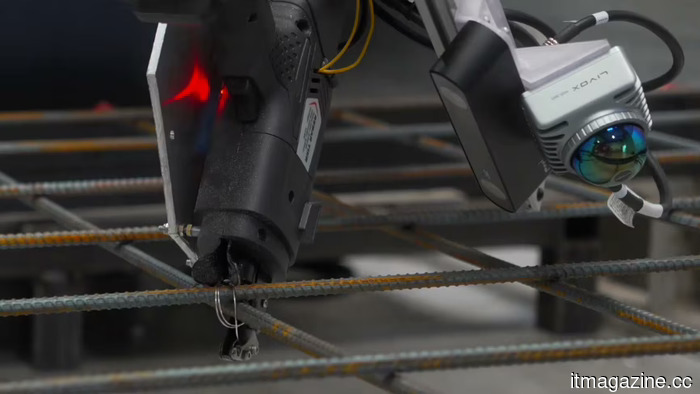 Gritt secures $32 million to develop AI robots that attach to current construction machinery, aiming to expedite the construction of solar farms.
Gritt secured $32 million in funding, led by Obvious Ventures, to develop AI robots that can be attached to current construction machinery, enabling the installation of solar panels four times more quickly.
Gritt secures $32 million to develop AI robots that attach to current construction machinery, aiming to expedite the construction of solar farms.
Gritt secured $32 million in funding, led by Obvious Ventures, to develop AI robots that can be attached to current construction machinery, enabling the installation of solar panels four times more quickly.
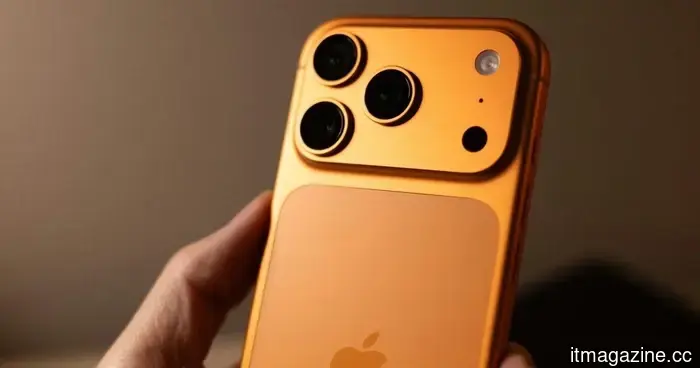 Apple's upcoming iPhone display experiment might be its most significant one to date.
Apple might be evaluating a display close to 7 inches for an upcoming iPhone, but this alleged panel has not been linked to any finalized model or verified independently as it potentially approaches its 2027 launch.
Apple's upcoming iPhone display experiment might be its most significant one to date.
Apple might be evaluating a display close to 7 inches for an upcoming iPhone, but this alleged panel has not been linked to any finalized model or verified independently as it potentially approaches its 2027 launch.
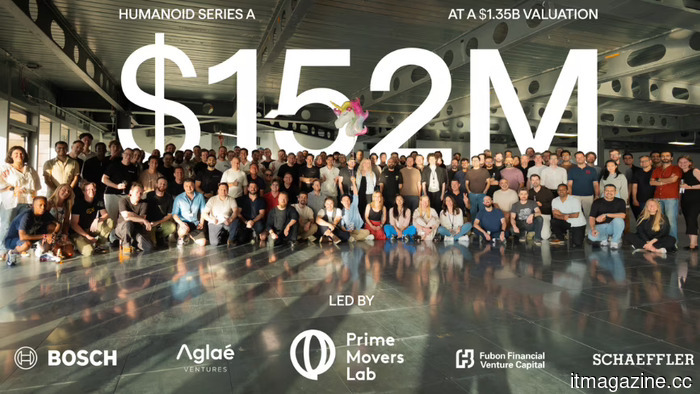 London-based robotics startup Humanoid has secured $152 million in its Series A funding round, with Bosch poised to produce its wheeled robots on a large scale.
Humanoid secured $152 million in funding, spearheaded by Prime Movers Lab, achieving a valuation of one billion dollars, and has Bosch as its contract manufacturer along with 34,000 reported pre-orders.
London-based robotics startup Humanoid has secured $152 million in its Series A funding round, with Bosch poised to produce its wheeled robots on a large scale.
Humanoid secured $152 million in funding, spearheaded by Prime Movers Lab, achieving a valuation of one billion dollars, and has Bosch as its contract manufacturer along with 34,000 reported pre-orders.
Sila secures $300 million to accelerate gigascale anode manufacturing and strengthen battery supply chains in the United States.
Sila secured $300 million, with Atreides Management and Sutter Hill at the helm, to enhance its silicon anode facility in Moses Lake, even though no electric vehicle batteries have been dispatched so far.