
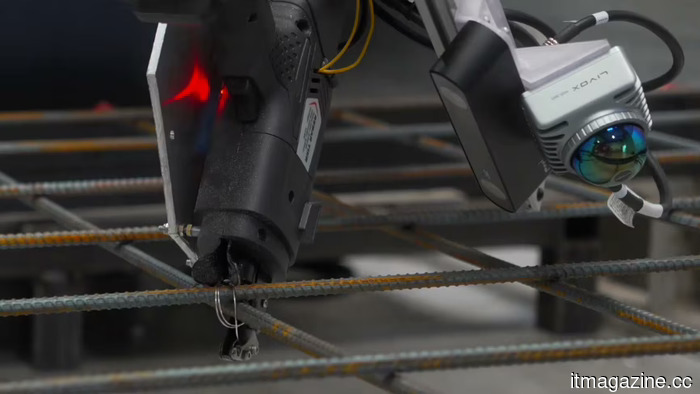
Gritt secures $32 million to develop AI robots that attach to current construction machinery, aiming to expedite the construction of solar farms.
**TL;DR** Gritt has secured $32 million in funding for AI robots that attach to existing construction machinery, enabling the installation of solar panels at speeds up to four times quicker than manual teams.
Gritt, based in San Francisco, has moved out of stealth mode with over $32 million raised in pre-seed and Series A funding to implement AI-powered robotic systems in large-scale construction, initially focusing on solar farms. The $26 million Series A was led by Obvious Ventures, with contributions from Union Square Ventures and Active Impact Investments, following a previous pre-seed round from First Round Capital, Climactic, Congruent Ventures, and VSC Ventures. The company’s technology complements existing construction machinery, using robotic arms attached to standard skid steers and forklifts to pick up, transport, and position solar panels with millimeter accuracy.
Both the company and TechCrunch report significant throughput improvements. An eight-person crew typically installs approximately 800 panels each day; however, this crew, when paired with Gritt’s system, can install between 3,000 and 4,000 panels daily. Gritt asserts that its machines have successfully positioned tens of thousands of panels without any breakages, a claim that remains unverified by independent sources.
Gritt claims it is contracted to assist in the installation of nearly 3 gigawatts of solar capacity over the next 18 months, servicing three of the top 10 power construction firms in the U.S. Currently, only two systems are operational in the field, but the company aims to scale up to 48 within six months. The disparity between having two functioning units and a significant contracted pipeline illustrates the challenge of transitioning from a promising demonstration to a viable business.
The timing coincides with a demographic shift in the construction sector, as over 41 percent of the U.S. construction workforce is projected to retire by 2031, according to the Bureau of Labor Statistics, while the industry faces challenges in attracting younger talent. Robotics startups in construction on both sides of the Atlantic are securing funding to address this issue, with investors betting that physical AI can revolutionize building sites, similar to automation's impact on factories years ago.
Founded by Puneet Puri and Vishal Dugar, both of whom graduated from Carnegie Mellon’s robotics program, Gritt developed its system to learn from each implementation. Tasks that previously required weeks of training now take just days, aided by the same AI framework, with the founders sharing that a rebar-tying demonstration was completed in just one day of training after the initial solar panel work. Beyond panel installation, Gritt plans to branch out into drilling posts, tying rebar, and assembling mounting racks, which many emerging construction robotics companies are targeting.
The competitive landscape includes companies like Luminous Robotics, Cosmic, and China’s Trinabot, which create dedicated panel-installation hardware instead of simply enhancing existing machines with AI. Gritt's strategy hinges on the belief that its approach can scale more rapidly and cost-effectively since clients are not required to purchase new equipment. Whether this advantage remains as the company expands from two to 48 systems and broadens its focus from solar panels to a wider array of construction tasks will determine the success of its venture.
Other articles
 Eight NATO member countries initiate HALO, a strategy to connect military satellites into a singular, integrated mega-constellation.
At the Ankara summit, NATO allies initiated HALO to connect national military satellites for communication, intelligence, and missile tracking throughout the Alliance.
Eight NATO member countries initiate HALO, a strategy to connect military satellites into a singular, integrated mega-constellation.
At the Ankara summit, NATO allies initiated HALO to connect national military satellites for communication, intelligence, and missile tracking throughout the Alliance.
 Major tech companies are concealing $1.65 trillion in AI-related debt that isn't reflected on their balance sheets.
A Nikkei study revealed that Alphabet, Microsoft, Amazon, Meta, and Oracle have $1.65 trillion in off-balance-sheet debt related to AI, exceeding their reported figures. This practice is entirely legal.
Major tech companies are concealing $1.65 trillion in AI-related debt that isn't reflected on their balance sheets.
A Nikkei study revealed that Alphabet, Microsoft, Amazon, Meta, and Oracle have $1.65 trillion in off-balance-sheet debt related to AI, exceeding their reported figures. This practice is entirely legal.
 Fujifilm Instax Mini 13 review: This instant camera captivated me with its simple retro appeal.
The Fujifilm Instax Mini 13 is a perfect purchase for those who are fed up with photos that are enhanced by algorithms and digital processing. Priced at under $100, it also serves as an excellent gift choice.
Fujifilm Instax Mini 13 review: This instant camera captivated me with its simple retro appeal.
The Fujifilm Instax Mini 13 is a perfect purchase for those who are fed up with photos that are enhanced by algorithms and digital processing. Priced at under $100, it also serves as an excellent gift choice.
 GM reports better-than-expected earnings for the second quarter and reveals plans for gas-powered Cadillacs as its nearly $11 billion retreat from electric vehicles approaches completion.
GM surpassed Wall Street expectations by 37 cents per share and increased its full-year forecast, subsequently revealing new gas-powered Cadillacs set to debut in spring 2027.
Sila secures $300 million to accelerate gigascale anode manufacturing and strengthen battery supply chains in the US.
Sila secured $300 million, with Atreides Management and Sutter Hill leading the round, to enhance its Moses Lake silicon anode facility, despite the fact that no EV batteries have been delivered as of now.
GM reports better-than-expected earnings for the second quarter and reveals plans for gas-powered Cadillacs as its nearly $11 billion retreat from electric vehicles approaches completion.
GM surpassed Wall Street expectations by 37 cents per share and increased its full-year forecast, subsequently revealing new gas-powered Cadillacs set to debut in spring 2027.
Sila secures $300 million to accelerate gigascale anode manufacturing and strengthen battery supply chains in the US.
Sila secured $300 million, with Atreides Management and Sutter Hill leading the round, to enhance its Moses Lake silicon anode facility, despite the fact that no EV batteries have been delivered as of now.
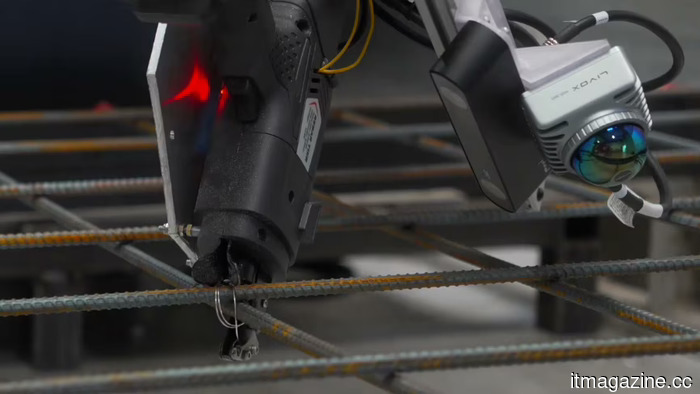 Gritt secures $32 million to develop AI robots that attach to current construction machinery, enabling quicker solar farm construction.
Gritt secured $32 million in funding, primarily from Obvious Ventures, for AI robots that can be attached to current construction machinery, enabling solar panel installation at a rate four times quicker.
Gritt secures $32 million to develop AI robots that attach to current construction machinery, enabling quicker solar farm construction.
Gritt secured $32 million in funding, primarily from Obvious Ventures, for AI robots that can be attached to current construction machinery, enabling solar panel installation at a rate four times quicker.
Gritt secures $32 million to develop AI robots that attach to current construction machinery, aiming to expedite the construction of solar farms.
Gritt secured $32 million in funding, led by Obvious Ventures, to develop AI robots that can be attached to current construction machinery, enabling the installation of solar panels four times more quickly.