

Infinity secures $15 million to prepare any AI chip for inference.
The proposal for a seed round is ambitious. Infinity asserts that it can eliminate the key advantage that has kept Nvidia unassailable. The company has recently secured funding to pursue this goal.
On Monday, it announced the completion of a $15 million seed round at a $100 million valuation. Investors include Touring Capital, Principal VC, executives from major chip companies, and researchers from OpenAI and Anthropic.
The CUDA Challenge
To grasp what Infinity is aiming for, one must understand Nvidia's success. While its chips are fast, the true barrier is CUDA, the software infrastructure developed over nearly two decades.
Major AI frameworks like PyTorch and TensorFlow operate on top of CUDA. When applications are written in Python, they automatically run on Nvidia hardware, which is why Nvidia captures an estimated 80% of the data center AI accelerator market.
Competitor chips from AMD, Qualcomm, and AWS often equal Nvidia in raw processing power, but they lack the accompanying software. Transitioning models to new silicon requires writing kernels, the low-level code needed to operate a chip, an undertaking that few teams can afford.
An Automated Code Generator
Infinity seeks to automate this process. Its AI agent, named Ignition, autonomously generates, tests, and rewrites those kernels, continuously refining them based on performance data. Human engineers guide the overall direction while the agent handles the labor-intensive tasks.
The results Infinity cites are impressive, albeit self-reported. In collaboration with chip maker d-Matrix, the company claims Ignition achieved 92% of a new chip's peak performance just 10 hours after first accessing the hardware. Within 10 days, three advanced models were fully operational end-to-end.
In another test, Infinity asserts that it increased a model's throughput from approximately 1,400 to over 20,000 tokens per second in just one day, surpassing vLLM, a popular open-source inference framework. These claims have yet to be independently verified.
Automating the Innovation Process
The founder adds a unique perspective to the project. Jeremy Nixon, a former researcher at Google Brain, established AGI House, a hacker network in San Francisco that claims to have inspired hundreds of startups.
Nixon shared with TechCrunch his fascination with “automated invention,” the notion that AI can serve as a sort of meta-technology. He previously developed an algorithm named Omega that could invent and evaluate other machine-learning algorithms in a feedback loop. Ignition applies a similar approach to hardware.
He announced the funding raise on X, celebrating the emergence of AI systems that “enable, optimize, and invent” the next wave of AI technologies.
A Competitive Landscape and Additional Considerations
Infinity is joining a growing number of startups aiming to disrupt the CUDA dependency. The company claims to already generate millions in annual recurring revenue and has a workforce of 26. Its business model takes a share of the speed and cost efficiencies it provides, rather than charging a licensing fee.
However, there are significant caveats. As a seed-stage company with only one publicly confirmed chip partner, the reported benchmarks are self-affirmed. Nevertheless, the potential rewards are substantial. With inference projected to account for two-thirds of all AI computing expenditures this year, more economical methods for processing it hold immense value.
“The next era of AI will be characterized not just by the producers of the best chips, but by those who can make any chip execute state-of-the-art models rapidly,” Nixon stated. If Ignition performs as claimed, the protective barrier that has secured Nvidia’s dominance might become less formidable.
Other articles
 Google Photos introduces a convenient switch between AI and traditional search.
Individuals who have chosen to use Ask Photos can now toggle between results powered by Gemini and standard search results directly from the results page.
Google Photos introduces a convenient switch between AI and traditional search.
Individuals who have chosen to use Ask Photos can now toggle between results powered by Gemini and standard search results directly from the results page.
 Kanishka Narayan is appointed as the UK’s inaugural cabinet-level minister for AI.
Kanishka Narayan is appointed as the inaugural AI minister in the UK, participating in the cabinet following the decision of new Prime Minister Andy Burnham to dissolve the DSIT and restructure Whitehall to focus on technology.
Kanishka Narayan is appointed as the UK’s inaugural cabinet-level minister for AI.
Kanishka Narayan is appointed as the inaugural AI minister in the UK, participating in the cabinet following the decision of new Prime Minister Andy Burnham to dissolve the DSIT and restructure Whitehall to focus on technology.
 deltaVision secures €10.2M to develop the infrastructure for in-orbit refueling.
The Munich-based startup deltaVision has secured €10.2 million in its initial funding round to expand its spacecraft valves and develop components for refueling satellites in orbit.
deltaVision secures €10.2M to develop the infrastructure for in-orbit refueling.
The Munich-based startup deltaVision has secured €10.2 million in its initial funding round to expand its spacecraft valves and develop components for refueling satellites in orbit.
 Samsung establishes a robotics division led by its CEO to pursue humanoid robots.
Samsung Electronics has established a new robotics division called RX, which will report directly to its CEO, as the company seeks to develop humanoid robots and physical AI to drive future growth.
Samsung establishes a robotics division led by its CEO to pursue humanoid robots.
Samsung Electronics has established a new robotics division called RX, which will report directly to its CEO, as the company seeks to develop humanoid robots and physical AI to drive future growth.
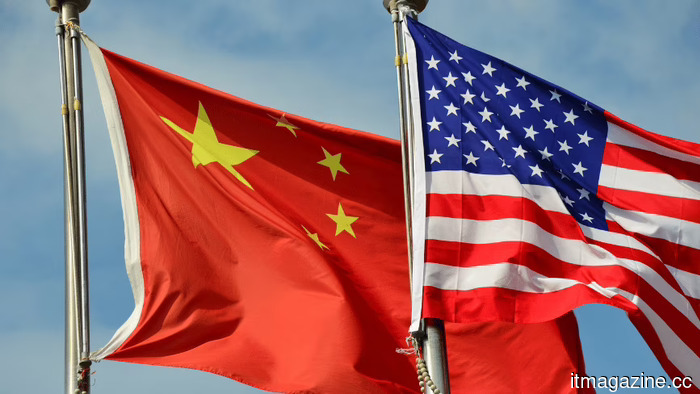 Reports indicate that the US and China are set to commence a new series of discussions regarding AI in September.
The United States and China are said to be organizing another round of discussions on AI in September, focusing on safety, governance, and the implications of chip export controls.
Reports indicate that the US and China are set to commence a new series of discussions regarding AI in September.
The United States and China are said to be organizing another round of discussions on AI in September, focusing on safety, governance, and the implications of chip export controls.
 AI-generated misinformation is fabricating rare bird sightings and negatively impacting scientific research.
AI-altered images are creating false reports of rare bird sightings on iNaturalist, and scientists caution that this AI-generated content could compromise biodiversity records.
AI-generated misinformation is fabricating rare bird sightings and negatively impacting scientific research.
AI-altered images are creating false reports of rare bird sightings on iNaturalist, and scientists caution that this AI-generated content could compromise biodiversity records.
Infinity secures $15 million to prepare any AI chip for inference.
Infinity secured a $15 million seed round to develop software that enables any AI chip to execute models in days, targeting Nvidia's CUDA dominance with a tool named Ignition.