
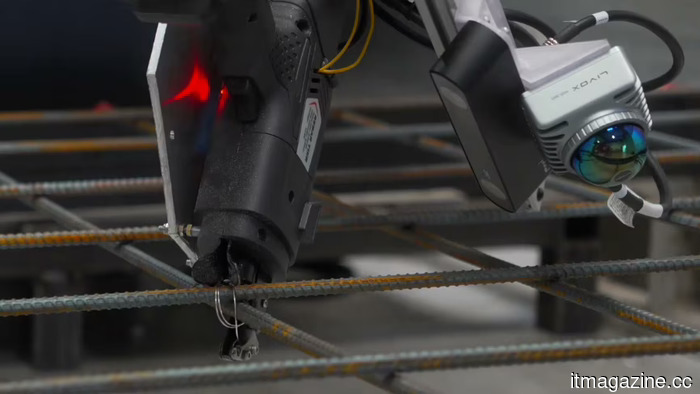
Gritt secures $32 million to develop AI robots that attach to current construction machinery, enabling quicker solar farm construction.
Gritt has secured $32 million in funding to enhance AI robots that attach to current construction equipment, enabling solar panel installation at a pace up to four times faster than manual teams. Based in San Francisco, Gritt has come out of stealth mode with more than $32 million in total funding, comprising a $26 million Series A led by Obvious Ventures, supported by Union Square Ventures and Active Impact Investments, following an earlier pre-seed round from First Round Capital, Climactic, Congruent Ventures, and VSC Ventures. The company’s technology integrates with existing construction machinery by using robotic arms mounted on standard skid steers and forklifts to pick, transport, and precisely position solar panels.
Reports from both the company and TechCrunch highlight significant productivity improvements. An average crew of eight can install around 800 panels daily, while the same crew equipped with Gritt’s system can install between 3,000 to 4,000 panels a day. Gritt claims its machines have successfully placed tens of thousands of panels without any damages, a statement that remains unverified by independent sources.
The company has contracts in place to assist in installing nearly 3 gigawatts of solar power capacity over the next 18 months, collaborating with three of the top ten power construction firms in the US. Although only two systems are currently operational, Gritt aims to expand that number to 48 in the next six months. The disparity between the two working machines and a substantial pipeline of contracts illustrates the challenge of transitioning from a promising demonstration to a fully functioning enterprise.
The timing coincides with an impending demographic shift in the construction workforce, as over 41 percent of US construction workers are expected to retire by 2031 based on Bureau of Labor Statistics figures, and the sector has faced challenges in attracting younger talent. Robotics startups in construction are securing funding on both sides of the Atlantic, with investors optimistic that physical AI can revolutionize building sites in a similar way that automation transformed factories years ago.
Founded by Puneet Puri and Vishal Dugar, both alumni of Carnegie Mellon’s robotics program, Gritt’s system is designed to learn and improve with each deployment. Tasks that previously took weeks to train can now be completed in days using the same AI framework, as noted by the founders, who mentioned that a demo for rebar-tying required just one day of training after the initial solar panel tasks. In addition to panel installation, Gritt plans to broaden its scope to include drilling posts, tying rebar, and assembling the mounting racks that are becoming targets for various construction robotics companies.
The competitive landscape features companies like Luminous Robotics, Cosmic, and China’s Trinabot, all of which are developing their own specialized panel-installing devices rather than adapting existing machinery. Gritt believes that its method can scale more rapidly and at a lower cost, as clients do not need to invest in new equipment. The success of this strategy as the company progresses from two active systems to a broader array of construction tasks will ultimately determine its viability.
Other articles
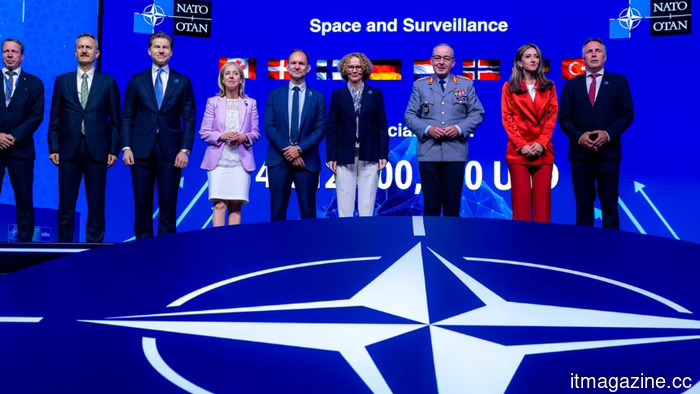 Eight NATO member countries initiate HALO, a strategy to connect military satellites into a singular, integrated mega-constellation.
At the Ankara summit, NATO allies initiated HALO to connect national military satellites for communication, intelligence, and missile tracking throughout the Alliance.
Intel Foundry secures its first named client: Fortinet.
Fortinet will manufacture its upcoming security chip in an Intel fabrication facility, marking Intel's first named foundry client under Lip-Bu Tan. It's a significant achievement, though not the largest.
Eight NATO member countries initiate HALO, a strategy to connect military satellites into a singular, integrated mega-constellation.
At the Ankara summit, NATO allies initiated HALO to connect national military satellites for communication, intelligence, and missile tracking throughout the Alliance.
Intel Foundry secures its first named client: Fortinet.
Fortinet will manufacture its upcoming security chip in an Intel fabrication facility, marking Intel's first named foundry client under Lip-Bu Tan. It's a significant achievement, though not the largest.
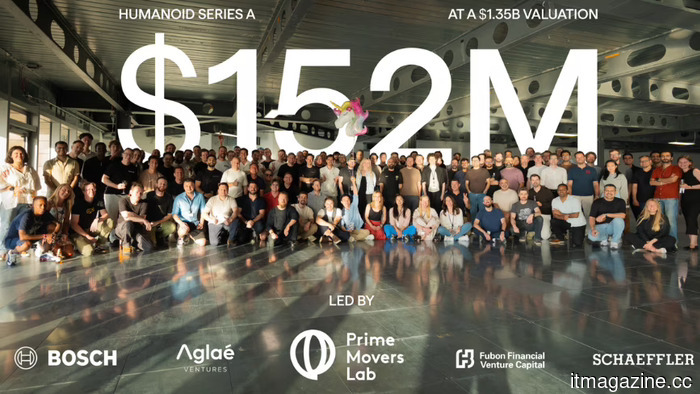 London-based robotics startup Humanoid has secured $152 million in Series A funding, with Bosch poised to manufacture its wheeled robots on a large scale.
Humanoid secured $152 million in funding, spearheaded by Prime Movers Lab, achieving a valuation of one billion dollars. Bosch is serving as the contract manufacturer, and there are reported pre-orders totaling 34,000.
London-based robotics startup Humanoid has secured $152 million in Series A funding, with Bosch poised to manufacture its wheeled robots on a large scale.
Humanoid secured $152 million in funding, spearheaded by Prime Movers Lab, achieving a valuation of one billion dollars. Bosch is serving as the contract manufacturer, and there are reported pre-orders totaling 34,000.
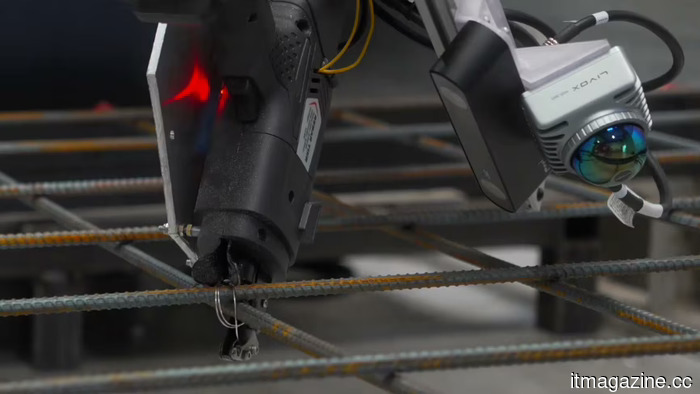 Gritt secures $32 million to develop AI robots that attach to current construction machinery, aiming to expedite the construction of solar farms.
Gritt secured $32 million in funding, led by Obvious Ventures, to develop AI robots that can be attached to current construction machinery, enabling the installation of solar panels four times more quickly.
Sila secures $300 million to accelerate gigascale anode manufacturing and strengthen battery supply chains in the US.
Sila secured $300 million, with Atreides Management and Sutter Hill leading the round, to enhance its Moses Lake silicon anode facility, despite the fact that no EV batteries have been delivered as of now.
Gritt secures $32 million to develop AI robots that attach to current construction machinery, aiming to expedite the construction of solar farms.
Gritt secured $32 million in funding, led by Obvious Ventures, to develop AI robots that can be attached to current construction machinery, enabling the installation of solar panels four times more quickly.
Sila secures $300 million to accelerate gigascale anode manufacturing and strengthen battery supply chains in the US.
Sila secured $300 million, with Atreides Management and Sutter Hill leading the round, to enhance its Moses Lake silicon anode facility, despite the fact that no EV batteries have been delivered as of now.
 Big Tech is concealing $1.65 trillion in AI liabilities that are off the balance sheet.
A Nikkei study revealed that Alphabet, Microsoft, Amazon, Meta, and Oracle hold $1.65 trillion in off-balance-sheet debt for AI, exceeding their reported figures. This practice is entirely legal.
Big Tech is concealing $1.65 trillion in AI liabilities that are off the balance sheet.
A Nikkei study revealed that Alphabet, Microsoft, Amazon, Meta, and Oracle hold $1.65 trillion in off-balance-sheet debt for AI, exceeding their reported figures. This practice is entirely legal.
Gritt secures $32 million to develop AI robots that attach to current construction machinery, enabling quicker solar farm construction.
Gritt secured $32 million in funding, primarily from Obvious Ventures, for AI robots that can be attached to current construction machinery, enabling solar panel installation at a rate four times quicker.