
Sila secures $300 million to accelerate gigascale anode manufacturing and strengthen battery supply chains in the US.
Sila has secured $300 million to enhance its silicon anode manufacturing facility in Moses Lake, positioning US-made battery materials as an alternative to Chinese supply chains. The company, formerly known as Sila Nanotechnologies, attracted this investment in a private equity round led by Atreides Management and Sutter Hill Ventures, with contributions from 8VC, Bessemer Venture Partners, Matrix Partners, and T Rowe Price, along with returning investors like In-Q-Tel, the venture arm of the US intelligence community. This funding increases the company's total investment to over $1 billion, although it has only supplied its battery material in a single consumer product, the WHOOP fitness band.
Silicon anode technology substitutes graphite in standard lithium-ion batteries with silicon, which can hold about 20 percent more energy by weight. Sila’s Titan Silicon was the first commercial silicon anode material available to consumers, debuting in the WHOOP wearable device in 2021. Mercedes-Benz has identified the electric EQG as the first vehicle to utilize this material, although no automotive batteries with Titan Silicon have been delivered yet.
The Moses Lake plant spans 160 acres and began Phase 1 production in the fall of 2025 with a capacity of 2 gigawatt-hours. The recent $300 million investment will fund Phase 2 expansion, which Sila aims to elevate towards a target of 250 gigawatt-hours over five years, potentially making it one of the largest battery material facilities ever constructed. However, achieving this goal remains uncertain, as even large automakers establishing US battery plants have faced challenges in scaling production as quickly as initially anticipated.
The rationale for the funding is primarily centered on supply chain concerns. According to data from the Department of Energy and the International Energy Agency, China dominates over 90 percent of global anode material processing and more than 80 percent of battery cell production. Sila aims to position its Moses Lake facility as a domestic alternative, creating silicon anode materials from silane gas provided by REC Silicon through a long-term contract, avoiding reliance on Chinese graphite.
Gene Berdichevsky, Sila’s co-founder and CEO, who was one of Tesla's original employees, established the company in 2011 to create silicon anode technology as an alternative to the graphite anodes prevalent in lithium-ion batteries. In June 2024, the company raised $375 million from investors such as Coatue and the Canada Pension Plan Investment Board. The inclusion of In-Q-Tel indicates that US defense and intelligence sectors regard domestic battery material supply as a matter of national security.
This funding round comes amid rising interest in next-generation battery technologies from both automotive manufacturers and financial backers, with substantial investments flowing into solid-state, silicon anode, and sodium-ion technologies. The critical question for Sila is whether it can scale from a wearable-sized production to automotive-scale volumes quickly enough to validate its fundraising strategy, as no silicon anode company has successfully transitioned from a 2 gigawatt-hour pilot to the level of production that could offer a true alternative to Chinese supply chains.
Otros artículos
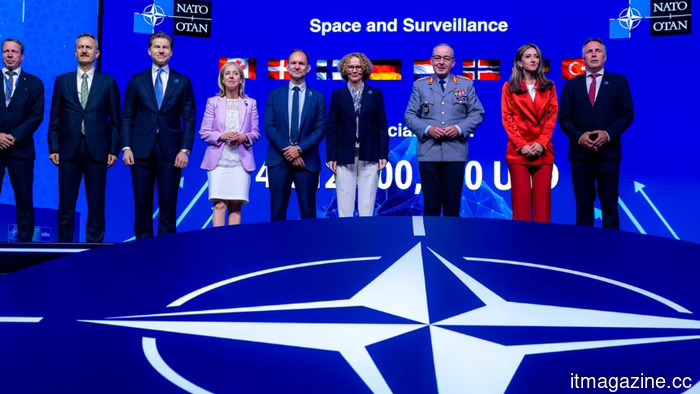 Ocho aliados de la OTAN lanzan HALO, un plan para vincular satélites militares en una mega-constelación en red.
Los aliados de la OTAN lanzaron HALO en la cumbre de Ankara para interconectar satélites militares nacionales para comunicaciones, inteligencia y seguimiento de misiles en toda la Alianza.
Ocho aliados de la OTAN lanzan HALO, un plan para vincular satélites militares en una mega-constelación en red.
Los aliados de la OTAN lanzaron HALO en la cumbre de Ankara para interconectar satélites militares nacionales para comunicaciones, inteligencia y seguimiento de misiles en toda la Alianza.
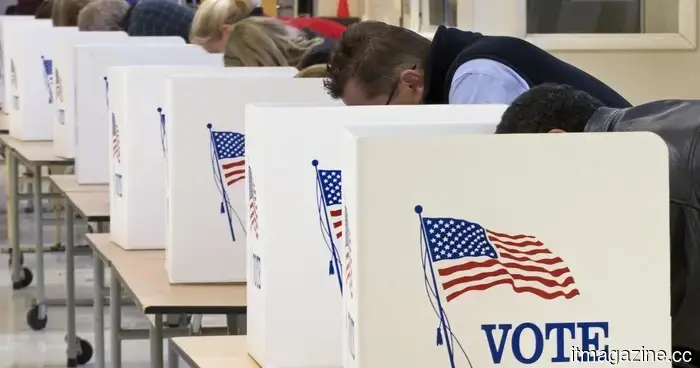 Otro estudio más dice que la IA es mala para las elecciones, y el agujero del conejo se vuelve peor.
ChatGPT y Gemini no lograron emparejar de manera confiable a los votantes con los partidos húngaros, añadiendo otra advertencia a medida que las campañas y los manipuladores aprenden cuán fácilmente se pueden moldear las respuestas de la IA.
Intel Foundry consigue su primer cliente nombrado: Fortinet
Fortinet construirá su próximo chip de seguridad en una fábrica de Intel, convirtiéndose en el primer cliente de fundición nombrado de Intel bajo Lip-Bu Tan. Una verdadera victoria, no la grande.
Otro estudio más dice que la IA es mala para las elecciones, y el agujero del conejo se vuelve peor.
ChatGPT y Gemini no lograron emparejar de manera confiable a los votantes con los partidos húngaros, añadiendo otra advertencia a medida que las campañas y los manipuladores aprenden cuán fácilmente se pueden moldear las respuestas de la IA.
Intel Foundry consigue su primer cliente nombrado: Fortinet
Fortinet construirá su próximo chip de seguridad en una fábrica de Intel, convirtiéndose en el primer cliente de fundición nombrado de Intel bajo Lip-Bu Tan. Una verdadera victoria, no la grande.
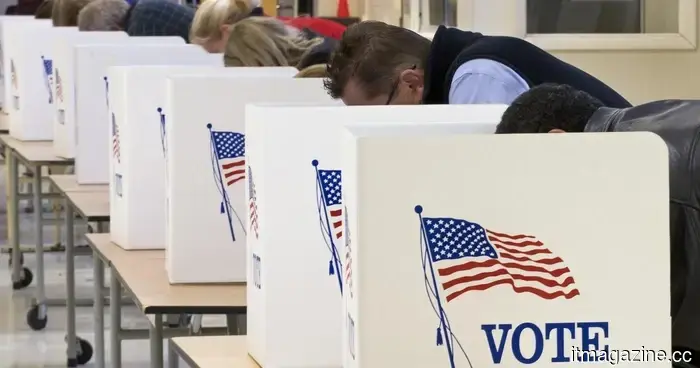 Otro estudio dice que la IA es mala para las elecciones, y la situación se complica aún más.
ChatGPT y Gemini no lograron emparejar de manera confiable a los votantes con los partidos húngaros, añadiendo otra advertencia a medida que las campañas y los manipuladores aprenden cuán fácilmente se pueden moldear las respuestas de la IA.
Otro estudio dice que la IA es mala para las elecciones, y la situación se complica aún más.
ChatGPT y Gemini no lograron emparejar de manera confiable a los votantes con los partidos húngaros, añadiendo otra advertencia a medida que las campañas y los manipuladores aprenden cuán fácilmente se pueden moldear las respuestas de la IA.
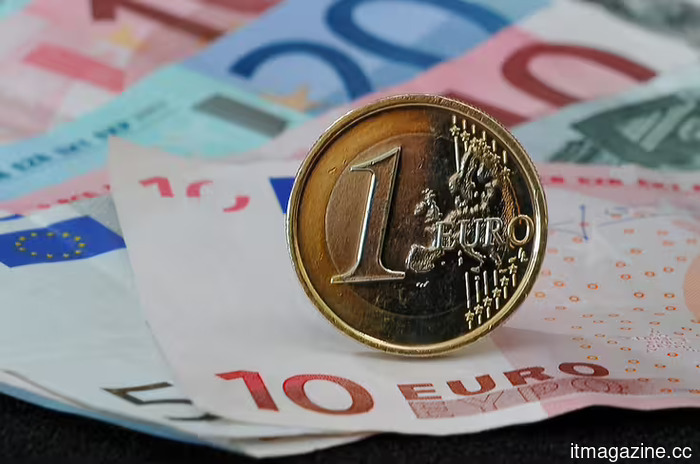 Las grandes tecnológicas están ocultando $1.65 billones en deuda de IA fuera de balance.
Un estudio de Nikkei encontró que Alphabet, Microsoft, Amazon, Meta y Oracle tienen $1.65 billones en deuda fuera de balance para IA, más de lo que reportan. Todo es legal.
Las grandes tecnológicas están ocultando $1.65 billones en deuda de IA fuera de balance.
Un estudio de Nikkei encontró que Alphabet, Microsoft, Amazon, Meta y Oracle tienen $1.65 billones en deuda fuera de balance para IA, más de lo que reportan. Todo es legal.
Sila secures $300 million to accelerate gigascale anode manufacturing and strengthen battery supply chains in the US.
Sila secured $300 million, with Atreides Management and Sutter Hill leading the round, to enhance its Moses Lake silicon anode facility, despite the fact that no EV batteries have been delivered as of now.