
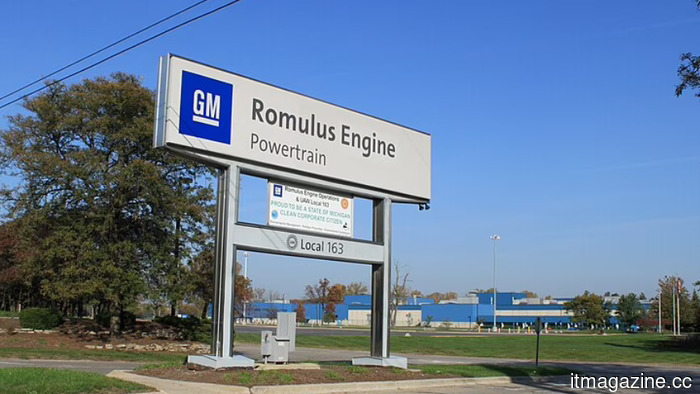
GM surpasses Q2 earnings expectations and reveals plans for gas-powered Cadillacs as its nearly $11 billion retreat from electric vehicles approaches completion.
General Motors (GM) surpassed Wall Street’s second-quarter expectations by 37 cents per share on Tuesday, increased its full-year earnings guidance for the second time this year, and announced that gas-powered Cadillacs will debut in 2027, as the company approaches completion of its EV pullback. The company's revenue reached $48 billion, exceeding the anticipated $47 billion, while adjusted earnings rose about 30 percent year over year to nearly $4 billion. CFO Paul Jacobson stated on CNBC that GM's stock is a "bargain" at around $75 per share, marking an over 40 percent increase from a year ago.
The announcement regarding Cadillac signals a definitive shift from GM’s all-electric strategy. The company initially aimed for Cadillac to offer only electric vehicles by the end of this decade, but CEO Mary Barra revealed that the next generation of gas-powered Cadillacs will start arriving in showrooms next spring and will continue to be released through 2028. These new models will be sold alongside Cadillac's existing electric crossovers and the Escalade SUV, effectively transforming the brand into a dual-powertrain lineup rather than the all-electric flagship GM previously envisioned.
GM has updated its full-year adjusted EBIT guidance to a range of $14 billion to $16 billion and adjusted EPS forecast to between $12 and $14, each increased by $500 million from previous estimates. Additionally, it raised its adjusted automotive free cash flow forecast by the same amount. However, the company lowered its net income guidance for the second consecutive quarter to approximately eight to ten billion dollars, reflecting ongoing costs associated with the EV withdrawal.
These costs are nearing completion, with GM recording nearly $11 billion in EV-related writedowns since the latter half of last year, which include canceled battery contracts, idled factories, and discontinued production plans. The company indicated it has incurred about four and a half billion dollars in cash charges out of an anticipated total just exceeding $7 billion through the second quarter, with most remaining outflows expected this year. The company also noted that EV losses are narrowing by one to one and a half billion dollars compared to 2025.
North America remains the backbone of the business. Barra mentioned in a shareholder letter that the region's adjusted profit margin has risen above eight and a half percent, more than two points higher than a year ago, and average vehicle transaction prices have stayed at $52,000, along with a decrease in warranty costs. GM International, which includes its China joint ventures, was also profitable, with Jacobson highlighting that the company’s earnings per share for the first half of the year are 25 percent higher than any previous first half in GM’s history.
Despite strong earnings, the sales landscape is more complicated. GM’s unit sales dropped four percent in Q2 as Toyota continued to close in on the title of America’s top-selling automaker, fueled by hybrid demand that GM currently cannot match. The company has also been restructuring its workforce to focus on AI and software-defined vehicles while stepping back from the EV and robotaxi initiatives that were central to its strategy just two years ago.
What remains is a corporation that is achieving record earnings in the first half, driven primarily by its truck and SUV business, while scaling back its electric vehicle ambitions that were meant to shape its future. The Cadillac ICE revival, increased margins, and reduced EV losses all indicate a shift for the Detroit automaker, which misjudged the pace of the EV transition and is now refocusing on combustion-engine vehicles that still deliver the majority of its profits. Additionally, Barra announced intentions to bring more manufacturing back onshore starting next year, including relocating full-size SUV production to a Michigan plant originally intended for electric vehicle assembly.
Other articles
 Big Tech is concealing $1.65 trillion in AI liabilities that are off the balance sheet.
A Nikkei study revealed that Alphabet, Microsoft, Amazon, Meta, and Oracle hold $1.65 trillion in off-balance-sheet debt for AI, exceeding their reported figures. This practice is entirely legal.
Big Tech is concealing $1.65 trillion in AI liabilities that are off the balance sheet.
A Nikkei study revealed that Alphabet, Microsoft, Amazon, Meta, and Oracle hold $1.65 trillion in off-balance-sheet debt for AI, exceeding their reported figures. This practice is entirely legal.
 Eight NATO member countries initiate HALO, a strategy to connect military satellites into a singular, integrated mega-constellation.
At the Ankara summit, NATO allies initiated HALO to connect national military satellites for communication, intelligence, and missile tracking throughout the Alliance.
Eight NATO member countries initiate HALO, a strategy to connect military satellites into a singular, integrated mega-constellation.
At the Ankara summit, NATO allies initiated HALO to connect national military satellites for communication, intelligence, and missile tracking throughout the Alliance.
 Poolside has launched Laguna S 2.1, an open-weight coding model presented as the Western counterpart to DeepSeek and Qwen.
Poolside's 118B-parameter Laguna S 2.1 competes with larger models in coding benchmarks, operates on a single desktop, and is aimed at enterprises looking to self-host.
Poolside has launched Laguna S 2.1, an open-weight coding model presented as the Western counterpart to DeepSeek and Qwen.
Poolside's 118B-parameter Laguna S 2.1 competes with larger models in coding benchmarks, operates on a single desktop, and is aimed at enterprises looking to self-host.
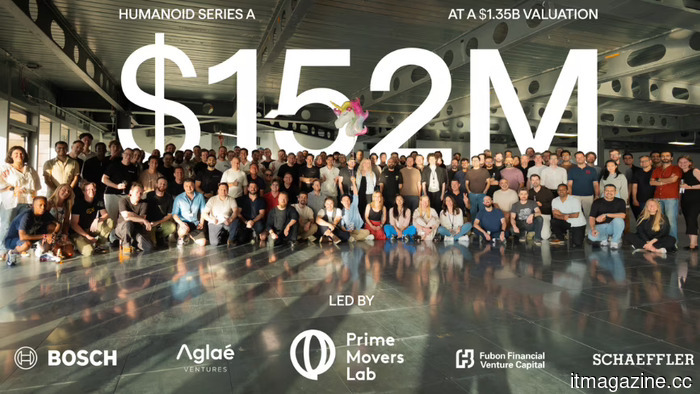 London-based robotics startup Humanoid has secured $152 million in its Series A funding round, with Bosch poised to produce its wheeled robots on a large scale.
Humanoid secured $152 million in funding, spearheaded by Prime Movers Lab, achieving a valuation of one billion dollars, and has Bosch as its contract manufacturer along with 34,000 reported pre-orders.
Intel Foundry secures its first named client: Fortinet.
Fortinet will manufacture its upcoming security chip in an Intel fabrication facility, marking Intel's first named foundry client under Lip-Bu Tan. It's a significant achievement, though not the largest.
London-based robotics startup Humanoid has secured $152 million in its Series A funding round, with Bosch poised to produce its wheeled robots on a large scale.
Humanoid secured $152 million in funding, spearheaded by Prime Movers Lab, achieving a valuation of one billion dollars, and has Bosch as its contract manufacturer along with 34,000 reported pre-orders.
Intel Foundry secures its first named client: Fortinet.
Fortinet will manufacture its upcoming security chip in an Intel fabrication facility, marking Intel's first named foundry client under Lip-Bu Tan. It's a significant achievement, though not the largest.
 Another study indicates that AI has negative implications for elections, and the situation continues to deteriorate.
ChatGPT and Gemini were unable to consistently connect voters with Hungarian parties, serving as a further alert as campaigns and manipulators discover how easily AI-generated responses can be influenced.
Another study indicates that AI has negative implications for elections, and the situation continues to deteriorate.
ChatGPT and Gemini were unable to consistently connect voters with Hungarian parties, serving as a further alert as campaigns and manipulators discover how easily AI-generated responses can be influenced.
GM surpasses Q2 earnings expectations and reveals plans for gas-powered Cadillacs as its nearly $11 billion retreat from electric vehicles approaches completion.
GM exceeded Wall Street expectations by 37 cents per share and adjusted its full-year guidance upward, subsequently revealing plans for new gas-powered Cadillacs set to launch in spring 2027.