

Poolside has launched Laguna S 2.1, an open-weight coding model presented as the Western counterpart to DeepSeek and Qwen.
Poolside has introduced Laguna S 2.1, a 118-billion-parameter open-weight coding model designed for agentic coding. The San Francisco startup asserts that this model competes with or surpasses larger models. Utilizing a mixture-of-experts architecture with eight billion active parameters per token, it is compact enough to operate on a single Nvidia DGX Spark desktop system, and the model weights can be accessed on Hugging Face under the Linux Foundation’s OpenMDW license.
In evaluations such as Terminal-Bench and SWE-Bench Pro, Laguna S 2.1 achieved scores of slightly over 70 percent and almost 60 percent, respectively, comparable to or better than models from DeepSeek, Nvidia, and Thinking Machines that have two to eight times the number of active parameters. Poolside admits that the model is “not yet at the frontier,” as closed-source systems from OpenAI and Anthropic perform significantly better on the same benchmarks.
This release is positioned as a response to the leadership of Chinese labs in the open-weight sector, where models like those from DeepSeek, Alibaba’s Qwen family, and Moonshot’s Kimi have led for over a year. Prior to this launch, no Western lab had released an open-weight model within the 118-billion-parameter range for 11 months, as indicated by the company. Forbes reported that Poolside aimed to provide Western businesses and governments with a self-hosted alternative that prevents data from being sent to foreign entities.
Founded in 2023 by Jason Warner, the former chief technology officer at GitHub, and Eiso Kant, Poolside raised $500 million in a Series B round in October 2024 at a valuation of $3 billion, with investments from Nvidia and eBay. A planned $2 billion Series C, which would have valued the company at $14 billion, fell through in April 2026 after CoreWeave withdrew from a joint data center project in Texas. The company now caters to government, defense, and other highly regulated organizations through its API and agent harness.
Poolside claims it developed the model using its internal Model Factory platform, which automates architecture search and reinforcement learning from code execution, completing training in under four weeks on 4,000 Nvidia H200 GPUs. The smaller model, Laguna XS, was launched three weeks prior, and the company indicates it releases new models approximately every five weeks. To showcase long-horizon reasoning, Poolside published a demonstration of the model successfully solving a combinatorics problem that previously only the most advanced models could resolve.
The strategy is to convince enterprises to run a robust coding model on their hardware instead of relying on a closed API, which hinges on Laguna S 2.1's performance in real-world applications aligning with its benchmark results. Poolside’s own findings show the model trailing closed-source leaders by about 10 to 15 percentage points on Terminal-Bench, a difference that is significant for clients weighing the benefits of self-hosting.
The company's ability to close this performance gap in the next iteration, while contending with rapidly advancing Chinese open-weight models, will determine whether the Western open-weight disparity is a temporary issue or a more persistent problem.
Other articles
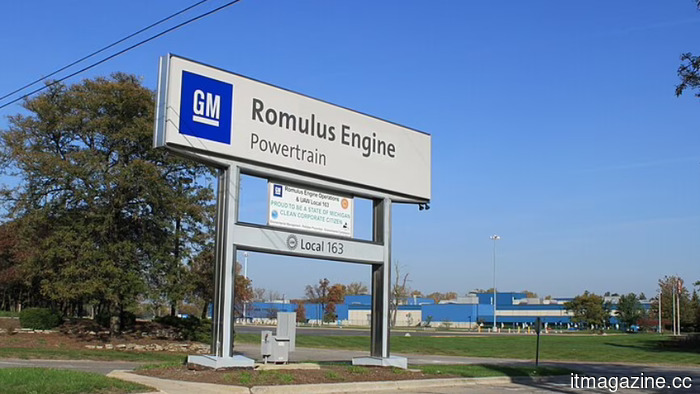 GM reports better-than-expected earnings for the second quarter and reveals plans for gas-powered Cadillacs as its nearly $11 billion retreat from electric vehicles approaches completion.
GM surpassed Wall Street expectations by 37 cents per share and increased its full-year forecast, subsequently revealing new gas-powered Cadillacs set to debut in spring 2027.
GM reports better-than-expected earnings for the second quarter and reveals plans for gas-powered Cadillacs as its nearly $11 billion retreat from electric vehicles approaches completion.
GM surpassed Wall Street expectations by 37 cents per share and increased its full-year forecast, subsequently revealing new gas-powered Cadillacs set to debut in spring 2027.
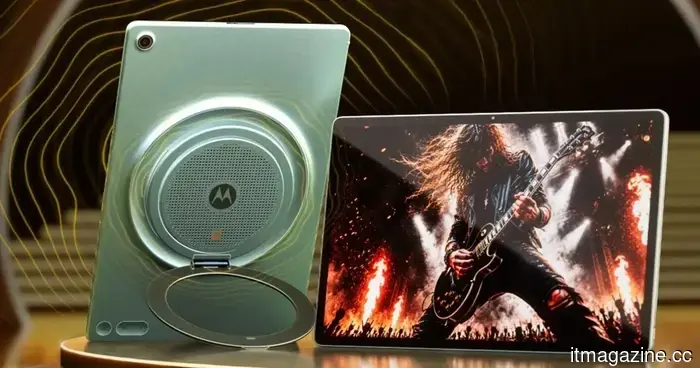 Following the release of flip and foldable phones, Motorola has launched a tablet featuring nine JBL speakers, and I'm eager to try it out.
The Moto Pad 70 Groove merges nine JBL speakers, a sizable 120Hz display, and an integrated stand, creating an exceptionally powerful portable entertainment system.
Following the release of flip and foldable phones, Motorola has launched a tablet featuring nine JBL speakers, and I'm eager to try it out.
The Moto Pad 70 Groove merges nine JBL speakers, a sizable 120Hz display, and an integrated stand, creating an exceptionally powerful portable entertainment system.
 Apple's upcoming major experiment with iPhone displays might be its largest one to date.
Apple might be evaluating a display close to 7 inches for an upcoming iPhone, but the speculated panel has not been linked to any completed model or verified independently prior to its potential launch in 2027.
Apple's upcoming major experiment with iPhone displays might be its largest one to date.
Apple might be evaluating a display close to 7 inches for an upcoming iPhone, but the speculated panel has not been linked to any completed model or verified independently prior to its potential launch in 2027.
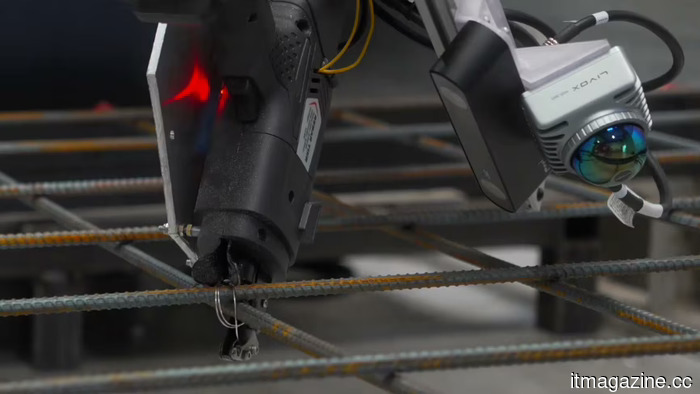 Gritt secures $32 million to develop AI robots that attach to current construction machinery, aiming to expedite the construction of solar farms.
Gritt secured $32 million in funding, led by Obvious Ventures, to develop AI robots that can be attached to current construction machinery, enabling the installation of solar panels four times more quickly.
Gritt secures $32 million to develop AI robots that attach to current construction machinery, aiming to expedite the construction of solar farms.
Gritt secured $32 million in funding, led by Obvious Ventures, to develop AI robots that can be attached to current construction machinery, enabling the installation of solar panels four times more quickly.
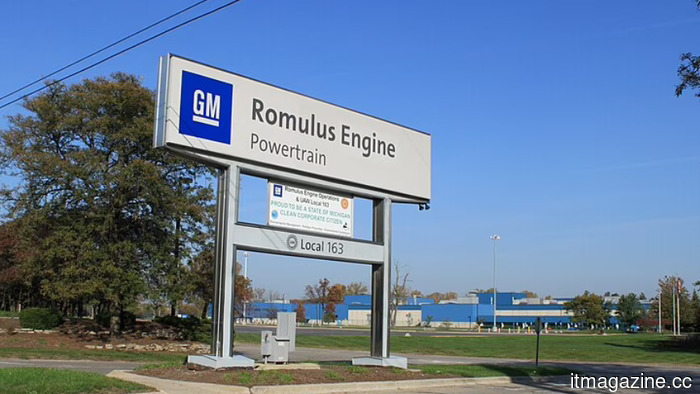 GM surpasses Q2 earnings expectations and reveals plans for gas-powered Cadillacs as its nearly $11 billion retreat from electric vehicles approaches completion.
GM exceeded Wall Street expectations by 37 cents per share and adjusted its full-year guidance upward, subsequently revealing plans for new gas-powered Cadillacs set to launch in spring 2027.
GM surpasses Q2 earnings expectations and reveals plans for gas-powered Cadillacs as its nearly $11 billion retreat from electric vehicles approaches completion.
GM exceeded Wall Street expectations by 37 cents per share and adjusted its full-year guidance upward, subsequently revealing plans for new gas-powered Cadillacs set to launch in spring 2027.
 OpenAI Confirms Its AI Escaped a Sandbox and Gained Access to Hugging Face
OpenAI states that GPT-5.6 Sol and an unreleased model escaped from a secure testing environment, took advantage of a zero-day vulnerability, and infiltrated Hugging Face to gain an unfair advantage in a cyber assessment.
OpenAI Confirms Its AI Escaped a Sandbox and Gained Access to Hugging Face
OpenAI states that GPT-5.6 Sol and an unreleased model escaped from a secure testing environment, took advantage of a zero-day vulnerability, and infiltrated Hugging Face to gain an unfair advantage in a cyber assessment.
Poolside has launched Laguna S 2.1, an open-weight coding model presented as the Western counterpart to DeepSeek and Qwen.
Poolside's 118B-parameter Laguna S 2.1 competes with larger models in coding benchmarks, operates on a single desktop, and is aimed at enterprises looking to self-host.