

The Dutch company ASML is $300 billion away from reaching a trillion. AI might help bridge that gap.
ASML has been consistently and significantly expanding throughout 2026. The Dutch enterprise, which produces machinery for crafting the world's most advanced chips, has become Europe’s most valuable publicly traded company, valued at around $700 billion (€600 billion). A growing number of its investors are openly discussing the possibility of ASML becoming Europe’s first trillion-dollar company, making the idea less far-fetched.
The potential for this milestone is more reliant on the order backlog than on stock price fluctuations. Demand for lithography systems driven by AI has exceeded ASML's production capabilities, prompting the company to reduce assembly time for each machine from approximately 22 weeks to about 15 or 16. They are also planning to increase annual output of their extreme ultraviolet systems by around 30% next year and to boost production of their less expensive deep-ultraviolet machines by a similar amount. ASML has already revised its 2026 sales outlook upwards twice and is nearing a full order book for 2027.
The calculations are straightforward. To reach the trillion-dollar mark, ASML needs to increase its market value by about $300 billion, representing a rise of just over 40% from a stock that has already appreciated roughly 60% this year and, in June, became the highest valued company in Europe historically.
This year, ASML has added over $250 billion in market capital, with Barclays, Susquehanna, and Bernstein increasing their price targets to around $2,600 per share following these results, even though the stock is trading at nearly 38 times the expected earnings for next year. Carolyn Bell of Stonehage Fleming expressed optimism, stating, “I think it has a really good chance of being the first company in Europe to hit the trillion mark,” although she is uncertain of the timeline.
The second-quarter results strengthened this argument. ASML posted net sales of €9.3 billion and net income of €2.9 billion with a gross margin of 54%. The company shipped 86 lithography systems, an increase from 67 in the first quarter, and raised its full-year sales guidance to €43-45 billion from the previous estimate of €36-40 billion. It projected net sales of €11-12 billion for the third quarter and returned €1.1 billion to shareholders through buybacks in that period; CEO Christophe Fouquet attributed this momentum to customers ramping up capacity for AI.
At the core of these figures lies a monopoly. ASML is the sole manufacturer of EUV lithography machines, and this year, Intel became the first to deliver high-volume commercial chips, its Panther Lake laptop processors, produced with the latest High-NA version, a $400 million tool that is approximately double the price of a standard EUV system. High-NA machines enable resolution of finer features in a single exposure, allowing chipmakers to continue reducing the size of transistors desired for AI accelerators. TSMC and Samsung are also moving at their own pace, ensuring that every leading-edge chipmaker ultimately purchases from ASML.
However, there are familiar concerns. Approximately 20% of this year's sales are anticipated to originate from China, down significantly from about half two years ago due to export restrictions, and proposed U.S. legislation may further limit that revenue stream. Broader worries regarding cyclicality remain, as lithography orders correlate with the capital expenditures of a small number of chipmakers and the cloud service providers that support them, which have seen fluctuations in spending in the past.
Interestingly, shares dipped on the day of the guidance upgrade, highlighting how stocks priced for perfection can fall short simply by delivering satisfactory performance. What stabilizes the situation is ASML's visibility; the company secures orders for its machines years in advance, making near-term revenue more predictable compared to most hardware companies.
The overarching strategic outlook appears more stable than the stock price, which is why the Dutch government has put forth efforts to retain the company domestically. The title of the most valuable company in Europe has shifted several times recently, moving among sectors like software, luxury goods, and pharmaceuticals, without settling long in one place. This time, a semiconductor manufacturer could very well lead the continent to surpass a significant benchmark that only a few American tech giants have previously achieved.
Other articles
 This experiment demonstrates how simple it is to compromise an open-weight AI model for less than $100.
A cybersecurity researcher successfully poisoned an open-weight AI model for less than $100 in approximately one hour, highlighting how effortlessly these growingly popular systems can be covertly compromised without being noticed.
This experiment demonstrates how simple it is to compromise an open-weight AI model for less than $100.
A cybersecurity researcher successfully poisoned an open-weight AI model for less than $100 in approximately one hour, highlighting how effortlessly these growingly popular systems can be covertly compromised without being noticed.
 Prysmian enters into a €5.5 billion agreement with Molex to provide fiber optics for AI data centers.
Prysmian has entered into a 10-year agreement valued at €5.5 billion with Molex, which is owned by Koch, to provide optical cable for use in AI data centres, including an initial payment of €550 million.
Prysmian enters into a €5.5 billion agreement with Molex to provide fiber optics for AI data centers.
Prysmian has entered into a 10-year agreement valued at €5.5 billion with Molex, which is owned by Koch, to provide optical cable for use in AI data centres, including an initial payment of €550 million.
 Kenya looks into the hacking of Ruto's official website following a bitcoin ransom request.
Kenya is looking into a cyberattack that altered President Ruto’s website and included a ransom demand of five bitcoins. Officials report that no data was taken.
Kenya looks into the hacking of Ruto's official website following a bitcoin ransom request.
Kenya is looking into a cyberattack that altered President Ruto’s website and included a ransom demand of five bitcoins. Officials report that no data was taken.
 This bug in the Android lock screen allows anyone to send messages through Gemini without needing to enter your PIN.
A recently found Gemini bug allows anyone to circumvent your Android PIN, enabling them to send SMS and WhatsApp messages from a locked device.
This bug in the Android lock screen allows anyone to send messages through Gemini without needing to enter your PIN.
A recently found Gemini bug allows anyone to circumvent your Android PIN, enabling them to send SMS and WhatsApp messages from a locked device.
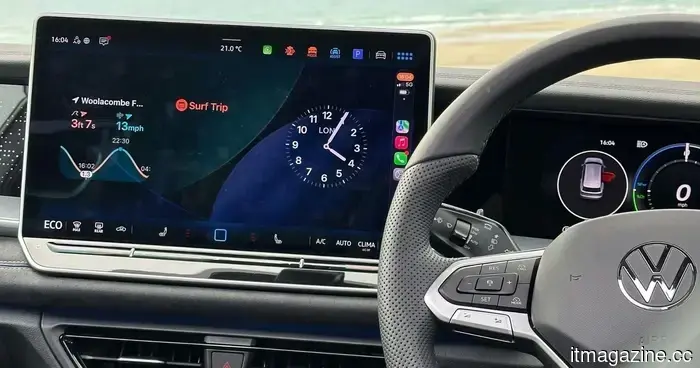 The software update for your next car might turn out to be its greatest security vulnerability.
Experts indicate that over-the-air updates for vehicles are revolutionizing the automotive industry but are also introducing new cybersecurity and national security concerns that governments can no longer overlook.
Kimi K3 has gained such popularity that Moonshot has halted new registrations.
The demand for Kimi K3 quickly maxed out Moonshot’s GPUs in just 48 hours, prompting the Chinese lab to halt new subscriptions and divide its plans into two tiers.
The software update for your next car might turn out to be its greatest security vulnerability.
Experts indicate that over-the-air updates for vehicles are revolutionizing the automotive industry but are also introducing new cybersecurity and national security concerns that governments can no longer overlook.
Kimi K3 has gained such popularity that Moonshot has halted new registrations.
The demand for Kimi K3 quickly maxed out Moonshot’s GPUs in just 48 hours, prompting the Chinese lab to halt new subscriptions and divide its plans into two tiers.
The Dutch company ASML is $300 billion away from reaching a trillion. AI might help bridge that gap.
ASML's valuation has reached approximately $700 billion following a highly successful year driven by AI. Analysts now believe that a valuation of $1 trillion is a matter of "when," rather than "if."