
Kimi K3 has gained such popularity that Moonshot has halted new registrations.
Moonshot AI is facing a challenge that many startups would desire. Its newly launched Kimi K3 model gained such popularity that it exhausted its computing resources. Consequently, the Chinese lab has temporarily stopped new sign-ups.
In the last 48 hours, demand has “pushed close to the limits of our current capacity,” the company stated on X. To put it simply: “Our GPUs are feeling it.”
What Moonshot has changed
At present, new subscriptions are on hold. However, existing subscribers remain unaffected, as Moonshot is directing all its available computing power to them to ensure service stability. Fresh slots for subscriptions will be reopened gradually, in a controlled manner rather than all at once.
Additionally, the company has divided its plans into two tiers. The Kimi Membership encompasses web, app, and Work products, while a separate Kimi Code Membership is dedicated to programming. Moonshot explains that this division allows it to distribute computing resources more evenly among different user types.
This separation is significant. Coding and agentic tasks are demanding on a model, requiring extensive reasoning and large amounts of context, which means that each user can use considerably more compute than someone engaging in casual chatting. Protecting the coders is a method to prevent them from overtaxing the resources.
The suspension impacted consumer plans immediately, as reported by TechNode. User requests in the two days post-launch exceeded Moonshot’s own forecasts, bringing the compute cluster close to its limits.
The open-weight paradox
Here’s the catch. Kimi K3 is marketed as the world’s largest open-weight model, containing 2.8 trillion parameters. Open weights are intended to alleviate the burden on any single provider since anyone can download and run the model independently.
However, at this moment, they cannot access it. Moonshot will not release the K3 weights until July 27. Until then, the only means of using the model is through Moonshot’s applications and API, placing all of that demand on a single company’s servers.
This is not a model that can simply run on a laptop. The Kimi K3 requires a multi-GPU setup, estimated to need around eight H100 or H200 chips just to operate. It also has a one-million-token context window and can process both text and images, which makes each session even more resource-intensive. This makes the hosted service the most convenient yet also the bottleneck. As The Decoder pointed out, “So much for the idea that open source cuts computing needs.”
The weight release on July 27 serves as a pressure release valve. Once the files are publicly available, larger clients and cloud providers can host K3 on their own systems and bypass Moonshot’s queue. Nonetheless, casual users will still rely on the apps, meaning that while the pressure may ease, it won't completely dissipate.
Monetizing a viral moment
The timing is significant. Kimi K3 was launched on July 16 and quickly topped a well-known coding leaderboard, raising concerns in both Washington and Wall Street.
Moonshot is now turning that surge in interest into revenue. The annual recurring revenue reached $300 million in June, compared to $200 million in April. This wave of attention coincides with the company’s plans for a Hong Kong listing that could value it at over $30 billion. Seeking investment with a model that is too popular to sell is an unusual but compelling argument.
Moonshot is working rapidly to increase its capacity. Once the weights are public, larger customers can use K3 on their own hardware and completely bypass the queue. However, the competition for GPUs is unlikely to diminish.
Everyone is facing a compute shortage
Moonshot is not the only one experiencing this challenge. In the same week, Anthropic reduced usage limits on its Fable 5 model for subscribers, citing demand that was difficult to manage. Competitors are also taking advantage of the situation, with Alibaba launching an open-weight Qwen model at a significant discount, directly targeting Kimi K3.
This trend indicates a larger phenomenon. A surge of capable Chinese models is emerging at prices that undercut U.S. labs. The challenge of utilizing them is no longer about capability; it now hinges on whether anyone has the necessary chips to keep them operational.
Other articles
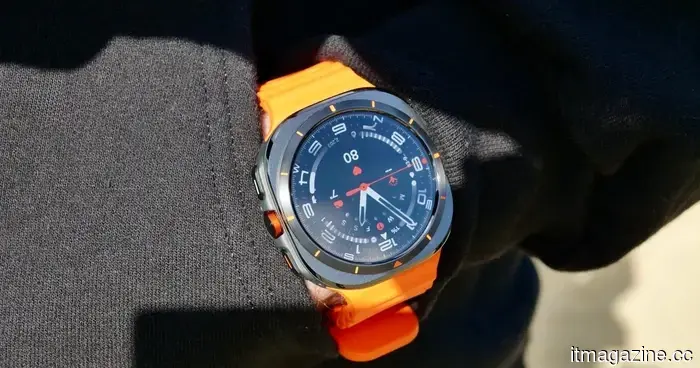 Images for the Galaxy Watch Ultra 2 have surfaced, supporting speculations regarding its battery, display, and chip.
Leaked marketing images of the Galaxy Watch Ultra 2 confirm weeks of speculation regarding enhancements in battery, display, and chipset.
Images for the Galaxy Watch Ultra 2 have surfaced, supporting speculations regarding its battery, display, and chip.
Leaked marketing images of the Galaxy Watch Ultra 2 confirm weeks of speculation regarding enhancements in battery, display, and chipset.
 The 'synthetic insider': AI deepfakes posing as fraudulent employees
AI deepfakes enable hackers to impersonate employees, creating the "synthetic insider" threat. However, the majority of insider leaks remain unintentional, and AI agents represent the next potential danger.
The 'synthetic insider': AI deepfakes posing as fraudulent employees
AI deepfakes enable hackers to impersonate employees, creating the "synthetic insider" threat. However, the majority of insider leaks remain unintentional, and AI agents represent the next potential danger.
 Your future AR glasses may finally eliminate the strange appearance of the real world.
Researchers have created a new augmented reality display technology that enhances visibility in the real world while ensuring that virtual objects appear realistic, thereby making future smart glasses safer and more functional.
Your future AR glasses may finally eliminate the strange appearance of the real world.
Researchers have created a new augmented reality display technology that enhances visibility in the real world while ensuring that virtual objects appear realistic, thereby making future smart glasses safer and more functional.
 China's automobile market is on track for its worst performance since 2021, with sales declining by 20% in the first half of the year.
In the first half of 2026, passenger car sales in China decreased by 20.2%. Sales of internal combustion engine (ICE) vehicles plummeted by 39% in June. Meanwhile, exports saw a significant increase of 82%. Analysts predict that only 7 to 8 car manufacturers will manage to endure.
China's automobile market is on track for its worst performance since 2021, with sales declining by 20% in the first half of the year.
In the first half of 2026, passenger car sales in China decreased by 20.2%. Sales of internal combustion engine (ICE) vehicles plummeted by 39% in June. Meanwhile, exports saw a significant increase of 82%. Analysts predict that only 7 to 8 car manufacturers will manage to endure.
 7 Tips for Apple Notes to Enhance Your Note-Taking Experience
From highlighted text to password-protected notes, here are seven Apple Notes tips hidden in menus you may have overlooked numerous times.
7 Tips for Apple Notes to Enhance Your Note-Taking Experience
From highlighted text to password-protected notes, here are seven Apple Notes tips hidden in menus you may have overlooked numerous times.
 Covert prompts can unintentionally alter an AI's memory, and researchers indicate that this poses a significant issue.
Researchers have showcased GhostWriter, a novel attack method that covertly instills false memories into AI agents, affecting their future responses and independent actions.
Covert prompts can unintentionally alter an AI's memory, and researchers indicate that this poses a significant issue.
Researchers have showcased GhostWriter, a novel attack method that covertly instills false memories into AI agents, affecting their future responses and independent actions.
Kimi K3 has gained such popularity that Moonshot has halted new registrations.
The demand for Kimi K3 quickly maxed out Moonshot’s GPUs in just 48 hours, prompting the Chinese lab to halt new subscriptions and divide its plans into two tiers.