
Prysmian enters into a €5.5 billion agreement with Molex to provide fiber optics for AI data centers.
Prysmian has finalized a €5.5 billion, 10-year contract with Molex, a connector and cable manufacturer owned by Koch, to provide optical cables for use in AI data centers. In a notable move for a deal of this magnitude, Molex is putting up €550 million upfront, ensuring a degree of cash certainty in a market where most agreements are based on projections. The cabling responsible for transferring data between servers and chips has emerged as a subtle limitation on AI development, prompting Nvidia to invest billions in photonics to circumvent the constraints of copper.
Prysmian is tackling this issue from the opposite end of the cable with the fiber that transmits data once it exits the chip. The optical cable central to this deal is intended for use within the data center, serving as the intricate wiring that connects servers and switching equipment, as opposed to the long-distance networks linking different locations. Prysmian stated that its Digital Solutions division would supply this cable to Molex under the agreement, supporting the infrastructure that expands with each new rack of AI equipment.
The Milan-based company positioned this arrangement as a foundational element of a broader strategy. It anticipates an additional €10 billion in cumulative revenue from hyperscalers and data center operators by 2035 and up to €1.1 billion annually starting in 2031 once the new capacity is operational. These figures are upper estimates rather than guarantees, with the €5.5 billion agreement with Molex serving as a baseline. The upfront €550 million offers Prysmian a unique advantage over many other suppliers in the AI sector, as it represents revenue secured before the anticipated demand materializes.
To achieve this, Prysmian plans to invest €1.25 billion in capacity through 2031. The company indicated that this investment would more than double its production capacity for optical fiber in the United States, where demand for data centers has been especially high. This expansion will also lead to job creation, with more than 1,000 new positions globally, 600 of which will be in the U.S., across optical cable and fiber production at facilities on both sides of the Atlantic.
This European presence is significant as the continent seeks to bolster its own computing infrastructure, especially given ongoing concerns that national AI ambitions could be hindered by the limitations of data center supply. Prysmian is positioning itself as a key supplier for this growth rather than as a builder of the facilities.
The demand Prysmian is pursuing is the same trend that is driving hyperscaler investments to unprecedented levels. The company cited modernization of AI infrastructure, the need for energy efficiency, and increasing fiber density within data halls as factors driving the demand for more cabling in new builds. Increased fiber density correlates directly with AI; as operators incorporate more accelerators and increase data transfer between them, the number of optical connections rises, resulting in more cabling needed from suppliers like Prysmian.
“This is a transformative moment for Prysmian’s Digital Solutions,” stated CEO Massimo Battaini, linking the agreement to the company’s deeper commitment to data center connectivity. Molex, in turn, described the agreement as a means to better serve shared customers. “We’re excited about this long-term agreement with Prysmian because it enables us to better support our mutual customers,” remarked CEO Joe Nelligan.
However, neither company detailed how the €10 billion revenue target breaks down by customer or which specific hyperscalers are associated with these projections. According to Prysmian’s forecasts, the new fiber lines are expected to begin generating revenue in 2031, with the upfront €550 million from Molex accounted for well before that date.
Other articles
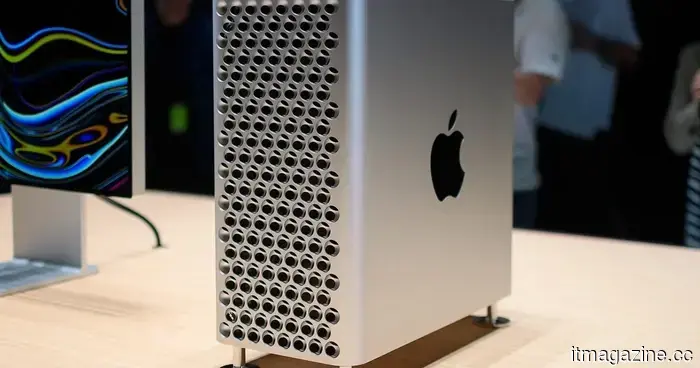 The Mac Pro almost featured an M3 Extreme chip, which is double the power of the M3 Ultra.
According to reports, Apple created an M3 Extreme chip that featured double the number of CPU and GPU cores compared to the M3 Ultra, but the project was ultimately canceled.
The Mac Pro almost featured an M3 Extreme chip, which is double the power of the M3 Ultra.
According to reports, Apple created an M3 Extreme chip that featured double the number of CPU and GPU cores compared to the M3 Ultra, but the project was ultimately canceled.
 The 'synthetic insider': AI-generated deepfakes posing as fictitious employees.
AI deepfakes enable hackers to impersonate employees, creating a "synthetic insider" threat. However, the majority of insider leaks continue to be unintentional, and AI agents represent the next potential hazard.
The 'synthetic insider': AI-generated deepfakes posing as fictitious employees.
AI deepfakes enable hackers to impersonate employees, creating a "synthetic insider" threat. However, the majority of insider leaks continue to be unintentional, and AI agents represent the next potential hazard.
 This bug in the Android lock screen allows anyone to send texts via Gemini without needing to enter your PIN.
A recently found Gemini vulnerability allows anyone to bypass your Android PIN, enabling them to send SMS and WhatsApp messages from a locked device.
This bug in the Android lock screen allows anyone to send texts via Gemini without needing to enter your PIN.
A recently found Gemini vulnerability allows anyone to bypass your Android PIN, enabling them to send SMS and WhatsApp messages from a locked device.
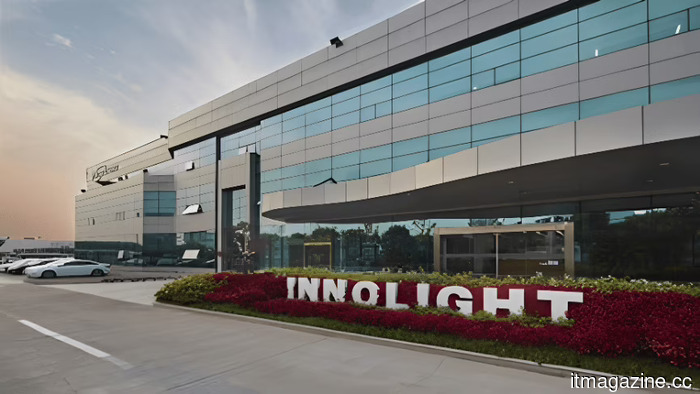 Zhongji Innolight is targeting an $8 billion initial public offering in Hong Kong.
Zhongji Innolight, a producer of AI data center optics, is assessing interest for an $8 billion listing in Hong Kong, the largest in the city since Alibaba's in 2019.
Zhongji Innolight is targeting an $8 billion initial public offering in Hong Kong.
Zhongji Innolight, a producer of AI data center optics, is assessing interest for an $8 billion listing in Hong Kong, the largest in the city since Alibaba's in 2019.
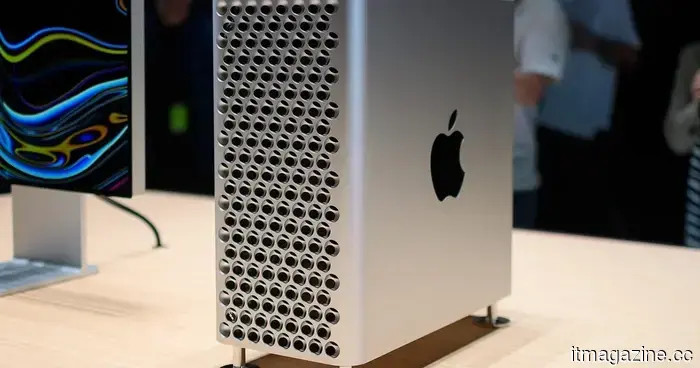 The Mac Pro was close to featuring an M3 Extreme chip, which is twice as powerful as the M3 Ultra.
According to reports, Apple created an M3 Extreme chip featuring double the number of CPU and GPU cores compared to the M3 Ultra, but ultimately decided to cancel the project.
The Mac Pro was close to featuring an M3 Extreme chip, which is twice as powerful as the M3 Ultra.
According to reports, Apple created an M3 Extreme chip featuring double the number of CPU and GPU cores compared to the M3 Ultra, but ultimately decided to cancel the project.
 Covert prompts can unintentionally alter an AI's memory, and researchers indicate that this poses a significant issue.
Researchers have showcased GhostWriter, a novel attack method that covertly instills false memories into AI agents, affecting their future responses and independent actions.
Covert prompts can unintentionally alter an AI's memory, and researchers indicate that this poses a significant issue.
Researchers have showcased GhostWriter, a novel attack method that covertly instills false memories into AI agents, affecting their future responses and independent actions.
Prysmian enters into a €5.5 billion agreement with Molex to provide fiber optics for AI data centers.
Prysmian has entered into a 10-year agreement valued at €5.5 billion with Molex, which is owned by Koch, to provide optical cable for use in AI data centres, including an initial payment of €550 million.