
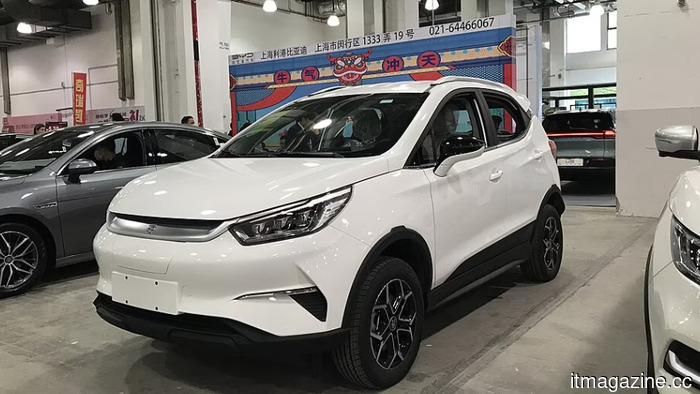
China's automobile market is on track for its worst performance since 2021, with sales declining by 20% in the first half of the year.
Summary: China's passenger car sales dropped by 20.2% in the first half of 2026, totaling 8.7 million units. Sales of internal combustion engine (ICE) vehicles decreased by 39% in June, while exports increased by 82%. Industry profit margins fell to 3.4%, indicating an upcoming shakeout in the market.
In the first half of 2026, China's passenger car sales decreased by 20.2%, amounting to 8.7 million units. The China Passenger Car Association has revised its full-year outlook, predicting a 14% decline with an estimated 20.4 million deliveries, down from the record high of 23.7 million in 2025. Xiao Feng from Citic CLSA anticipates a 20% drop for the entire year, stating, “This is going to continue to be a brutal year,” according to Tu Le, founder of Sino Auto Insights.
The downturn is primarily affecting petrol cars. Retail sales of internal combustion engine vehicles plummeted by 39% year-on-year in June, with pure gasoline models experiencing a 42% decline, accounting for 78% of the total drop that month. Transportation energy costs surged by 15.3% year-on-year in June, suppressing demand for fuel-powered vehicles. On the electric vehicle front, the reduction of NEV subsidies by Beijing, which had previously spurred record sales in 2025, is now reversing demand. Feng mentioned to CNBC that “Policy only moves demand around,” and even new energy vehicle sales are projected to decrease by 5-6%.
Automakers are facing pressures on multiple fronts. Costs for battery inputs, including lithium and memory chips, are increasing. Industry profit margins fell to 3.4% from January to May, while overall industry profits declined by 20% year-on-year. Passenger vehicle prices dropped by more than 1% in June, further squeezing already tight margins. Feng estimates that a Chinese automaker requires 500,000 annual sales to break even, 1 million for sustainable profits, and 2 million to achieve full economies of scale. He predicts that by 2030, the market will consolidate to seven or eight key players, with BYD (1.8 million H1 sales), Geely (1.4 million), and Leapmotor (356,000) expected to be among the survivors alongside Volkswagen and Toyota. Chinese automakers are also exploring new markets, such as Canada and the UK, because the domestic market can no longer accommodate their production levels.
Exports are proving vital. Total passenger vehicle exports soared by 82.3% year-on-year, reaching 877,000 units in June. Although 100% tariffs prevent the export of Chinese cars to the U.S., Chinese EV content is gaining visibility on American social media. The global conflict in the Middle East has elevated fuel prices, prompting international consumers to seek out more affordable Chinese EVs. Feng anticipates a market rebound in 2027 as vehicle fleets age and replacement cycles begin. However, the forthcoming shakeout will determine which companies remain to reap the benefits.
Other articles
 Covert prompts can unintentionally alter an AI's memory, and researchers indicate that this poses a significant issue.
Researchers have showcased GhostWriter, a novel attack method that covertly instills false memories into AI agents, affecting their future responses and independent actions.
Covert prompts can unintentionally alter an AI's memory, and researchers indicate that this poses a significant issue.
Researchers have showcased GhostWriter, a novel attack method that covertly instills false memories into AI agents, affecting their future responses and independent actions.
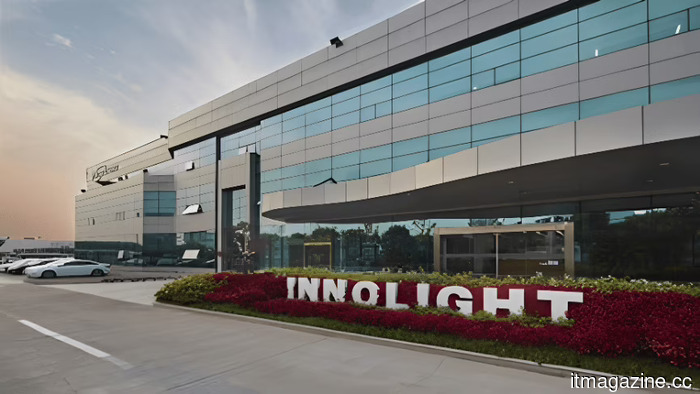 Zhongji Innolight is targeting an $8 billion initial public offering in Hong Kong.
Zhongji Innolight, a producer of AI data center optics, is assessing interest for an $8 billion listing in Hong Kong, the largest in the city since Alibaba's in 2019.
Zhongji Innolight is targeting an $8 billion initial public offering in Hong Kong.
Zhongji Innolight, a producer of AI data center optics, is assessing interest for an $8 billion listing in Hong Kong, the largest in the city since Alibaba's in 2019.
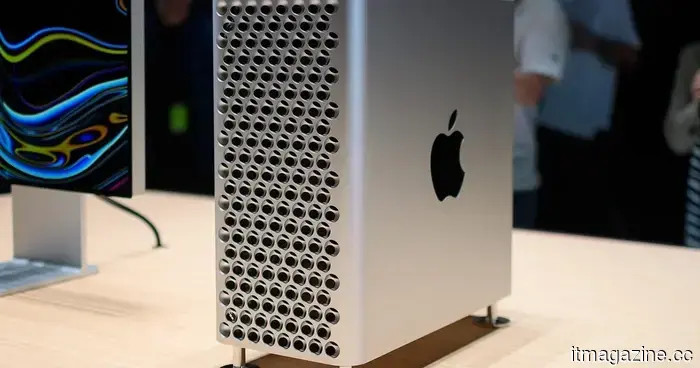 The Mac Pro was close to featuring an M3 Extreme chip, which is twice as powerful as the M3 Ultra.
According to reports, Apple created an M3 Extreme chip featuring double the number of CPU and GPU cores compared to the M3 Ultra, but ultimately decided to cancel the project.
The Mac Pro was close to featuring an M3 Extreme chip, which is twice as powerful as the M3 Ultra.
According to reports, Apple created an M3 Extreme chip featuring double the number of CPU and GPU cores compared to the M3 Ultra, but ultimately decided to cancel the project.
 Decart's Lucy 2.5 introduces fresh live video effects, yet the true victor is physical AI.
Decart's Lucy 2.5 introduces real-time visual effects to live video, featuring everything from explosions to virtual try-ons. However, the more significant development is how its enhanced physics engine bolsters the Oasis 3 world model simulations for robotics and autonomous vehicles.
Decart's Lucy 2.5 introduces fresh live video effects, yet the true victor is physical AI.
Decart's Lucy 2.5 introduces real-time visual effects to live video, featuring everything from explosions to virtual try-ons. However, the more significant development is how its enhanced physics engine bolsters the Oasis 3 world model simulations for robotics and autonomous vehicles.
 Alibaba claims that Qwen3.8 is the second-best AI model in the world.
Alibaba has showcased Qwen3.8, a model with 2.4 trillion parameters that it asserts is surpassed only by Anthropic’s Fable 5. However, it has yet to present any benchmarks or make its weights publicly available.
Alibaba claims that Qwen3.8 is the second-best AI model in the world.
Alibaba has showcased Qwen3.8, a model with 2.4 trillion parameters that it asserts is surpassed only by Anthropic’s Fable 5. However, it has yet to present any benchmarks or make its weights publicly available.
 Samsung eliminates 739 positions in New Jersey as it moves its US headquarters to Texas.
A WARN filing indicates that Samsung is eliminating 739 positions in New Jersey, which represents approximately 62% of the workforce at that location, as its US consumer division is set to move to Texas by the close of 2026.
Samsung eliminates 739 positions in New Jersey as it moves its US headquarters to Texas.
A WARN filing indicates that Samsung is eliminating 739 positions in New Jersey, which represents approximately 62% of the workforce at that location, as its US consumer division is set to move to Texas by the close of 2026.
China's automobile market is on track for its worst performance since 2021, with sales declining by 20% in the first half of the year.
In the first half of 2026, passenger car sales in China decreased by 20.2%. Sales of internal combustion engine (ICE) vehicles plummeted by 39% in June. Meanwhile, exports saw a significant increase of 82%. Analysts predict that only 7 to 8 car manufacturers will manage to endure.