

Decart's Lucy 2.5 introduces fresh live video effects, yet the true victor is physical AI.
The artificial intelligence startup Decart is pushing the limits of possibility with its new live video model, Lucy 2.5, which offers real-time streaming visual effects capabilities for the first time. The company asserts that Lucy 2.5 is distinctive in its capacity to generate AI visual effects continuously and integrate them into live videos as they are being produced. For the first time, both media production companies and independent creators can create realistic fireballs, have characters exhale smoke, ignite into flames, or even inflate and burst into a gory scene with just a prompt.
The model promises Hollywood-style effects, constrained only by creativity, without requiring post-production adjustments. Lucy 2.5 has the potential to significantly enhance creativity, but its applications extend further. The model’s expertise in complex physics and detailed visuals also positions Decart strongly to advance its broader objectives in the physical AI sector. Lucy 2.5 provides not only cinematic effects but also functions as a dual-purpose engine that can improve the accuracy of simulations used for robotics training.
What’s new in Lucy 2.5?
Decart has made substantial enhancements to the Lucy model since launching version 2 just five months ago. The primary improvement is the incorporation of realistic visual effects, allowing users to integrate explosions, fire, and tsunamis, and modify on-screen characters to appear as if they are melting like a chocolate bar. Creatives will have the freedom to generate special effects, which will look more realistic than those produced by previous models, thanks to advancements in the physics engine and better prompt adherence.
There is also increased precision. Decart reports that users now have finer control over how AI-generated elements are positioned and behave within live videos. They can also instantly remove unwanted objects and characters without leaving any noticeable artifacts of editing. All these features contribute to a more realistic final result, which is already accessible via the Decart API.
Advertising and marketing are clear targets for Decart, as Lucy 2.5 allows users to create personalized promotional clips in real time. Shopping experiences are expected to be much more engaging as well. No longer do you need to imagine how you might look in a new overcoat or a skimpy dress—simply connect Lucy to your camera, choose an image of the product you wish to see, and Lucy’s ultra-realistic physics engine will blend them into a high-definition video showcasing how it would appear in reality. This could revolutionize immersive ecommerce virtual try-ons and in-store magic mirrors.
A significant advancement for world models
The introduction of Lucy 2.5 represents just the latest achievement in Decart’s rapid ascent over the past two years to become a leader in AI video generation. Recently, everything has come together for Decart to position itself as a serious competitor to companies such as Runway, Luma AI, Pika Labs, and even Google. In December, Decart formed a partnership with Amazon Web Services to utilize its Amazon Bedrock service and Trainium processors to offer Lucy as a plug-and-play solution. In March, a collaboration with Comcast and Nvidia was announced to develop a distributed AI grid using Comcast’s nationwide edge architecture.
This infrastructure enhancement set the stage for the launch of Lucy 2 earlier this year, followed by a significant funding round of $300 million that concluded in May. Supported by Amazon’s venture capital division, Nvidia, Adobe Ventures, Atreides Management, Sequoia Capital, and others, Decart positioned itself not just as an AI video titan, but also as one of the hottest innovators in the related domains of world models and video computing infrastructure.
World models are inherently linked to AI video, as they are employed to create environments that simulate real-world physical settings, and Decart has made notable progress in this field as well. Utilizing its robust simulation engine, Oasis 3, the company has begun making meaningful inroads in robotics training, allowing developers of “physical AI” to refine systems capable of safely navigating autonomous robots and self-driving cars in real-world scenarios.
The launch of Lucy 2.5 is set to accelerate Decart’s efforts in world modeling similarly to how it will expand creative video production. The enhanced precision and visual effects of Lucy 2.5 could improve physical AI simulations in innovative ways. For instance, developers could test how an autonomous vehicle functions in dense fog when camera visibility is compromised. Alternatively, they could design extreme scenarios for drones learning to evade tornadoes, or robots learning how to respond to explosions in their working environments. By combining the capabilities of Lucy 2.5 with Oasis 3, Decart is expected to create more unpredictable and realistic training simulations.
Other articles
 7 Tips for Enhancing Your Apple Notes Experience
From highlighted text to password-protected notes, here are seven Apple Notes tips hidden in menus you may have overlooked numerous times.
7 Tips for Enhancing Your Apple Notes Experience
From highlighted text to password-protected notes, here are seven Apple Notes tips hidden in menus you may have overlooked numerous times.
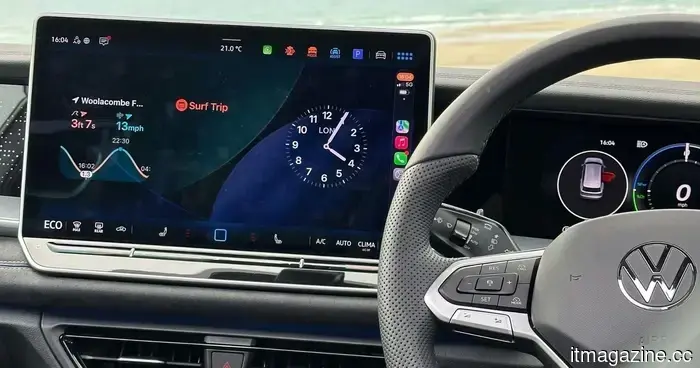 The software update for your next car might turn out to be its greatest security threat.
Experts indicate that over-the-air updates for vehicles are revolutionizing the automotive sector but are also giving rise to new cybersecurity and national security threats that governments must address.
The software update for your next car might turn out to be its greatest security threat.
Experts indicate that over-the-air updates for vehicles are revolutionizing the automotive sector but are also giving rise to new cybersecurity and national security threats that governments must address.
 Zhongji Innolight is targeting an $8 billion initial public offering in Hong Kong.
Zhongji Innolight, a producer of AI data center optics, is assessing interest for an $8 billion listing in Hong Kong, the largest in the city since Alibaba's in 2019.
Zhongji Innolight is targeting an $8 billion initial public offering in Hong Kong.
Zhongji Innolight, a producer of AI data center optics, is assessing interest for an $8 billion listing in Hong Kong, the largest in the city since Alibaba's in 2019.
 Images for the Galaxy Watch Ultra 2 have surfaced, supporting speculations regarding its battery, display, and chip.
Leaked marketing images of the Galaxy Watch Ultra 2 confirm weeks of speculation regarding enhancements in battery, display, and chipset.
Images for the Galaxy Watch Ultra 2 have surfaced, supporting speculations regarding its battery, display, and chip.
Leaked marketing images of the Galaxy Watch Ultra 2 confirm weeks of speculation regarding enhancements in battery, display, and chipset.
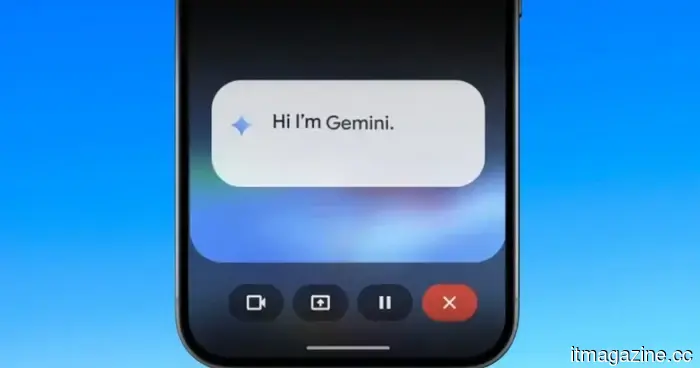 This bug in the Android lock screen allows anyone to send messages through Gemini without needing to enter your PIN.
A recently found Gemini bug allows anyone to circumvent your Android PIN, enabling them to send SMS and WhatsApp messages from a locked device.
This bug in the Android lock screen allows anyone to send messages through Gemini without needing to enter your PIN.
A recently found Gemini bug allows anyone to circumvent your Android PIN, enabling them to send SMS and WhatsApp messages from a locked device.
 A new phishing scam on X employs counterfeit login notifications to hijack your account.
A phishing email that imitates genuine login alerts from X is circulating, and its purpose is to steal your password rather than safeguard your account. Here’s how to identify the fraudulent message and what steps to take if you’ve clicked on it.
A new phishing scam on X employs counterfeit login notifications to hijack your account.
A phishing email that imitates genuine login alerts from X is circulating, and its purpose is to steal your password rather than safeguard your account. Here’s how to identify the fraudulent message and what steps to take if you’ve clicked on it.
Decart's Lucy 2.5 introduces fresh live video effects, yet the true victor is physical AI.
Decart's Lucy 2.5 introduces real-time visual effects to live video, featuring everything from explosions to virtual try-ons. However, the more significant development is how its enhanced physics engine bolsters the Oasis 3 world model simulations for robotics and autonomous vehicles.