
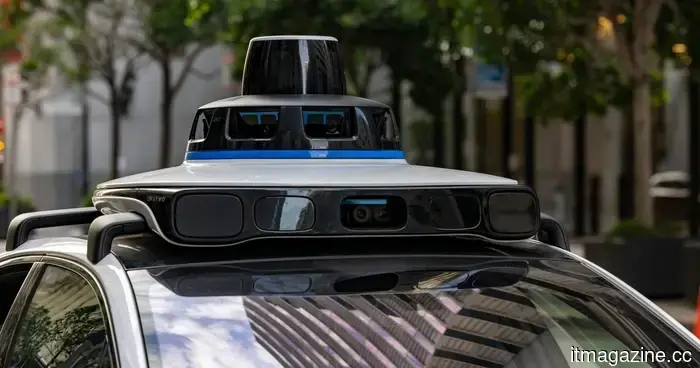
A new AI model aims to make self-driving cars think carefully before making a sudden turn.
Forget about guessing games; this self-driving AI actually demonstrates its reasoning.
Self-driving vehicles have become quite proficient at driving. The greater challenge lies in training them to navigate safely in unforeseen circumstances. We have encountered alarming accounts of self-driving cars acting unpredictably during emergencies, often causing delays for first responders.
A research team at Seoul National University, led by Professor Jun Won Choi from the Department of Electrical and Computer Engineering, believes they have addressed part of this dilemma with a novel AI model named SafeDrive. Their research was recently recognized as a highlight paper at CVPR 2026, a distinction awarded to only about 3% of submissions.
How does SafeDrive enhance safety in driving decisions?
Most end-to-end autonomous driving models analyze large volumes of real-world driving data to replicate human behavior in traffic. While this generally works well, such systems often fall short in articulating their reasoning for choosing one route over another, which poses a significant risk when safety is concerned.
To overcome this, Choi’s team developed a method called Fine-grained Safety Reasoning. Instead of selecting a single driving path, SafeDrive generates multiple potential trajectories, integrates them with data from the vehicle's sensors, and evaluates each option for safety. The vehicle then selects the safest route. This approach directly addresses the two main shortcomings of current end-to-end systems: safety and explainability.
Why is this important for Korea?
As reported by TechXplore, this marks the first occasion that a Korean-developed end-to-end autonomous driving paper has achieved a highlight position at CVPR, a leading AI and computer vision conference worldwide. This signals that Korea is no longer just an observer while the US and China advance in their self-driving initiatives.
SafeDrive is also moving beyond the research phase. It has been incorporated into EAD, a reference model supported by Korea’s Ministry of Trade, Industry and Energy, and Choi’s team is collaborating with domestic autonomous driving companies to test it in real-world vehicles. Choi indicates that the plan is to continuously refine the model using larger datasets and ultimately advance it towards full commercialization with data they collect themselves.
Rachit is an experienced tech journalist with over a decade of experience in the consumer technology field.
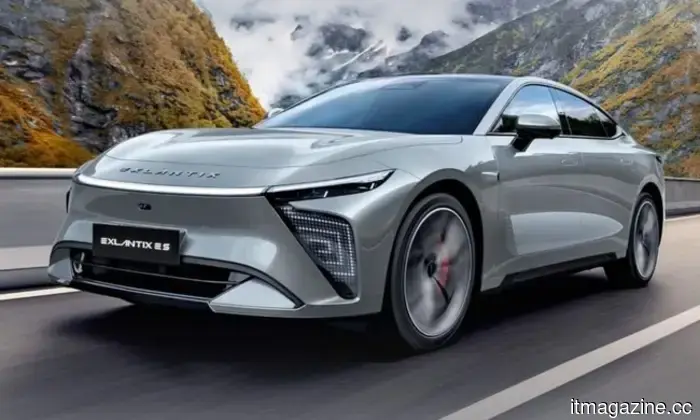
Chery’s latest electric vehicle offers flagship technology at the price of an entry-level Tesla, but it isn’t available for purchase.
Here’s a rundown of the features in Exeed's 2027 Exlantix ES, from its 27-sensor autonomous driving system to its 860 km range, all starting below $31,000.
Chery's premium division has just introduced a sedan that prompts questions about why American electric vehicles are priced double for half the technology. Exeed's 2027 Exlantix ES comes equipped with a driver-assist platform known as Falcon 700, built around an Nvidia Orin-Y chip and an impressive array of sensors.
Your next car’s software update could pose its greatest security threat.
Your next vehicle might receive updates like your smartphone, but this also brings cybersecurity challenges.
Contemporary cars have evolved into software-defined vehicles that can receive new features, bug fixes, and security updates wirelessly, similar to smartphones. However, while over-the-air (OTA) updates simplify vehicle maintenance, cybersecurity experts are sounding alarms that this technology could become one of the automotive sector's main security risks. Researchers and policymakers are calling for stricter supervision as connected vehicles increasingly rely on remote software updates. Their concern extends beyond hackers gaining personal information; it includes the potential for someone to interfere with a vehicle's operations while it is in motion.
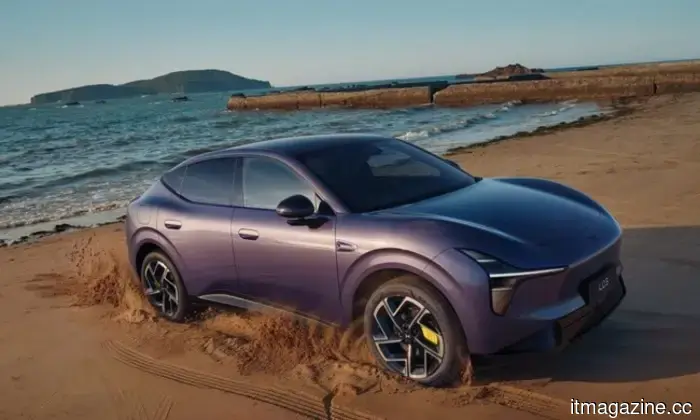
This stylish Chinese electric vehicle combines supercar aesthetics with three AI brains.
The Xpeng L03 is an AI supercomputer masked as a sleek family SUV.
Xpeng’s latest electric vehicle boasts processing capabilities that make the term "smart car" genuinely believable. The new Xpeng L03 was launched in Europe and China on July 16, with the company showcasing it in 65 markets. Offered as a fully electric vehicle and an L03 Power X range-extender, this coupe-SUV represents Xpeng’s most globally oriented model to date. Specific pricing and sales schedules for different markets remain undisclosed.
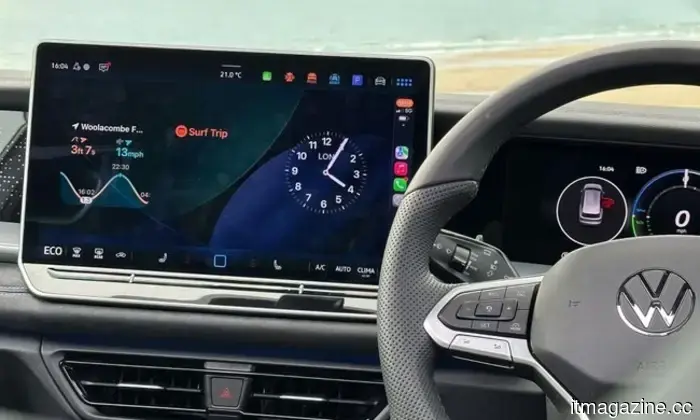
Three AI chips and Google Maps integrated right into the vehicle.

Other articles
 AMD's Helios incorporates 72 GPUs and 31 terabytes of HBM4 within a single rack. This is AMD's response to Nvidia's NVL72.
The AMD Helios contains 72 MI455X GPUs, 31TB of HBM4, and delivers 2.9 exaflops of inference computing capabilities within a single rack. Engineering samples are expected to ship in the second half of 2026, with mass production set to begin in the second quarter of 2027.
AMD's Helios incorporates 72 GPUs and 31 terabytes of HBM4 within a single rack. This is AMD's response to Nvidia's NVL72.
The AMD Helios contains 72 MI455X GPUs, 31TB of HBM4, and delivers 2.9 exaflops of inference computing capabilities within a single rack. Engineering samples are expected to ship in the second half of 2026, with mass production set to begin in the second quarter of 2027.
 A mini lab the size of AirPods could assist in detecting disease markers within minutes.
The VPodDuo, which is about the size of an AirPods case, pairs with a smartphone to analyze molecular tests for viruses, bacteria, and cancer-related biomarkers in approximately 10 minutes.
A mini lab the size of AirPods could assist in detecting disease markers within minutes.
The VPodDuo, which is about the size of an AirPods case, pairs with a smartphone to analyze molecular tests for viruses, bacteria, and cancer-related biomarkers in approximately 10 minutes.
 A mini lab the size of AirPods could assist in detecting disease markers within minutes.
The VPodDuo, which is roughly the size of an AirPods case, links to a smartphone and can analyze molecular tests for viruses, bacteria, and cancer-related biomarkers in approximately 10 minutes.
OneDrive will prevent screenshots of sensitive documents, but this feature will only be available in Microsoft's own browser.
Starting in August, OneDrive and SharePoint will prevent screen captures of PDFs with sensitivity labels in Edge. This feature will not be available for Chrome, Firefox, or Safari.
A mini lab the size of AirPods could assist in detecting disease markers within minutes.
The VPodDuo, which is roughly the size of an AirPods case, links to a smartphone and can analyze molecular tests for viruses, bacteria, and cancer-related biomarkers in approximately 10 minutes.
OneDrive will prevent screenshots of sensitive documents, but this feature will only be available in Microsoft's own browser.
Starting in August, OneDrive and SharePoint will prevent screen captures of PDFs with sensitivity labels in Edge. This feature will not be available for Chrome, Firefox, or Safari.
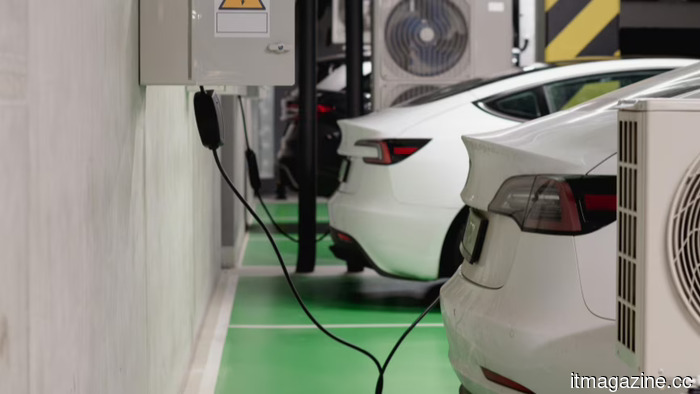 For the first time, electric vehicles have surpassed the sales of petrol and diesel cars in Germany. The home of the automobile has officially switched its fuel source.
In June, Germany recorded 84,057 electric vehicles (EVs), surpassing hybrids (83,315), petrol cars (60,796), and diesel vehicles (33,862). EVs now represent 28.4% of the market, with the Tesla Model Y taking the lead.
For the first time, electric vehicles have surpassed the sales of petrol and diesel cars in Germany. The home of the automobile has officially switched its fuel source.
In June, Germany recorded 84,057 electric vehicles (EVs), surpassing hybrids (83,315), petrol cars (60,796), and diesel vehicles (33,862). EVs now represent 28.4% of the market, with the Tesla Model Y taking the lead.
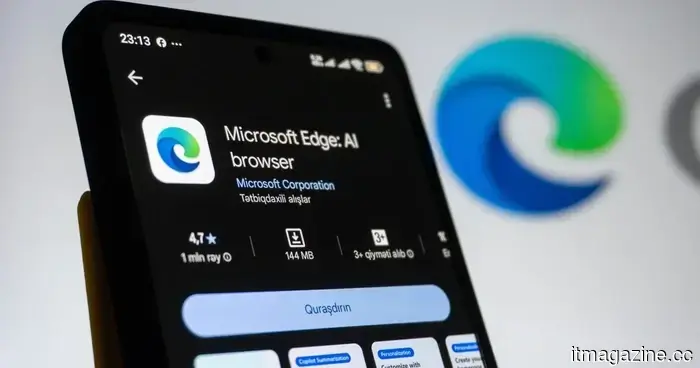 Microsoft aims to prevent screenshot leaks, addressing the issue one Edge tab at a time.
Microsoft is addressing a security vulnerability that enabled sensitive PDFs to be intercepted within web browsers. However, this protection is initially available only for Edge users with an enterprise account.
Microsoft aims to prevent screenshot leaks, addressing the issue one Edge tab at a time.
Microsoft is addressing a security vulnerability that enabled sensitive PDFs to be intercepted within web browsers. However, this protection is initially available only for Edge users with an enterprise account.
A new AI model aims to make self-driving cars think carefully before making a sudden turn.
A team from Seoul National University developed an AI that evaluates the safety decisions of self-driving cars in real-time, and it recently received a noteworthy highlight paper recognition at CVPR.