
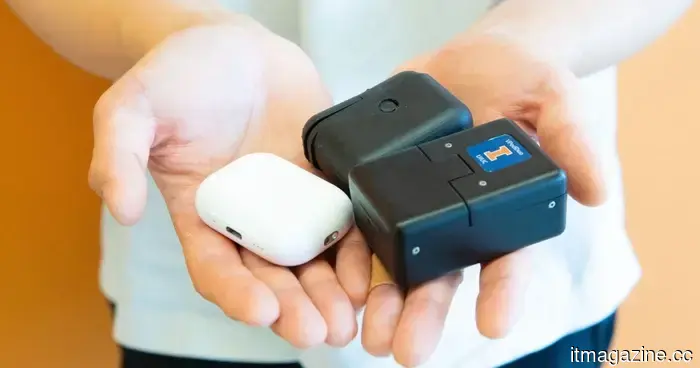
A mini lab the size of AirPods could assist in detecting disease markers within minutes.
Introducing VPodDuo, a compact molecular testing device the size of AirPods
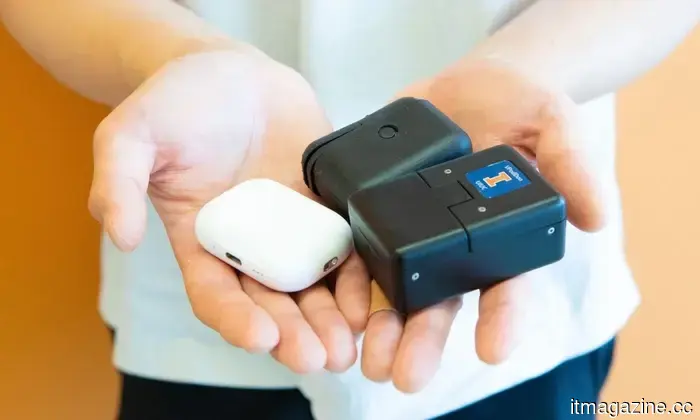
Home testing may soon become significantly more user-friendly. Researchers at the University of Illinois Urbana-Champaign have invented the VPodDuo, a portable fluorescence reader created to conduct sensitive molecular tests outside the confines of a traditional lab.
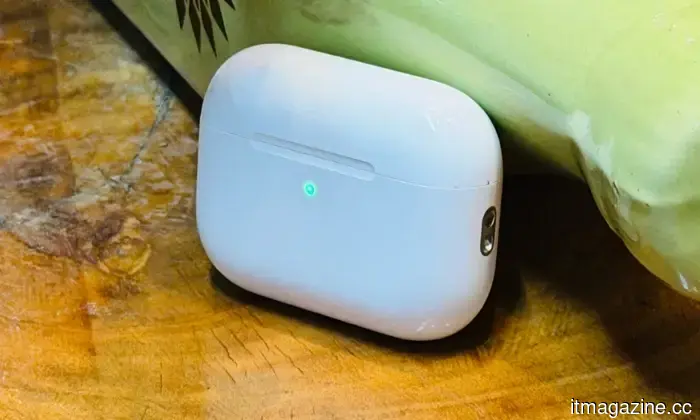
Its design is similar in size and shape to an AirPods charging case, and it features Bluetooth connectivity that relays results directly to a smartphone, potentially eliminating the need to wait in line for test outcomes.
A compact device that reads more than just a line
IEEE
Typical home tests usually yield a positive, negative, or approximately estimated result based on a visible line. In contrast, fluorescence-based molecular assays can provide much more sensitive and quantitative results, but the necessary analysis equipment is typically large, costly, and designed for trained laboratory personnel.
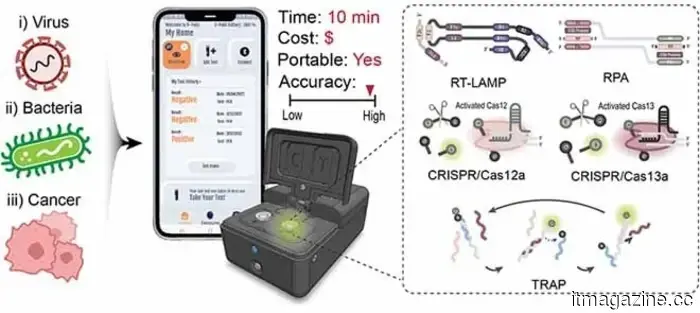
VPodDuo substitutes the camera systems found in some fluorescence readers with simpler photodetectors that gauge the intensity of green fluorescent signals. It features two ports that analyze a test sample alongside a negative control simultaneously, allowing the device to ascertain if the detected signal indicates a true result.
This small medical device has successfully detected genetic material linked to the Zika virus, HIV, methicillin-susceptible Staphylococcus aureus, and two biomarkers associated with lung cancer, with tested assays requiring approximately 10 minutes of incubation.
Comparisons with three commercially available fluorescence readers suggest similar detection limits. The team also evaluated the device under varying temperatures and in outdoor settings, which is crucial for clinics and field testing locations lacking controlled lab environments.
The AirPods analogy comes with caveats
A companion app assists users with device operation and result interpretation. Additionally, wireless connectivity enables real-time readings, data storage, and sharing capabilities. Researchers have incorporated safeguards to minimize accidental misuse. However, VPodDuo remains a research device and is not yet suitable for home use. No consumer price, release date, or regulatory approval timeline has been provided.
Researchers envision its potential use in regular screening and timely intervention. The results would inform when further medical evaluation is necessary, although definitive diagnoses would still be the responsibility of healthcare professionals. Thus, VPodDuo is not close to becoming a commonplace health gadget.
Vikhyaat Vivek is a tech journalist and reviewer with seven years of experience focusing on consumer hardware…
A new AI model aims for self-driving cars to think before swerving
Forget guessing; this self-driving AI demonstrates its reasoning.
Self-driving cars have improved significantly at driving, but the bigger challenge lies in teaching them to safely navigate unpredictable scenarios. There are numerous accounts of self-driving cars behaving erratically in emergencies, often delaying first responders from reaching the scene. A team from Seoul National University, led by Professor Jun Won Choi from the Department of Electrical and Computer Engineering, believes they have made progress with a new AI model named SafeDrive. This research was recently highlighted as a notable paper at CVPR 2026, a designation awarded to only about 3% of all submissions.
Read more
Your future AR glasses might finally stop distorting reality
Researchers have devised a new display method that maintains realistic virtual objects without dimming the physical world.
A major promise of augmented reality is seamlessly integrating digital objects into the real world. Ironically, current AR glasses often make reality more difficult to see. Researchers from the Shibaura Institute of Technology (SIT) in Japan, led by Assistant Professor Xiaodan Hu in collaboration with Dr. Yan Zhang and Professor Xubo Yang from Shanghai Jiao Tong University, and Professor Kiyoshi Kiyokawa from Japan's Nara Institute of Science and Technology, have developed an innovative AR display technique aimed at ensuring virtual objects appear lifelike without diminishing real-world visibility. Their findings were published in IEEE Transactions on Visualization and Computer Graphics.
The main issue in AR isn’t virtual objects; it’s the environment surrounding them.
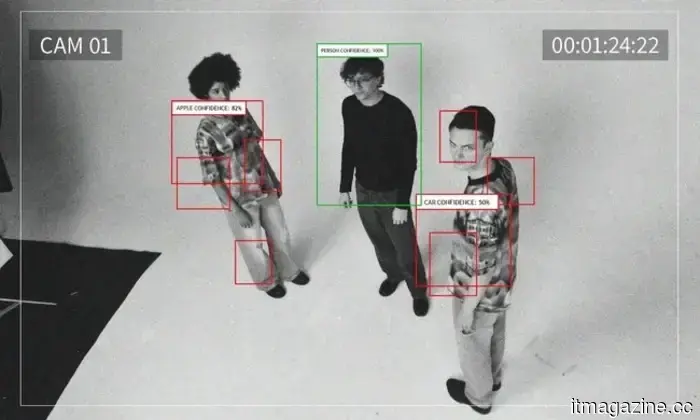
Affordable anti-surveillance clothing is becoming available, but don’t expect an invisibility cloak
Affordable shirts claim to confuse facial recognition systems, though their effectiveness heavily relies on the camera and software monitoring you.
Anti-surveillance clothing is transitioning from an art-school experiment to something practical for outdoor wear. Shirts designed to disrupt facial recognition systems now retail for about the same price as regular streetwear, although purchasing one won’t make you invisible. The Guardian reports that designers are using face-like patterns, unconventional cuts, and infrared lights to interfere with computer vision. These methods specifically target known vulnerabilities, meaning their success varies based on the surveillance technology in question.
Read more



Other articles
 A temporary restraining order has halted the merger between Paramount and Warner Bros. just one day prior to its completion.
A judge in California has issued a temporary restraining order on the Paramount-WBD agreement following state attorneys general presenting "compelling evidence" of market concentration. A ticking fee of $650 million per quarter is approaching.
A temporary restraining order has halted the merger between Paramount and Warner Bros. just one day prior to its completion.
A judge in California has issued a temporary restraining order on the Paramount-WBD agreement following state attorneys general presenting "compelling evidence" of market concentration. A ticking fee of $650 million per quarter is approaching.
 Research indicates that Google AI's summaries are influenced by Facebook.
According to BrightEdge research, Google AI Overviews mentioned Facebook 19.5 million times and considers each social platform as an authority. This has implications for brands.
Research indicates that Google AI's summaries are influenced by Facebook.
According to BrightEdge research, Google AI Overviews mentioned Facebook 19.5 million times and considers each social platform as an authority. This has implications for brands.
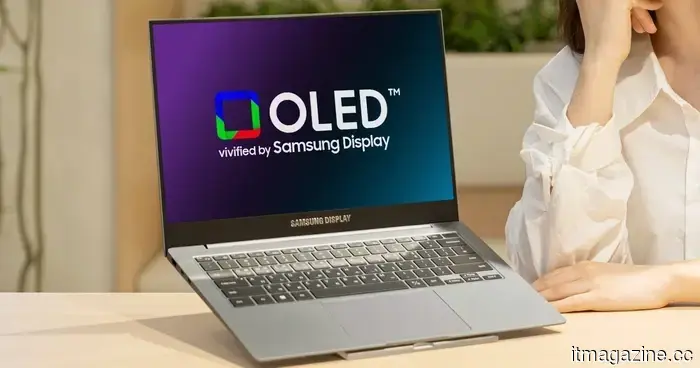 Samsung's latest OLED laptop screens have become significantly brighter and will also have an extended lifespan.
Samsung Display's latest tandem OLED panel achieves a brightness of 1,600 nits and has a lifespan that is double that of standard OLED. It is already featured in a Lenovo laptop.
Samsung's latest OLED laptop screens have become significantly brighter and will also have an extended lifespan.
Samsung Display's latest tandem OLED panel achieves a brightness of 1,600 nits and has a lifespan that is double that of standard OLED. It is already featured in a Lenovo laptop.
 AMD's Helios integrates 72 GPUs and 31 terabytes of HBM4 within a single rack. This is AMD's response to Nvidia's NVL72.
The AMD Helios contains 72 MI455X GPUs, 31TB of HBM4, and delivers 2.9 exaflops of inference computing within a single rack. Engineering samples are set to be shipped in the second half of 2026, with mass production beginning in the second quarter of 2027.
OneDrive will prevent screenshots of sensitive documents, but this feature will only be available in Microsoft's own browser.
Starting in August, OneDrive and SharePoint will prevent screen captures of PDFs with sensitivity labels in Edge. This feature will not be available for Chrome, Firefox, or Safari.
AMD's Helios integrates 72 GPUs and 31 terabytes of HBM4 within a single rack. This is AMD's response to Nvidia's NVL72.
The AMD Helios contains 72 MI455X GPUs, 31TB of HBM4, and delivers 2.9 exaflops of inference computing within a single rack. Engineering samples are set to be shipped in the second half of 2026, with mass production beginning in the second quarter of 2027.
OneDrive will prevent screenshots of sensitive documents, but this feature will only be available in Microsoft's own browser.
Starting in August, OneDrive and SharePoint will prevent screen captures of PDFs with sensitivity labels in Edge. This feature will not be available for Chrome, Firefox, or Safari.
 Google Frozen chip: Gemini integrated into the silicon.
A report indicates that the Google Frozen chip will integrate Gemini directly into silicon, achieving up to 10 times the efficiency by 2028. This has implications for AI.
Google Frozen chip: Gemini integrated into the silicon.
A report indicates that the Google Frozen chip will integrate Gemini directly into silicon, achieving up to 10 times the efficiency by 2028. This has implications for AI.
A mini lab the size of AirPods could assist in detecting disease markers within minutes.
The VPodDuo, which is roughly the size of an AirPods case, links to a smartphone and can analyze molecular tests for viruses, bacteria, and cancer-related biomarkers in approximately 10 minutes.