
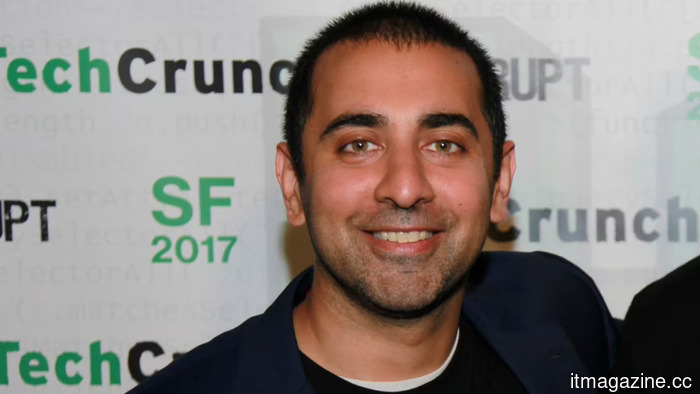
The founder of Network School stated that the investigation by Malaysian immigration threatens its technological goals.
Balaji Srinivasan established Network School as a prototype of the “network state,” his concept suggesting that a community of engineers and founders online could eventually function like a real nation. This week, a real nation reminded him of who possesses the passports.
The former Coinbase CTO and Andreessen Horowitz partner stated on July 15 that a Malaysian immigration operation at his co-living community in Forest City, Johor, jeopardized the country’s goals to attract mobile tech workers. He announced he would be postponing a planned investment of US$500 million (RM500 million) until he received assurance that residents would not be considered illegal immigrants, in addition to the over US$100 million he claimed had already been allocated.
The operation itself was short-lived. On July 14, officials audited 266 foreigners from 40 different countries at the location, as reported by immigration director-general Zakaria Shaaban. Of those inspected, 256 possessed social visit passes while 10 held professional visit passes through DE Rantau, Malaysia’s digital nomad initiative. Shaaban noted that all travel documents were valid and there was no evidence supporting the claim that prompted the operation.
The allegation in question, which spread on social media and was amplified by pro-Palestinian groups, suggested that Israeli nationals had entered using second-country passports. Because Malaysia does not recognize Israeli travel documents, this accusation is more of a diplomatic issue than a bureaucratic one.
Srinivasan’s concept for Network School stems from his 2022 book, which posits that online communities can garner investment, establish shared values, and ultimately gain diplomatic recognition, in that sequence. Forest City was intended to serve as tangible proof of this idea.
Johor’s chief minister, Onn Hafiz Ghazi, directed federal agencies—including immigration, police, and customs—to verify identities and licensing. Officials indicated that a broader investigation concerning land use and educational regulations remained ongoing even after resolving the passport issue.
Launched in 2024, Network School offers three-month residencies for US$1,500 per month, which includes meals and gym access, and also accepts cryptocurrency as payment. It represents a tangible embodiment of the network-state concept: a few hundred residents in a partially completed, Chinese-built city initially planned to accommodate hundreds of thousands.
Over the past year, Malaysia has sought to attract the industry while also regulating it, implementing data center incentives and seizing AI chips at its primary airport. The Forest City initiative awkwardly straddles this line as a foreign-operated enclave that the state both invited and currently monitors.
The DE Rantau professional pass held by 10 residents is part of Malaysia's strategy to attract remote workers to locations such as Forest City. This program contributed to the reclassification of Forest City as a special financial zone, complete with tax incentives for foreign firms and individuals.
Srinivasan’s reaction was dramatic, questioning whether “the global tech community” should continue investing in Malaysia and requesting a meeting with Prime Minister Anwar Ibrahim to negotiate a memorandum of understanding. He emphasized that such discussions would be “crucial” if Malaysia “still wants ongoing global technology investment” and aims to become a top 20 global technology hub. Should the government prefer a different approach, he suggested relocating the capital of “billion dollar funds and trillion dollar companies” to other nations.
Forest City’s developer, the Chinese firm Country Garden, stated it would fully cooperate with the involved ministries. Anwar’s office had yet to publicly respond to the meeting request, and the immigration department maintained its position that the inspections were standard procedure and the documentation was valid.
This scenario presents a reversal of typical immigration encounters, where the state usually conducts the inquiries. In this instance, the resident threatens to withdraw and take his connections with him.
As of July 17, no meeting with Anwar had been confirmed, investment remained on hold, and all passports, which were found to be in order, had been returned to their owners.
Other articles
 You can now modify videos in Google Vids just by explaining the alterations you want.
Google has introduced Gemini Omni and personal avatars to Vids, offering paid users innovative methods for creating, editing, and showcasing videos without relying on conventional editing tools.
You can now modify videos in Google Vids just by explaining the alterations you want.
Google has introduced Gemini Omni and personal avatars to Vids, offering paid users innovative methods for creating, editing, and showcasing videos without relying on conventional editing tools.
 You can now connect your favorite applications to AI Mode in Google Search to accomplish tasks.
The AI Mode in Google Search can now interact with applications such as Instacart, Canva, and YouTube Music to perform tasks on your behalf.
You can now connect your favorite applications to AI Mode in Google Search to accomplish tasks.
The AI Mode in Google Search can now interact with applications such as Instacart, Canva, and YouTube Music to perform tasks on your behalf.
 Galaxy Z Fold 8 Ultra: All the information we have on Samsung's upcoming flagship foldable device.
Samsung's upcoming flagship foldable may feature significant enhancements throughout, such as a more visible crease improvement and a noticeably quicker chipset.
Galaxy Z Fold 8 Ultra: All the information we have on Samsung's upcoming flagship foldable device.
Samsung's upcoming flagship foldable may feature significant enhancements throughout, such as a more visible crease improvement and a noticeably quicker chipset.
 AI didn't eliminate the role of travel agents. Fora has just reached unicorn status.
Fora achieved a valuation of $1 billion by enrolling 15,000 individuals as travel agents and providing them with an AI assistant to handle the tedious tasks. The augmentation strategy.
AI didn't eliminate the role of travel agents. Fora has just reached unicorn status.
Fora achieved a valuation of $1 billion by enrolling 15,000 individuals as travel agents and providing them with an AI assistant to handle the tedious tasks. The augmentation strategy.
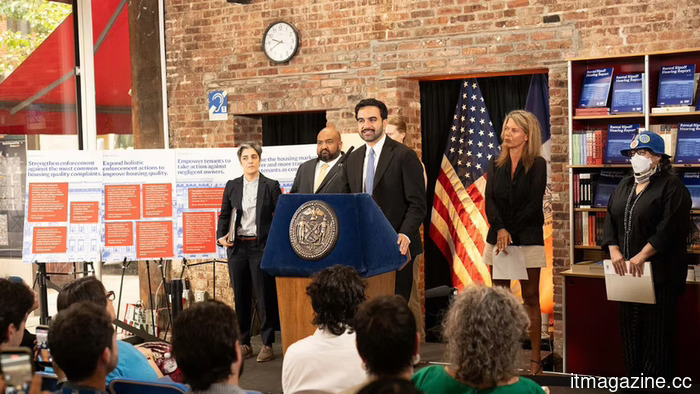 Mamdani is urging landlords in NYC to indicate the use of AI in their apartment images.
New York's Rental Ripoff Report would require landlords to reveal any AI-modified listing images, as outlined in Mayor Mamdani’s 23-point plan for tenants.
Mamdani is urging landlords in NYC to indicate the use of AI in their apartment images.
New York's Rental Ripoff Report would require landlords to reveal any AI-modified listing images, as outlined in Mayor Mamdani’s 23-point plan for tenants.
 Xi states at the World AI Conference that no one nation should dominate AI.
In his inaugural keynote at the WAIC, Xi Jinping promoted open AI for developing nations while also addressing US export restrictions, just a day after China established a competing AI organization.
Xi states at the World AI Conference that no one nation should dominate AI.
In his inaugural keynote at the WAIC, Xi Jinping promoted open AI for developing nations while also addressing US export restrictions, just a day after China established a competing AI organization.
The founder of Network School stated that the investigation by Malaysian immigration threatens its technological goals.
Balaji Srinivasan halted a US$500 million investment and requested a meeting with Anwar after Malaysian officials examined 266 residents in his Forest City network-state community.