
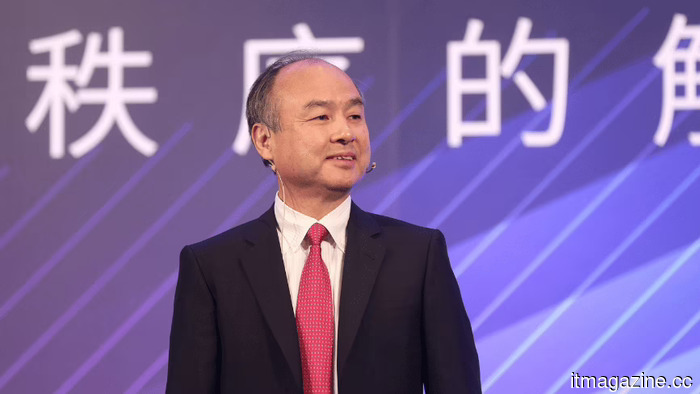
SoftBank has arranged a new $60 billion bond to ensure continued funding for its investment in OpenAI.
Sixty billion dollars represents a significant amount of bonds, even by SoftBank Group's standards. The Japanese conglomerate is reportedly preparing to secure up to that amount in new debt, as reported by Bloomberg, a figure that surpasses any previous issuances by Masayoshi Son's firm and is directly linked to its growing investment in OpenAI.
This plan comes after a series of smaller fundraising efforts, including a record ¥600 billion ($4.1 billion) retail bond and a series of dollar and euro deals aimed at international investors.
Additionally, it builds on an existing foundation of borrowing already established for OpenAI, which includes a $40 billion bridge loan and a pending $10 billion margin loan secured by SoftBank's OpenAI shares.
The $60 billion figure is best understood as an upper limit rather than a single verified transaction; it is expected to encompass several tranches across different currencies and types of investors rather than one major institutional offering.
To date, SoftBank has issued approximately $7.8 billion in bonds in 2026, so viewing this figure as a target for a program rather than a fixed sum makes it seem somewhat less shocking. Even presented this way, it indicates an ambition to borrow at a rate the group has never pursued before.
The intention behind this initiative is quite clear. Son has committed over $60 billion to OpenAI in $10 billion increments, with the second tranche concluding on July 1 under a bridge facility and a third planned for October.
Bridge debt was intended to be a temporary solution. The previous facility was shared among eight banks, and a bond of this magnitude would enable SoftBank to convert its short-term borrowing into longer-term, more stable financing, trading bank loans for the patience of retail and institutional investors.
These investors have made SoftBank pay for this luxury. Its most recent yen retail bond had a coupon rate of 5.12%, the highest for any of its yen-denominated debt so far, up from 4.97% on a similar issuance earlier in the year.
The choice to target retail investors is intentional. Japanese households have traditionally supported their national champion through brokerages, and this captive demand allows SoftBank to raise significant amounts domestically, even as global investors require higher returns for anything associated with AI.
The overall debt situation is where the narrative shifts. SoftBank currently carries around ¥7 trillion in outstanding bonds and has informed investors it aims to maintain a loan-to-value ratio below 25%, a discipline that becomes more challenging with each payment to OpenAI.
Analysts have raised concerns about a potential liquidity crunch, as the group relies on valuable assets like its stake in Arm to support new borrowing.
The primary concern is less about financial stability and more about timing—whether cash inflows will match the pace at which obligations become due.
A bond issuance of this scale makes the underlying intention obvious. Son is ready to leverage the balance sheet in accordance with the demands of the AI strategy, even if it means paying record coupon rates.
Credit rating agencies have taken note. S&P revised its outlook to negative in March following a $30 billion investment in OpenAI, citing the concentration in early-stage and privately held ventures, while Moody’s maintains SoftBank at a Ba2 rating, solidly in speculative territory.
Part of the complexity lies in SoftBank's role as a publicly traded proxy for OpenAI itself. Any fluctuations in the AI narrative are reflected in its stock price, and a postponed listing leaves public markets valuing the entire venture based on speculation rather than concrete figures.
None of this intimidates the founder, who argues that AI will cost the global economy $5 trillion annually by 2040. From that perspective, a $60 billion bond is less of a splurge and more of an initial investment, with early adoption being the core strategy.
The immediate challenge is timing. With OpenAI's long-anticipated listing still awaited and the third $10 billion tranche due in October, SoftBank must rely on a favorable bond market and the willingness of investors, as a $60 billion ask is significant for any market to absorb all at once.
Other articles
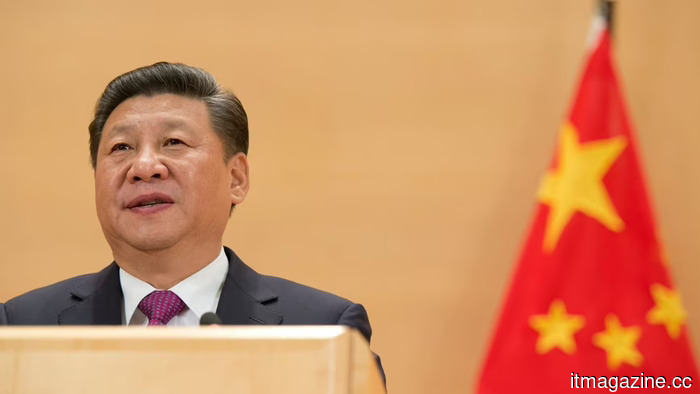 Xi asserts at the World AI Conference that no one nation should have a monopoly on AI.
Xi Jinping delivered his inaugural keynote at the WAIC, advocating for open AI for developing nations while criticizing US export restrictions, just a day after China introduced a competing AI organization.
Xi asserts at the World AI Conference that no one nation should have a monopoly on AI.
Xi Jinping delivered his inaugural keynote at the WAIC, advocating for open AI for developing nations while criticizing US export restrictions, just a day after China introduced a competing AI organization.
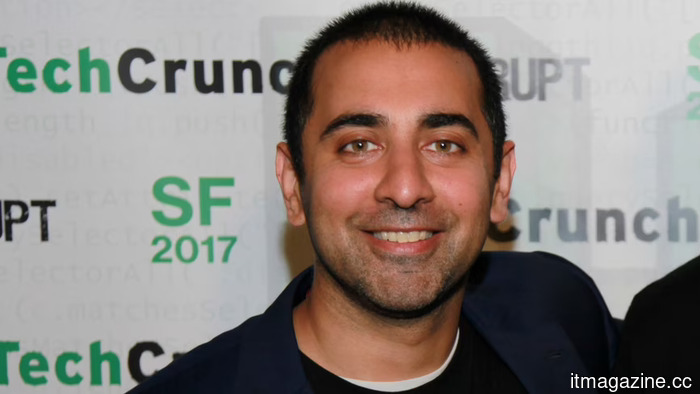 The founder of Network School states that the investigation by Malaysian immigration could jeopardize its technological aspirations.
Balaji Srinivasan halted a US$500 million initiative and requested a meeting with Anwar after Malaysian officials examined 266 residents of his Forest City network-state community.
The founder of Network School states that the investigation by Malaysian immigration could jeopardize its technological aspirations.
Balaji Srinivasan halted a US$500 million initiative and requested a meeting with Anwar after Malaysian officials examined 266 residents of his Forest City network-state community.
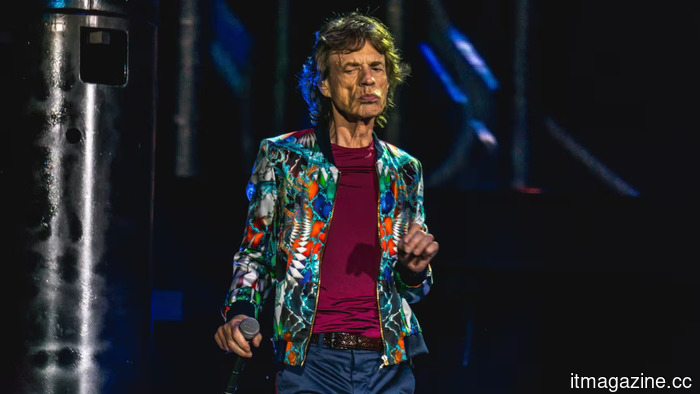 Mick Jagger claims that AI is acceptable for musicians, as long as it doesn't mimic his voice.
Mick Jagger supports AI as a creative resource but firmly opposes software that replicates the Rolling Stones, coinciding with the band's release of Foreign Tongues.
Mick Jagger claims that AI is acceptable for musicians, as long as it doesn't mimic his voice.
Mick Jagger supports AI as a creative resource but firmly opposes software that replicates the Rolling Stones, coinciding with the band's release of Foreign Tongues.
 You can now connect your favorite applications to AI Mode in Google Search to accomplish tasks.
The AI Mode in Google Search can now interact with applications such as Instacart, Canva, and YouTube Music to perform tasks on your behalf.
You can now connect your favorite applications to AI Mode in Google Search to accomplish tasks.
The AI Mode in Google Search can now interact with applications such as Instacart, Canva, and YouTube Music to perform tasks on your behalf.
 You can now modify videos in Google Vids just by explaining the alterations you want.
Google has introduced Gemini Omni and personal avatars to Vids, offering paid users innovative methods for creating, editing, and showcasing videos without relying on conventional editing tools.
You can now modify videos in Google Vids just by explaining the alterations you want.
Google has introduced Gemini Omni and personal avatars to Vids, offering paid users innovative methods for creating, editing, and showcasing videos without relying on conventional editing tools.
 Coca-Cola suspends Fairlife production in the US following a ransomware attack.
Coca-Cola has reported that its fairlife dairy division experienced a ransomware attack, leading to a halt in all US production as the company looks into the incident.
Coca-Cola suspends Fairlife production in the US following a ransomware attack.
Coca-Cola has reported that its fairlife dairy division experienced a ransomware attack, leading to a halt in all US production as the company looks into the incident.
SoftBank has arranged a new $60 billion bond to ensure continued funding for its investment in OpenAI.
SoftBank is said to be preparing a new bond issuance of as much as $60 billion to support its initiatives with OpenAI, a goal that would surpass its previous record retail transaction and assess its leverage.