
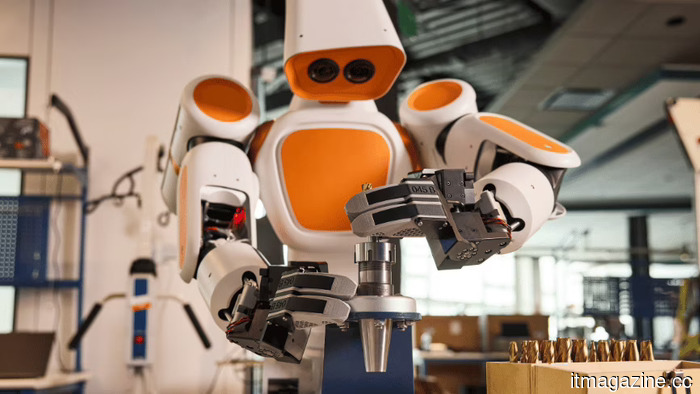
Walden Robotics debuts with $300 million in funding and legs not included.
Walden Robotics has emerged from stealth mode with $300 million in funding and a valuation of $1.1 billion. This spin-off from Toyota designs humanoid robots for factories, intentionally omitting legs from their design.
Russ Tedrake explained to Bloomberg, “Factory workers aren’t prepared for them and don’t want them yet,” which is why the new robots are equipped with wheels instead of legs. Tedrake oversees Walden Robotics, a startup based in Cambridge that debuted on Wednesday with significant funding and valuation, and its robots are already operational in a Toyota factory.
The seed funding round was jointly led by Toyota and Deviation Capital, with contributions from Nvidia, Boeing, Samsung Ventures, and CoreWeave Ventures. This impressive list of investors is notable for a company that's only been around for six months.
Choosing wheels over legs, Tedrake highlights both safety and practicality. Wheeled robots can navigate around humans more easily, adhering to existing safety regulations in factories. Additionally, they can accommodate larger batteries and enhanced computing power, making them more suitable for full-shift operations compared to humanoid robots.
Walden is not merely a concept; its robots have been actively working since February in a Toyota plant in North America, performing tasks such as loading and unloading car parts, cleaning machinery, and preparing components for assembly, all alongside human colleagues during eight-hour shifts.
Originating from the Toyota Research Institute in January, Walden develops its hardware, software, and AI systems. Its robots utilize Large Behavior Models, a type of AI co-developed by the team that enables them to learn new tasks and enhance their capabilities through experience. The company’s clientele includes various sectors such as automotive, aerospace, semiconductors, electronics, logistics, and life sciences.
Tedrake emphasized at the launch, “Delivering genuine value to customers requires a profound understanding and respect for current manufacturing processes.” Toyota's chief technology officer, Hiroki Nakajima, expressed this in terms of kaizen and jidoka, emphasizing the importance of keeping people at the forefront.
Walden is entering a highly competitive field, with companies like 1X, LimX, and Booster investing billions in humanoid robotics. Car manufacturers are also integrating these robots into their facilities, with Hyundai expanding its use of Boston Dynamics’ Atlas. Morgan Stanley predicts that the market could exceed $5 trillion by 2050.
Tedrake remains cautious about expectations, stating, “Everyone recognizes the opportunity’s scale and the technology appears ready, but success is not guaranteed. It’s essential to consider the business case and unit economics.”
The company's name, Walden—after Thoreau—is intended to convey the idea of robots that allow people to engage in more valuable work rather than replacing them. Regardless of whether wheels or legs dominate factory environments, Walden Robotics has a significant advantage and a working model in a Toyota plant to validate its approach.
Other articles
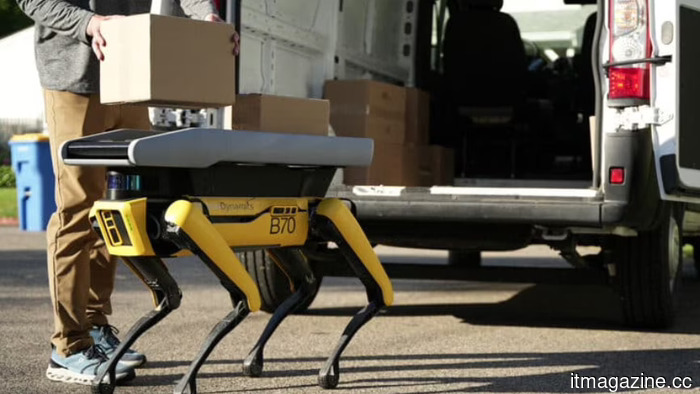 Boston Dynamics is evaluating Spot as a delivery robot that moves from the van to the front door.
Boston Dynamics equipped Spot with a conveyor belt designed to transport packages from delivery vans to front doors, focusing on the final 50 feet of the logistics chain.
Boston Dynamics is evaluating Spot as a delivery robot that moves from the van to the front door.
Boston Dynamics equipped Spot with a conveyor belt designed to transport packages from delivery vans to front doors, focusing on the final 50 feet of the logistics chain.
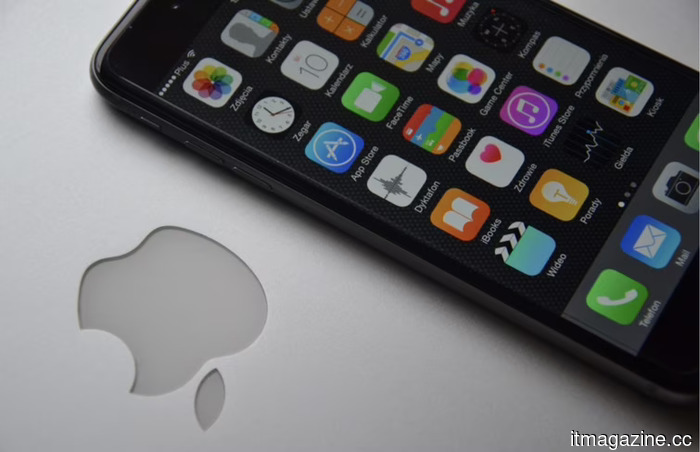 Apple seeks to acquire AI chip companies to improve its servers.
Apple is pursuing acquisitions in the AI chip sector following the underperformance of its own M2 Ultra servers, marking an unusual move in mergers and acquisitions while Nvidia continues to support the Gemini-based Siri.
YouTube is contesting the ruling regarding its role in social media addiction.
YouTube has contested the significant ruling regarding social media addiction, aligning with Meta, and asserts that it is not a social media platform in the same way as Instagram or TikTok.
Apple seeks to acquire AI chip companies to improve its servers.
Apple is pursuing acquisitions in the AI chip sector following the underperformance of its own M2 Ultra servers, marking an unusual move in mergers and acquisitions while Nvidia continues to support the Gemini-based Siri.
YouTube is contesting the ruling regarding its role in social media addiction.
YouTube has contested the significant ruling regarding social media addiction, aligning with Meta, and asserts that it is not a social media platform in the same way as Instagram or TikTok.
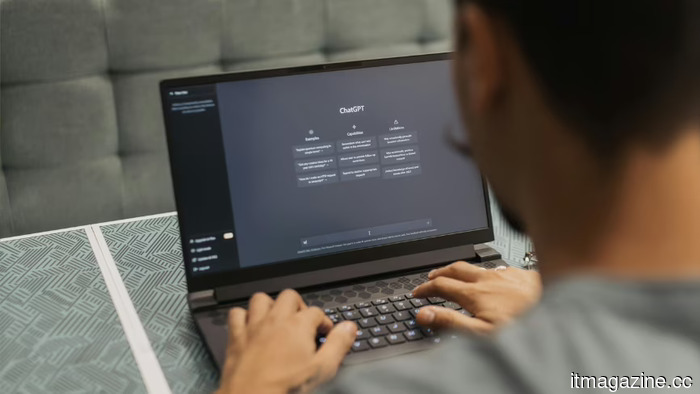 OpenAI is displaying Kalshi's World Cup betting odds within ChatGPT, marking its initial partnership with a prediction market.
ChatGPT now shows Kalshi prediction market odds for the 2026 World Cup games, representing OpenAI's initial collaboration with a regulated betting exchange.
OpenAI is displaying Kalshi's World Cup betting odds within ChatGPT, marking its initial partnership with a prediction market.
ChatGPT now shows Kalshi prediction market odds for the 2026 World Cup games, representing OpenAI's initial collaboration with a regulated betting exchange.
 Suno AI music was trained on over 2 million songs scraped from YouTube.
A breach of Suno AI music revealed its source code, indicating that it harvested millions of tracks from YouTube, Deezer, and Genius to develop its song generator.
Suno AI music was trained on over 2 million songs scraped from YouTube.
A breach of Suno AI music revealed its source code, indicating that it harvested millions of tracks from YouTube, Deezer, and Genius to develop its song generator.
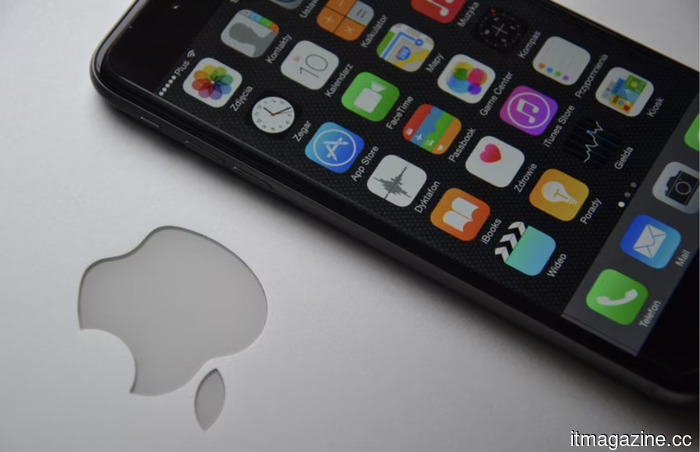 Apple seeks to acquire AI chip companies to enhance its servers.
Apple is seeking to acquire AI chip companies following the underperformance of its own M2 Ultra servers, marking an unusual move in mergers and acquisitions while Nvidia continues to drive the Gemini-based Siri.
Apple seeks to acquire AI chip companies to enhance its servers.
Apple is seeking to acquire AI chip companies following the underperformance of its own M2 Ultra servers, marking an unusual move in mergers and acquisitions while Nvidia continues to drive the Gemini-based Siri.
Walden Robotics debuts with $300 million in funding and legs not included.
Walden Robotics, a spin-off from Toyota, emerged from stealth mode with $300 million in funding at a valuation of $1.1 billion. Its factory humanoid robots operate on wheels instead of legs.