
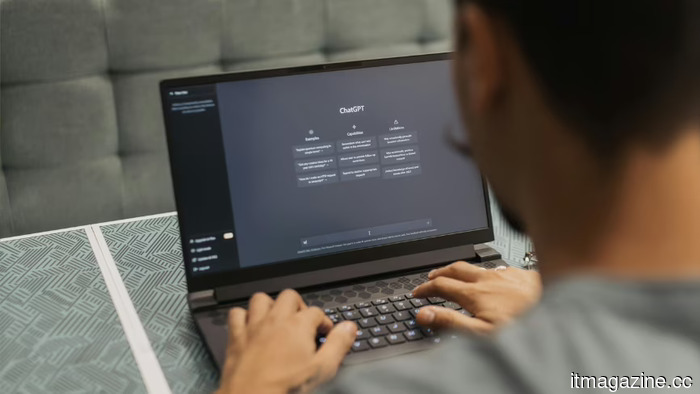
OpenAI is displaying Kalshi's World Cup betting odds within ChatGPT, marking its initial partnership with a prediction market.
**TL;DR:** ChatGPT now includes Kalshi prediction market odds for World Cup matches, marking OpenAI’s initial collaboration with a regulated betting exchange.
OpenAI has started to feature prediction market odds from Kalshi in ChatGPT's search results, representing the company's first partnership with a regulated betting exchange. As reported by the New York Times, this integration displays live odds for the 2026 FIFA World Cup matches labeled with “Source: Kalshi,” but without any outbound links or Kalshi branding. Users are prohibited from placing bets via ChatGPT, and OpenAI's support page clarifies that the data is limited to World Cup-related queries and is intended solely for informational purposes.
The launch occurred alongside the World Cup semifinals, indicating France at approximately 60 percent odds to defeat Spain and England at about 55 percent to prevail over Argentina, based on Kalshi's prediction contracts. Both companies have kept the integration under wraps, and the feature is only visible when users inquire about forthcoming World Cup matches. OpenAI has not revealed if any financial exchanges occurred or if revenue sharing is part of the agreement.
This deal highlights the rapid incorporation of prediction markets into mainstream technology platforms. In late 2025, Kalshi forged an exclusive partnership with CNN to integrate its odds into news broadcasts, where anchor Harry Enten utilizes the data on air. Similarly, in January, competing platform Polymarket secured its own exclusive agreement with Dow Jones to present prediction market data in the Wall Street Journal, Barron’s, and MarketWatch.
Google has also incorporated data from both Kalshi and Polymarket into its search results and Google Finance pages, granting visibility to the two largest US prediction market platforms for millions of users who may not have visited either website directly. Kalshi, regulated by the Commodity Futures Trading Commission, is positioning itself as a premium platform for prediction markets, raising around one billion dollars with a valuation near $22 billion. This year, sports have become the most actively traded category on both platforms, with the World Cup driving unprecedented trading volumes.
For OpenAI, this partnership signifies a new type of data integration for ChatGPT, which earlier this year added advertising and shopping features to its search results. Displaying real-time betting odds occupies a gray area between informative content and gambling promotion, and OpenAI’s choice to omit Kalshi branding and prevent direct betting implies the company recognizes the sensitivity of the issue. The assistance page’s disclaimer that users “cannot place bets through ChatGPT” resembles both a legal disclaimer and a product limitation.
Despite their quick acceptance into the mainstream, prediction markets remain contentious. State regulators have raised concerns regarding specific contract types for both Kalshi and Polymarket, and Google has announced a ban on prediction market browser extensions starting in August. The impact of showcasing betting odds within an AI chatbot used by over a billion people weekly—whether it normalizes prediction markets or merely illustrates their deep integration into the information ecosystem—is a question neither OpenAI nor Kalshi seems willing to address publicly.
Other articles
 Apple seeks to acquire AI chip companies to improve its servers.
Apple is pursuing acquisitions in the AI chip sector following the underperformance of its own M2 Ultra servers, marking an unusual move in mergers and acquisitions while Nvidia continues to support the Gemini-based Siri.
Apple seeks to acquire AI chip companies to improve its servers.
Apple is pursuing acquisitions in the AI chip sector following the underperformance of its own M2 Ultra servers, marking an unusual move in mergers and acquisitions while Nvidia continues to support the Gemini-based Siri.
 What are the simplest methods for accepting payments both online and in person?
This post is provided in collaboration with QuickBooks. Today's customers anticipate that businesses will accommodate payments in the most convenient ways, whether it's by tapping a card at the checkout, settling an invoice via phone, or making an online purchase. For small businesses, fulfilling these expectations is crucial, but handling various payment systems [...]
What are the simplest methods for accepting payments both online and in person?
This post is provided in collaboration with QuickBooks. Today's customers anticipate that businesses will accommodate payments in the most convenient ways, whether it's by tapping a card at the checkout, settling an invoice via phone, or making an online purchase. For small businesses, fulfilling these expectations is crucial, but handling various payment systems [...]
 Apple seeks to acquire AI chip companies to enhance its servers.
Apple is seeking to acquire AI chip companies following the underperformance of its own M2 Ultra servers, marking an unusual move in mergers and acquisitions while Nvidia continues to drive the Gemini-based Siri.
Apple seeks to acquire AI chip companies to enhance its servers.
Apple is seeking to acquire AI chip companies following the underperformance of its own M2 Ultra servers, marking an unusual move in mergers and acquisitions while Nvidia continues to drive the Gemini-based Siri.
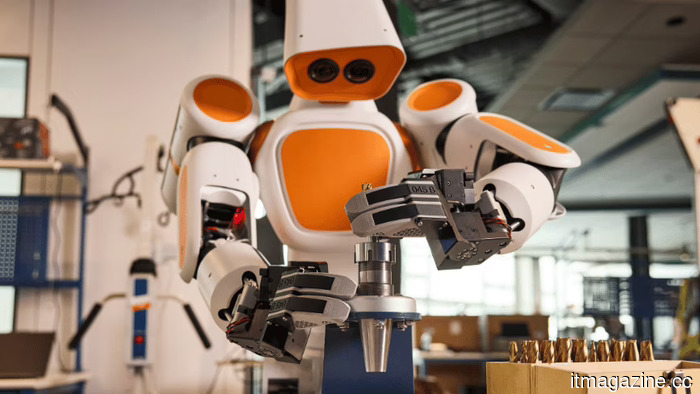 Walden Robotics begins with $300 million in funding, but without legs.
Walden Robotics, a spin-off from Toyota, has emerged from stealth mode with $300 million in funding and a valuation of $1.1 billion. Its factory humanoid robots are designed to move on wheels rather than legs.
Walden Robotics begins with $300 million in funding, but without legs.
Walden Robotics, a spin-off from Toyota, has emerged from stealth mode with $300 million in funding and a valuation of $1.1 billion. Its factory humanoid robots are designed to move on wheels rather than legs.
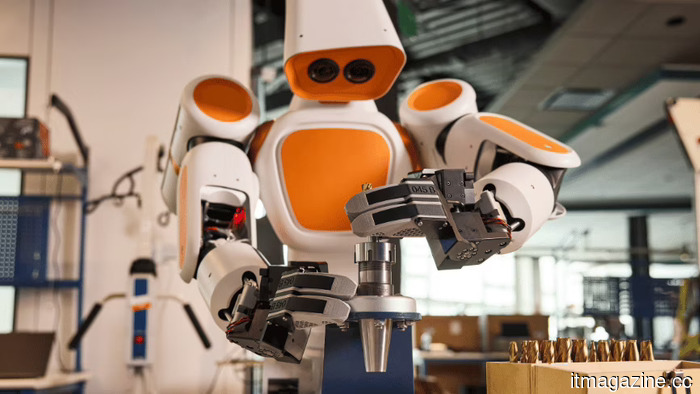 Walden Robotics debuts with $300 million in funding and legs not included.
Walden Robotics, a spin-off from Toyota, emerged from stealth mode with $300 million in funding at a valuation of $1.1 billion. Its factory humanoid robots operate on wheels instead of legs.
Walden Robotics debuts with $300 million in funding and legs not included.
Walden Robotics, a spin-off from Toyota, emerged from stealth mode with $300 million in funding at a valuation of $1.1 billion. Its factory humanoid robots operate on wheels instead of legs.
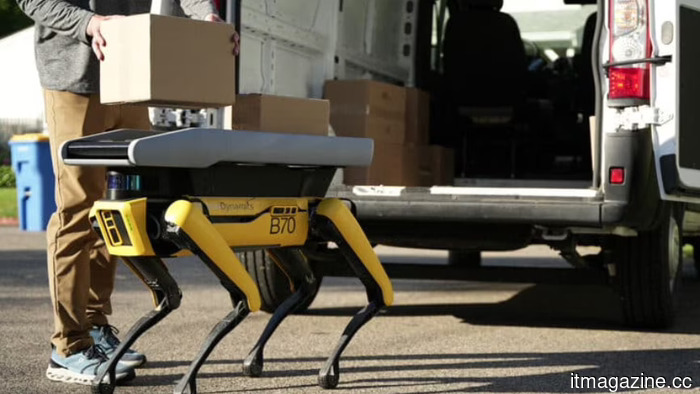 Boston Dynamics is evaluating Spot as a delivery robot that moves from the van to the front door.
Boston Dynamics equipped Spot with a conveyor belt designed to transport packages from delivery vans to front doors, focusing on the final 50 feet of the logistics chain.
Boston Dynamics is evaluating Spot as a delivery robot that moves from the van to the front door.
Boston Dynamics equipped Spot with a conveyor belt designed to transport packages from delivery vans to front doors, focusing on the final 50 feet of the logistics chain.
OpenAI is displaying Kalshi's World Cup betting odds within ChatGPT, marking its initial partnership with a prediction market.
ChatGPT now shows Kalshi prediction market odds for the 2026 World Cup games, representing OpenAI's initial collaboration with a regulated betting exchange.