
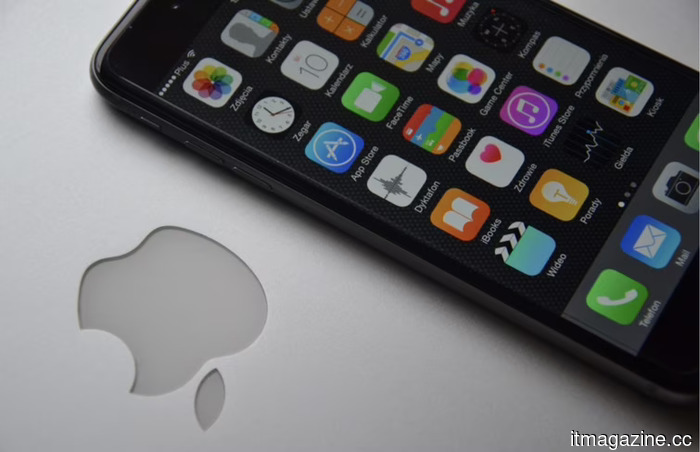
Apple seeks to acquire AI chip companies to improve its servers.
Apple has developed a trillion-dollar enterprise based on self-designed chips. However, it is struggling to produce the AI chips it needs quickly enough, prompting the company to seek acquisitions.
According to The Information, the iPhone manufacturer is on the lookout for AI chip acquisitions. In recent months, it has engaged with bankers about potential deals and reached out to chip startups to inquire about their willingness to sell. This marks an unusual approach for a company that rarely makes large purchases.
The motivation behind this shift is a significant challenge that Apple cannot overlook. Its AI servers, which utilize internally designed M2 Ultra chips, are facing difficulties. The heavy processing required for the new, Gemini-powered Siri is instead being handled by Nvidia chips within Google’s cloud. Apple made an attempt to utilize its own machines for the task, but they fell short.
The delayed chip
Apple is developing its own server chip, known as Baltra, which was expected to launch this year but has been postponed. Bloomberg reports that a chip capable of competing with Nvidia might not be available until 2029, with an M5 Ultra upgrade anticipated to fill the gap in the meantime.
The latest updates from the EU tech sector, a piece from our founder Boris, and some questionable AI-generated artwork are now available. Subscriptions are free and delivered weekly to your inbox. Sign up today!
Pursuing acquisitions would mark a departure from Apple's usual practices. Its largest acquisition to date was the $3 billion purchase of Beats in 2014, while its chip empire was built primarily on the smaller acquisition of PA Semi for $278 million in 2008.
Even this year's expenditures appear modest compared to its competitors. Apple spent approximately $2 billion on the Israeli AI startup Q.ai, making it its second-largest recorded deal.
A readiness to invest
Two indicators suggest that Apple is prepared to increase its spending. CFO Kevan Parekh informed analysts that the company would abandon its longstanding goal of maintaining cash equal to its debt levels. This change opens up financial resources, with Apple having $45.6 billion in cash at the end of March.
The second indicator is personnel changes. Tim Cook will transition the CEO role to hardware lead John Ternus in September, while chip chief Johny Srouji will now oversee all hardware at Apple. Both individuals have engineering backgrounds and may be more inclined to pursue acquisitions to address their challenges.
Continuing to rely on others
Acquisitions are just one strategy. Apple is also in discussions with PrismML, a startup that specializes in compressing large AI models for iPhone compatibility. Furthermore, Apple has committed to purchasing $30 billion worth of chips from Broadcom, extending their partnership to 2031.
All signs point to a common goal: Apple aims to step away from Nvidia and avoid the broader memory and hardware constraints that are reshaping the industry. While designing its own silicon is the long-term goal, acquiring an existing solution could provide a quicker alternative. For a company that values its independence, the need for either approach highlights a significant story.
Other articles
 The UK has recently suggested implementing a midnight curfew for teenagers on social media, which they can easily circumvent in a matter of seconds.
The UK government has suggested implementing a midnight curfew that would prevent 16 and 17-year-olds from accessing apps such as Instagram, TikTok, and YouTube, though this limitation can be easily disabled with just a few taps.
The UK has recently suggested implementing a midnight curfew for teenagers on social media, which they can easily circumvent in a matter of seconds.
The UK government has suggested implementing a midnight curfew that would prevent 16 and 17-year-olds from accessing apps such as Instagram, TikTok, and YouTube, though this limitation can be easily disabled with just a few taps.
 Miles Wang departs from OpenAI to join a $2 billion AI pharmaceuticals startup.
Miles Wang, a researcher at OpenAI, is negotiating to secure $200 million at a valuation of $2 billion for a yet-to-be-named AI drug-discovery startup that currently lacks a product.
Miles Wang departs from OpenAI to join a $2 billion AI pharmaceuticals startup.
Miles Wang, a researcher at OpenAI, is negotiating to secure $200 million at a valuation of $2 billion for a yet-to-be-named AI drug-discovery startup that currently lacks a product.
 Boston Dynamics is experimenting with Spot as a delivery robot that walks from the van to the front door.
Boston Dynamics equipped Spot with a conveyor belt to transport packages from delivery vans to front doors, focusing on the final 50 feet of the logistics process.
Boston Dynamics is experimenting with Spot as a delivery robot that walks from the van to the front door.
Boston Dynamics equipped Spot with a conveyor belt to transport packages from delivery vans to front doors, focusing on the final 50 feet of the logistics process.
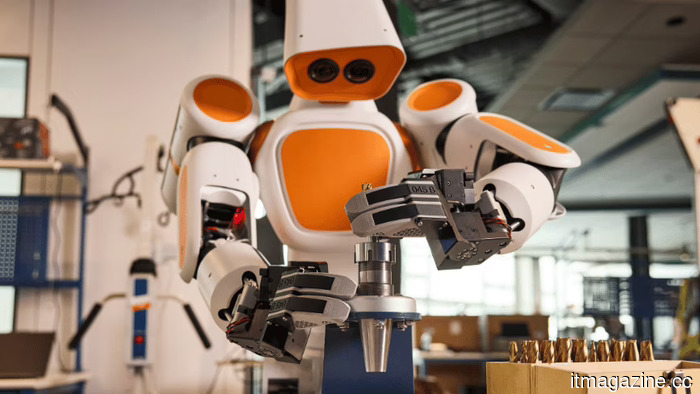 Walden Robotics begins with $300 million in funding, but without legs.
Walden Robotics, a spin-off from Toyota, has emerged from stealth mode with $300 million in funding and a valuation of $1.1 billion. Its factory humanoid robots are designed to move on wheels rather than legs.
Walden Robotics begins with $300 million in funding, but without legs.
Walden Robotics, a spin-off from Toyota, has emerged from stealth mode with $300 million in funding and a valuation of $1.1 billion. Its factory humanoid robots are designed to move on wheels rather than legs.
 Apple increases AppleCare+ prices as the memory shortage transitions from hardware to services.
Apple has increased the monthly AppleCare+ subscription fees for Macs and iPads by 50 cents, continuing a trend of price hikes influenced by the global shortage of memory chips.
Apple increases AppleCare+ prices as the memory shortage transitions from hardware to services.
Apple has increased the monthly AppleCare+ subscription fees for Macs and iPads by 50 cents, continuing a trend of price hikes influenced by the global shortage of memory chips.
Apple seeks to acquire AI chip companies to improve its servers.
Apple is pursuing acquisitions in the AI chip sector following the underperformance of its own M2 Ultra servers, marking an unusual move in mergers and acquisitions while Nvidia continues to support the Gemini-based Siri.