
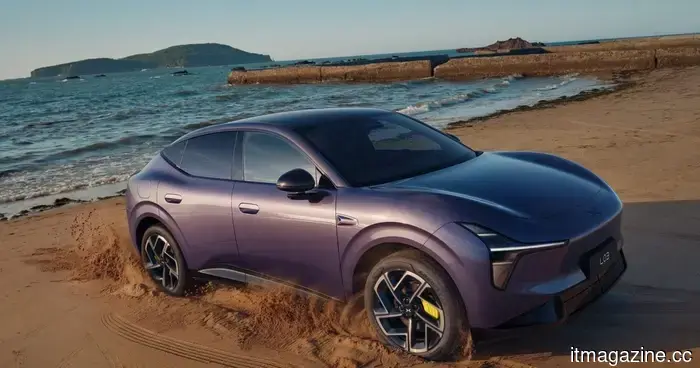
This stylish Chinese electric vehicle combines supercar aesthetics with three artificial intelligence systems.
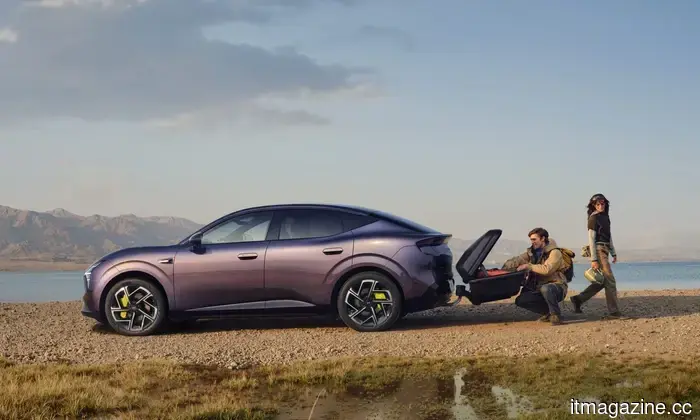
The Xpeng L03 is an AI supercomputer cleverly designed as a sleek family SUV.
Xpeng's newest electric vehicle boasts enough computing power to make the phrase “smart car” seem more plausible than it generally does. The Xpeng L03 was launched simultaneously in Europe and China on July 16, with the company showcasing it in 65 markets. It is available in both a fully electric version and an L03 Power X range-extender. This coupe-SUV represents Xpeng’s most globally oriented model to date, though specific prices and sales launch dates have not yet been confirmed.
The L03 features an impressive triple Turing AI-chip setup, providing up to 2,250 TOPS of computing capability. This system fuels Xpeng’s next-gen NGP system, known as VLA 2.0, which the company plans to gradually introduce in Europe, starting in 2027. Xpeng characterizes VLA 2.0 as a foundation model for interpreting complex road environments and determining suitable driving actions. However, it remains a driver-assistance system, meaning that drivers are still responsible for controlling and monitoring the vehicle.
Additionally, the L03 will be the first model from Xpeng to utilize a collaboration with Google Maps. Xpeng claims to be the first automaker in the Asia-Pacific region to offer a vehicle with the Google Maps Auto SDK. Navigation will be integrated directly into Xpeng’s interface, eliminating the need for users to open the Google Maps app or mirror their smartphones. The mapping data will also enhance the NGP and the traditional XPILOT Assist system, similar to Rivian's integration of Google Maps for easier navigation.
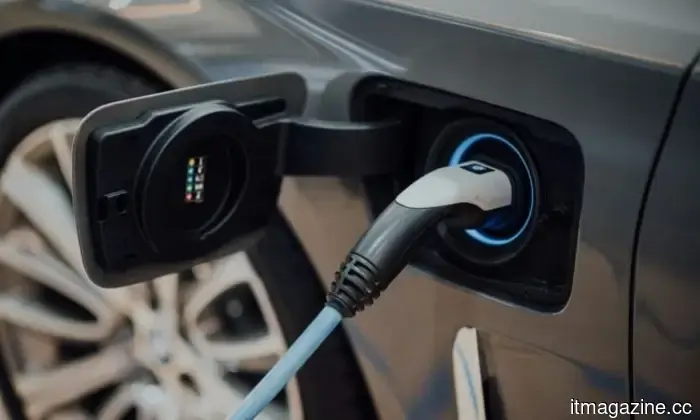
Xpeng will release the L03 as both a battery-electric vehicle and an extended-range version that uses a gasoline engine to generate electricity for longer journeys. Official figures suggest that the fully electric L03 can achieve a CLTC range of up to 625 km, or 388 miles, while the Power X model boasts a claimed CLTC range of 1,330 km, or 826 miles, including 315 km of electric-only driving. Although international WLTP ratings will likely be lower, no testing results have been provided yet.
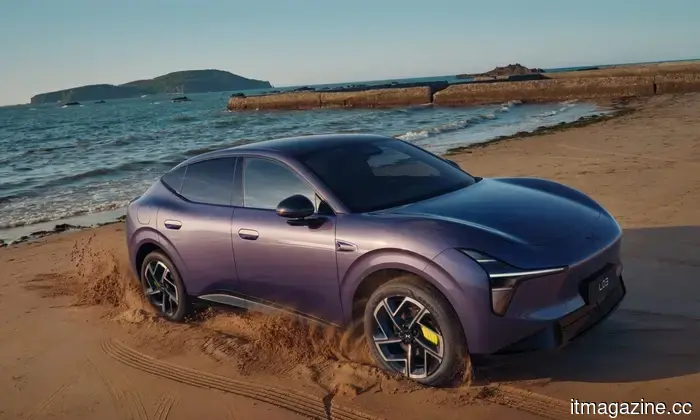
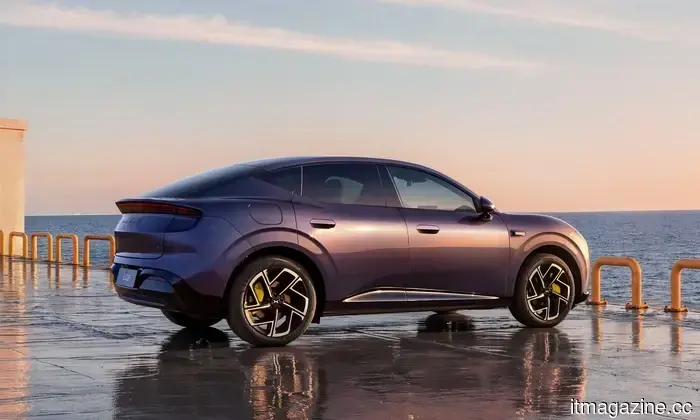
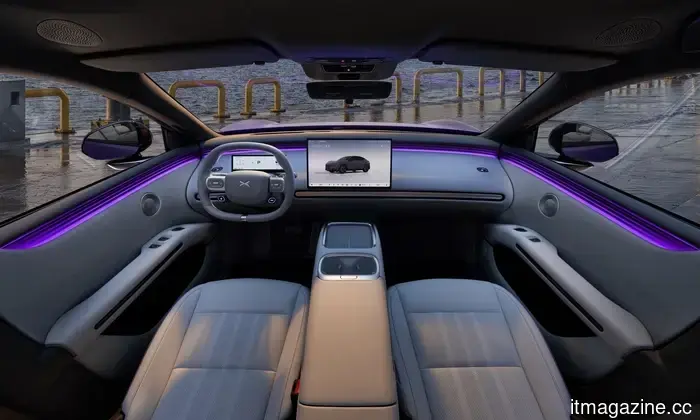
For charging, Xpeng estimates just 19.1 minutes to charge the battery from 10% to 80%. The vehicle's design was spearheaded by former Ferrari exterior design chief JuanMa Lopez. Its broad stance, sloping roofline, frameless doors, and a drag coefficient of 0.228 give it a sportier appearance compared to typical family crossovers. Inside, there is a generous 15.6-inch display, ambient lighting, and 37 storage compartments, in addition to ample cargo space.
Preorders for the vehicle opened in China in July at a starting price of 143,800 yuan, approximately $21,200, although this pricing offers little insight for European and other markets.
Vikhyaat Vivek is a technology journalist and reviewer with seven years of experience focusing on consumer hardware.
A new sodium battery demonstrates remarkable charging speeds, but it won’t be found in electric vehicles just yet.
The advancement promises to enhance fast charging and battery longevity, but the results have not been shown in a production-sized pack.
A newly developed sodium-metal battery has achieved charging rates that render current EVs significantly slower. In lab tests, the cell functioned at a 15C rate, allowing it to complete a charge or discharge in about four minutes. However, this does not imply that researchers could simply plug an electric car into the charger and have it fully charged while the driver grabs coffee. The results were derived from a small experimental cell utilizing a new quasi-solid electrolyte, while the performance of larger pouch-cell prototypes was considerably less impressive.
The Apple Car may be gone, but it laid the groundwork for Apple Intelligence.
Over ten years of development on a discontinued car project reportedly established the basis for Apple Intelligence.
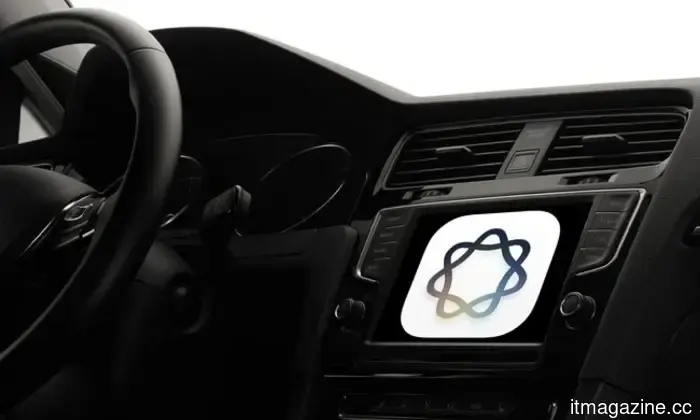
Although the Apple Car never reached production, it seemingly paved the way for Apple's ambitions in artificial intelligence. As reported by Bloomberg’s Mark Gurman, the scrapped autonomous vehicle initiative, which consumed over a decade of effort and more than $10 billion before being abandoned in 2024, ultimately formed the technological foundation for Apple Intelligence. Ironically, one of Apple's costliest failures could turn out to be one of its most significant long-term investments. The Apple Car compelled Apple to adopt the mindset of an AI company.
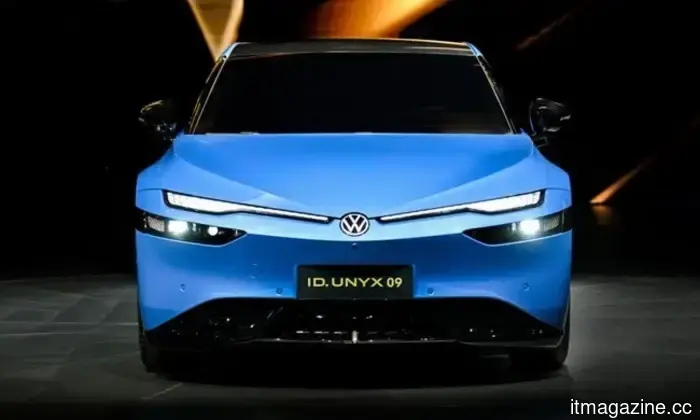
Volkswagen's ID. Unyx 09 has leaked, and it’s the type of EV I hope to see in the U.S.
VW's collaboration with Xpeng is producing exactly what we had hoped for.
I’ve been closely observing Volkswagen's Chinese lineup getting more exciting over the past two years, but the ID. Unyx 09 could be the key moment when it becomes thrilling not just for Chinese consumers, but for international buyers as well. Regulatory documents from China’s Ministry of Industry and Information Technology, Batch 409, have revealed

Other articles
 This intelligent ring offers a blood pressure claim that neither Apple nor Oura has yet provided.
The $399 Signal Ring claims to provide cuff-free systolic and diastolic measurements without the need for calibration. However, the absence of FDA approval and the lack of published clinical data suggest that retaining the traditional arm cuff is the more prudent choice.
This intelligent ring offers a blood pressure claim that neither Apple nor Oura has yet provided.
The $399 Signal Ring claims to provide cuff-free systolic and diastolic measurements without the need for calibration. However, the absence of FDA approval and the lack of published clinical data suggest that retaining the traditional arm cuff is the more prudent choice.
 Oracle is at the forefront of developing an air-gapped cloud for Japan.
Oracle is leading the effort to develop an air-gapped cloud for Japan that is disconnected from the internet, as the United States encourages Tokyo to defend against Chinese cyberattacks.
Oracle is at the forefront of developing an air-gapped cloud for Japan.
Oracle is leading the effort to develop an air-gapped cloud for Japan that is disconnected from the internet, as the United States encourages Tokyo to defend against Chinese cyberattacks.
 The UK abandons its proposal for VPN restrictions.
The UK has abandoned its plan to impose VPN restrictions following its own findings that children utilize VPNs primarily for privacy reasons rather than to circumvent age verification. The responsibility now lies with the platforms.
The UK abandons its proposal for VPN restrictions.
The UK has abandoned its plan to impose VPN restrictions following its own findings that children utilize VPNs primarily for privacy reasons rather than to circumvent age verification. The responsibility now lies with the platforms.
 This Game of the Year, exclusive to PS5, is now available on PC… in a way.
Astro Bot has entered an early boot phase via the experimental SharpEmu PS5 emulator, indicating hopeful advancements, although it currently does not provide any form of playable gameplay.
This Game of the Year, exclusive to PS5, is now available on PC… in a way.
Astro Bot has entered an early boot phase via the experimental SharpEmu PS5 emulator, indicating hopeful advancements, although it currently does not provide any form of playable gameplay.
 A NeuroAI startup founded by a pioneer of Face ID has secured $52 million in funding.
Hemispheric, a NeuroAI startup co-founded by a pioneer of Face ID technology, secured $52 million for Descartes, a model with 6 billion parameters that non-invasively interprets brain activity.
A NeuroAI startup founded by a pioneer of Face ID has secured $52 million in funding.
Hemispheric, a NeuroAI startup co-founded by a pioneer of Face ID technology, secured $52 million for Descartes, a model with 6 billion parameters that non-invasively interprets brain activity.
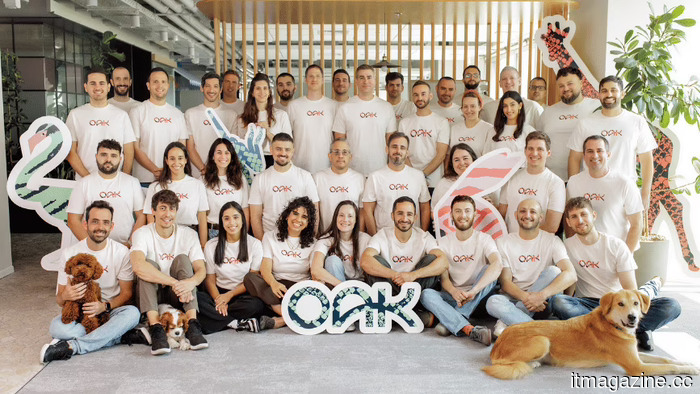 Oak secures $60 million for an AI-driven identity platform.
Israeli startup Oak has secured $60 million for an AI-native identity platform that manages every user, machine, and AI agent from a unified control panel.
Oak secures $60 million for an AI-driven identity platform.
Israeli startup Oak has secured $60 million for an AI-native identity platform that manages every user, machine, and AI agent from a unified control panel.
This stylish Chinese electric vehicle combines supercar aesthetics with three artificial intelligence systems.
Xpeng’s L03, designed for a global market, features three proprietary AI chips, seamless integration with Google Maps, two powertrain options, and ample towing and cargo capacity suitable for genuine road trips.