
The AI-driven government of Abu Dhabi manages everyday life.
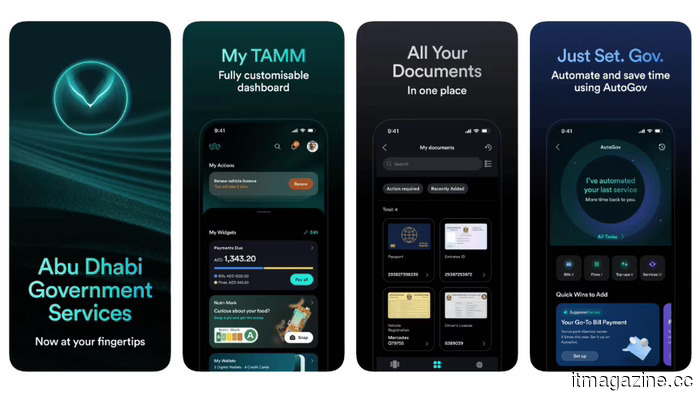
While Western nations debate how to regulate artificial intelligence, Abu Dhabi has discreetly developed a government that is native to AI. In the capital of the UAE, a single app has the ability to renew your ID, schedule doctor appointments, and pay your parking fines—often even before you request these services.
Most governments are still in the process of outlining their initial AI strategies, whereas Abu Dhabi is already implementing one.
The emirate enjoys widespread use of an app called TAMM, which translates to "consider it done" in Arabic. It keeps track of the expiration dates for your national ID, health insurance, and vehicle registration. Its "AutoGov" feature goes a step further by managing the necessary paperwork and paying what you owe before you even have to ask for it. Axios’s Mike Allen reported on this after conducting two interviews with the individual overseeing the app.
This individual is Mohamed Al Askar, the director general of TAMM. He describes a government that is AI-native and approaches citizens as customers. If you take a photo of a broken streetlight, the app directs it to the appropriate department, which cannot close your ticket until you confirm the issue has been resolved.
A decade-long investment
The 💜 of EU tech: Recent developments in EU tech, a story from our wise founder Boris, and some questionable AI art. It’s free, delivered weekly to your inbox. Sign up now!
This transformation didn’t occur overnight. In 2017, the UAE appointed the world’s first AI minister. Two years later, it launched MBZUAI in Abu Dhabi, claiming to be the first graduate university exclusively dedicated to AI.
Funding followed suit. Abu Dhabi invests in sovereign AI at a level few nations can match, as part of a broader initiative to transition to a post-oil future. The national strategy aims to make the country a hub for global AI talent by 2031. PwC estimates that AI could contribute $320 billion (around €295 billion) to the Middle East economy by 2030.
The challenge democracies cannot replicate
However, there is a significant limitation. Abu Dhabi can redesign its government around AI because an all-powerful royal family holds control over both the state and the economy. This allows for substantial changes that no elected government could implement, as noted by Axios in its own assessment.
This also presents an uncomfortable reality. An app that acts on your behalf, operated by a government that monitors your ID renewals and parking fines, serves both as a convenience and as a surveillance tool. The system that manages your fines also gathers extensive information about you.
Caught between Washington and Beijing
This investment is now being tested amid conflict. Although the tensions with Iran have unsettled the Gulf region, the UAE insists it remains fully committed to AI. It aims to collaborate with both the United States and China to achieve its goals.
Washington is responding positively. The Wall Street Journal reported that the Trump administration is increasing the UAE’s access to valuable AI chips. This move acknowledges Abu Dhabi’s support during the conflict and culminates a long-term effort to secure U.S. technology.
As a result, Abu Dhabi stands as a case study that the rest of the world is observing. Its AI handles administrative tasks, and its agents take actions independently. The pivotal question that remains is whether a model founded on absolute control can be applicable for governments that are accountable to their voters.
Other articles
 Lucid's stock dropped 40% due to a bankruptcy rumor originating from an EV blog, but a denial was issued just a few hours later.
Lucid's stock fell sharply following a report indicating that AlixPartners was exploring Chapter 11 and privatization alternatives. Lucid refuted the allegations. The shares finished down 16% at $4.62.
Lucid's stock dropped 40% due to a bankruptcy rumor originating from an EV blog, but a denial was issued just a few hours later.
Lucid's stock fell sharply following a report indicating that AlixPartners was exploring Chapter 11 and privatization alternatives. Lucid refuted the allegations. The shares finished down 16% at $4.62.
 Opera's expansion indicates that users are willing to change browsers when presented with options.
Opera's browser is gaining significant market share in the US and UK, demonstrating that when users are offered genuine options, they are willing to abandon the default choice.
Opera's expansion indicates that users are willing to change browsers when presented with options.
Opera's browser is gaining significant market share in the US and UK, demonstrating that when users are offered genuine options, they are willing to abandon the default choice.
 Doubao's AI companions have disappeared. Users have a period of 3 months to take screenshots of what remains.
On July 15, Doubao and Qwen terminated custom AI agents. Doubao provides users with read-only access until October 15, whereas Qwen does not offer any access. Neither platform has a solution for exporting the data.
Doubao's AI companions have disappeared. Users have a period of 3 months to take screenshots of what remains.
On July 15, Doubao and Qwen terminated custom AI agents. Doubao provides users with read-only access until October 15, whereas Qwen does not offer any access. Neither platform has a solution for exporting the data.
 Gold Eagle: the AI cybersecurity hub of the White House
Gold Eagle is the White House's new AI-powered clearinghouse designed to consolidate, prioritize, and manage solutions for cybersecurity vulnerabilities within US critical infrastructure.
Gold Eagle: the AI cybersecurity hub of the White House
Gold Eagle is the White House's new AI-powered clearinghouse designed to consolidate, prioritize, and manage solutions for cybersecurity vulnerabilities within US critical infrastructure.
 Australia instructs AI data centers to contribute more power than they consume.
Albanese unveiled an Office of AI, regulations for data centres regarding net generation, and stringent copyright provisions. However, none of these measures are legally binding as of now.
Australia instructs AI data centers to contribute more power than they consume.
Albanese unveiled an Office of AI, regulations for data centres regarding net generation, and stringent copyright provisions. However, none of these measures are legally binding as of now.
 Zipline is starting a healthcare drone delivery service in partnership with Cleveland Clinic. It has recruited former employees from Tesla and Waymo to help expand the initiative.
Zipline has reached 2.5 million deliveries and is set to commence healthcare delivery in partnership with the Cleveland Clinic. The company has brought on former executives from Tesla, Waymo, and Uber to facilitate further expansion.
Zipline is starting a healthcare drone delivery service in partnership with Cleveland Clinic. It has recruited former employees from Tesla and Waymo to help expand the initiative.
Zipline has reached 2.5 million deliveries and is set to commence healthcare delivery in partnership with the Cleveland Clinic. The company has brought on former executives from Tesla, Waymo, and Uber to facilitate further expansion.
The AI-driven government of Abu Dhabi manages everyday life.
Abu Dhabi's AI-driven government operates through a single app, TAMM, which allows you to renew your ID and settle fines. The downside is that its model is not replicable by any democratic system.