
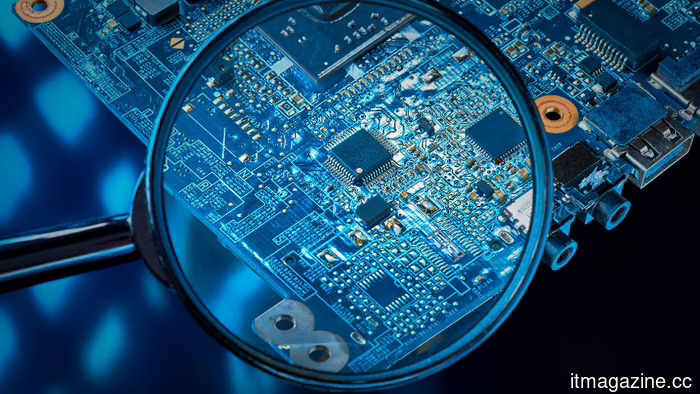
India commits $20 billion to enhance chip production and smartphones as Modi advocates for a domestic mobile brand.
India has committed a total of $19.7 billion, which includes $13.3 billion for semiconductors and $6.5 billion for smartphones. Prime Minister Modi aims to establish an Indian mobile brand to compete with Chinese dominance. On Wednesday, India announced an incentive package amounting to 1.9 trillion rupees ($19.7 billion) to boost domestic production of chips and smartphones. The cabinet approved 1.28 trillion rupees ($13.3 billion) for the semiconductor sector, which encompasses chip design, machine fabrication, research and development, and talent cultivation, along with an additional 625 billion rupees ($6.5 billion) for mobile phone manufacturing. “The Prime Minister has clearly instructed us to create an Indian mobile brand,” stated Technology Minister Ashwini Vaishnaw in New Delhi.
This new initiative builds upon India's $10 billion program launched in 2021, which provided to cover half the expenses associated with establishing semiconductor projects. That initiative attracted companies like Micron Technology and the Tata Group to western Gujarat state, where India's initial chip production has already commenced, and six semiconductor projects totaling $14.7 billion have received approval.
India's strategy is similar to the $52 billion US CHIPS and Science Act, which aims to boost domestic chip production. However, India’s initiative is still in the early phases, with only a few significant projects currently in progress. Governments around the world are racing to develop self-sufficient chip industries to satisfy the growing demand from sectors such as AI, smartphones, vehicles, and consumer appliances. China's chip industry is supported by substantial state-backed investments.
India is working to draw major chip manufacturers by leveraging its engineering workforce, design expertise, and subsidies, replicating the approach it took to lure Apple’s iPhone assembly to the country. Currently, Apple assembles 25% of its iPhones in India, facilitated by production-linked subsidies offered during the pandemic. Additionally, the smartphone subsidies will bolster mobile production by Indian companies in a market largely controlled by Chinese brands. India's broader pursuit of technological self-reliance has gained momentum this year, particularly after the US Anthropic export ban highlighted the risks of reliance on foreign infrastructure. This combined $20 billion commitment supports a strategy that spans from raw silicon to consumer devices and sovereign AI.
Other articles
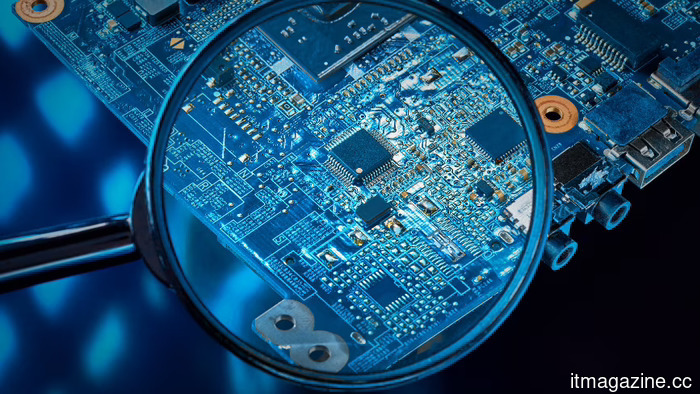 India commits $20 billion to enhance chip and smartphone production as Modi advocates for a domestic mobile brand.
Modi's cabinet has authorized $13.3 billion for semiconductors and $6.5 billion for smartphones. The minister noted that Modi aims to "establish an Indian mobile brand."
India commits $20 billion to enhance chip and smartphone production as Modi advocates for a domestic mobile brand.
Modi's cabinet has authorized $13.3 billion for semiconductors and $6.5 billion for smartphones. The minister noted that Modi aims to "establish an Indian mobile brand."
 Doubao's AI companions have disappeared. Users have a period of 3 months to take screenshots of what remains.
On July 15, Doubao and Qwen terminated custom AI agents. Doubao provides users with read-only access until October 15, whereas Qwen does not offer any access. Neither platform has a solution for exporting the data.
Doubao's AI companions have disappeared. Users have a period of 3 months to take screenshots of what remains.
On July 15, Doubao and Qwen terminated custom AI agents. Doubao provides users with read-only access until October 15, whereas Qwen does not offer any access. Neither platform has a solution for exporting the data.
 Australia instructs AI data centres to return more power than they consume.
Albanese revealed plans for an Office of AI, new regulations for data centres regarding net generation, and stringent copyright provisions. However, none of these measures have become law at this time.
Australia instructs AI data centres to return more power than they consume.
Albanese revealed plans for an Office of AI, new regulations for data centres regarding net generation, and stringent copyright provisions. However, none of these measures have become law at this time.
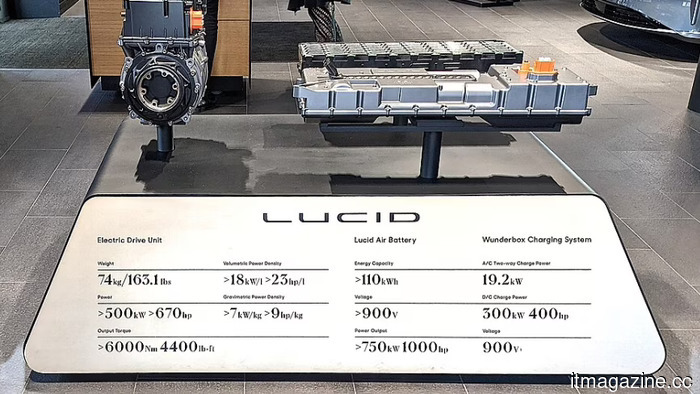 Lucid's stock fell by 40% following a bankruptcy rumor reported by an EV blog. A denial was issued a few hours later.
Lucid's stock fell sharply following a report indicating that AlixPartners was assessing Chapter 11 and going-private alternatives. Lucid refuted the allegations. The stock closed down 16% at $4.62.
Lucid's stock fell by 40% following a bankruptcy rumor reported by an EV blog. A denial was issued a few hours later.
Lucid's stock fell sharply following a report indicating that AlixPartners was assessing Chapter 11 and going-private alternatives. Lucid refuted the allegations. The stock closed down 16% at $4.62.
 India commits $20 billion to encourage chip and smartphone production as Modi advocates for the creation of an Indian mobile brand.
Modi's cabinet has authorized $13.3 billion for semiconductors and $6.5 billion for smartphones. The minister stated that Modi aims for India to "establish an Indian mobile brand."
Anthropic's safety hiring focuses on mitigating risks related to nuclear and biological threats.
Anthropic's current safety hiring efforts focus on preventing nuclear, chemical, and biological threats by employing analysts to ensure that its AI does not assist anyone in creating weapons.
India commits $20 billion to encourage chip and smartphone production as Modi advocates for the creation of an Indian mobile brand.
Modi's cabinet has authorized $13.3 billion for semiconductors and $6.5 billion for smartphones. The minister stated that Modi aims for India to "establish an Indian mobile brand."
Anthropic's safety hiring focuses on mitigating risks related to nuclear and biological threats.
Anthropic's current safety hiring efforts focus on preventing nuclear, chemical, and biological threats by employing analysts to ensure that its AI does not assist anyone in creating weapons.
India commits $20 billion to enhance chip production and smartphones as Modi advocates for a domestic mobile brand.
Modi's cabinet has authorized $13.3 billion for semiconductors and $6.5 billion for smartphones. The minister indicated that Modi aims for India to "develop an Indian mobile brand."