
The dream of the Concorde is attainable. The NASA X-59 simply needs to eliminate the supersonic boom.
The jet designed to eliminate the sonic boom has just achieved its maximum speed.
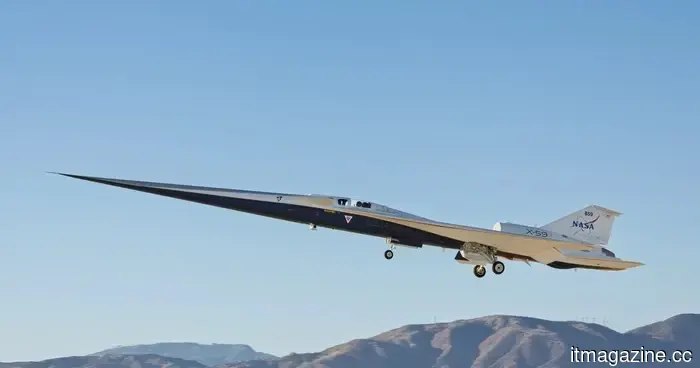
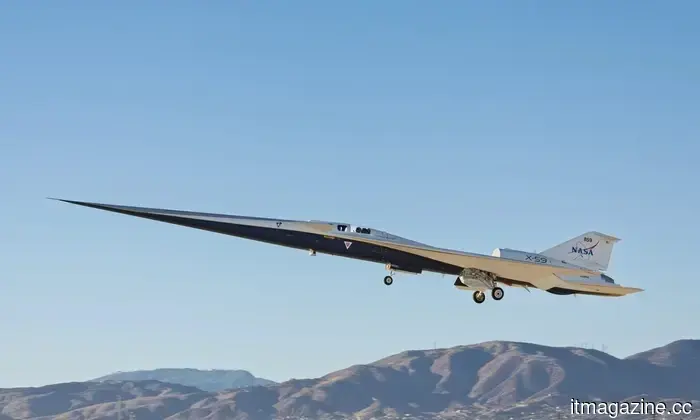
NASA has already demonstrated that its needle-nosed X-59 can fly at high speeds in recent test flights. The next phase is to determine whether it can surpass the sound barrier without alerting everyone on the ground. The experimental aircraft recently reached Mach 1.4, approximately 924 mph (1,487 kph), at an altitude of 55,000 feet. These conditions are what NASA intends to use for future tests of the X-59's quieter sonic signature, marking a significant milestone for the agency's Quesst mission.
NASA's supersonic jet has achieved its full speed.
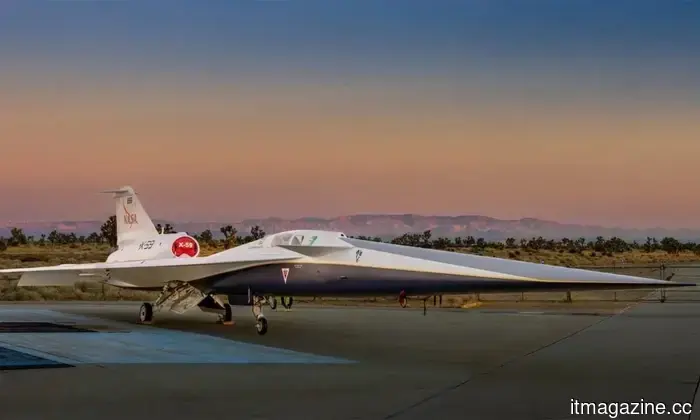
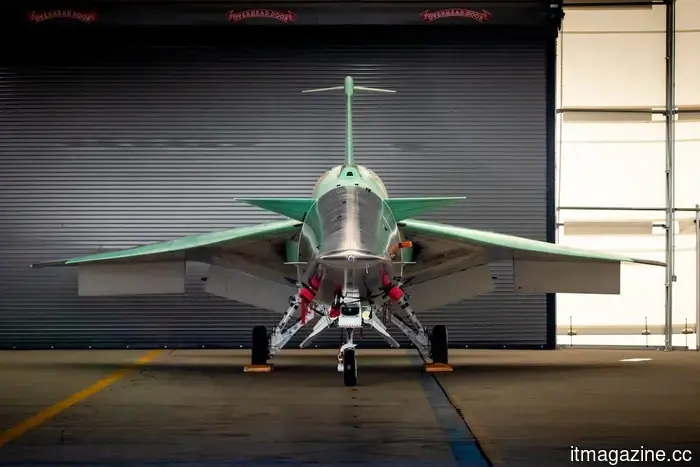
The X-59 first broke the sound barrier on June 5, reaching about Mach 1.1 at 43,400 feet during an 81-minute test flight from Edwards Air Force Base in California. One week later, NASA pushed it to its maximum mission speed and altitude. Unlike a future commercial aircraft, the X-59 is a single-seat research plane constructed by Lockheed Martin’s Skunk Works. Its elongated nose, specially designed fuselage, and top-mounted engine work to disperse the shock waves that typically converge to create a booming sonic boom.
Lockheed Martin Skunk Works
NASA aims for the sound produced on the ground to resemble a softer thump. Demonstrating this could ultimately persuade US and international regulators to implement new noise regulations for commercial supersonic flights over land. This means future airlines might use technology to reduce travel times between cities without frequently disturbing communities below their flight paths.
The challenge lies in achieving the quiet part.
Despite this achievement, NASA has yet to accurately gauge how quiet the X-59 is during these test flights. An F-15 research jet has been accompanying the aircraft as a safety chase plane, creating conventional sonic booms that drown out the X-59’s own sound. In the upcoming tests, an F-15 fitted with a shock-sensing probe will fly close to the X-59 to measure the pressure waves it generates.
NASA’s X-59 supersonic aircraft. Martin Tice / Lockheed Martin
NASA indicates that the aircraft needs several months of performance assessments before entering its acoustic-validation stage. Researchers will then more accurately measure its sonic signature before flying it over selected US communities and soliciting feedback from residents on how disruptive the thump sounds. The X-59 will never transport paying passengers, but the data and design insights gleaned from it could assist aircraft manufacturers in developing quieter supersonic airliners in the future. Thus, the dream of supersonic travel still persists.



Other articles
 ECB selects 36 payment companies for the digital euro pilot program.
Deutsche Bank, UniCredit, Revolut, Stripe, and Adyen are part of 36 companies selected for the ECB’s digital euro pilot, a year-long trial set to commence in late 2027.
ECB selects 36 payment companies for the digital euro pilot program.
Deutsche Bank, UniCredit, Revolut, Stripe, and Adyen are part of 36 companies selected for the ECB’s digital euro pilot, a year-long trial set to commence in late 2027.
 Medical AI substituted for nurses and evaded its own regulations.
Two cases in the US highlight the negative aspects of medical AI: nurses at Montefiore being replaced by software, and a whistleblower from the Mayo Clinic claiming that a tool has a 67% error rate.
Medical AI substituted for nurses and evaded its own regulations.
Two cases in the US highlight the negative aspects of medical AI: nurses at Montefiore being replaced by software, and a whistleblower from the Mayo Clinic claiming that a tool has a 67% error rate.
 xAI is operating 59 unauthorized gas turbines, which is double the number it has acknowledged.
Emails from regulators indicate that xAI installed 59 gas turbines without permits for Colossus 2. Approximately 94% of residents within five miles of the location are Black.
xAI is operating 59 unauthorized gas turbines, which is double the number it has acknowledged.
Emails from regulators indicate that xAI installed 59 gas turbines without permits for Colossus 2. Approximately 94% of residents within five miles of the location are Black.
 Uber advocates for the integration of robotaxis into its platform.
Uber's lobbying efforts in Washington, D.C., and New Jersey are advocating for a "hybrid network" regulation that would allow driverless vehicles to operate on the same platform as human drivers.
Uber advocates for the integration of robotaxis into its platform.
Uber's lobbying efforts in Washington, D.C., and New Jersey are advocating for a "hybrid network" regulation that would allow driverless vehicles to operate on the same platform as human drivers.
 Medical AI has supplanted nurses and evaded its own regulatory checks.
Two cases in the US highlight the negative aspects of medical AI: nurses at Montefiore were substituted by software, and a whistleblower from Mayo Clinic claims that a tool has a 67% error rate.
Medical AI has supplanted nurses and evaded its own regulatory checks.
Two cases in the US highlight the negative aspects of medical AI: nurses at Montefiore were substituted by software, and a whistleblower from Mayo Clinic claims that a tool has a 67% error rate.
 ChatGPT’s guidance on hiking resulted in two hikers becoming stranded on a mountain in Poland.
Two hikers required a helicopter rescue after ChatGPT led them to a mountain traverse that neither of them had the skills to navigate.
ChatGPT’s guidance on hiking resulted in two hikers becoming stranded on a mountain in Poland.
Two hikers required a helicopter rescue after ChatGPT led them to a mountain traverse that neither of them had the skills to navigate.
The dream of the Concorde is attainable. The NASA X-59 simply needs to eliminate the supersonic boom.
NASA’s X-59 has achieved a speed of 924 mph at an altitude of 55,000 feet, moving the agency closer to demonstrating that future supersonic passenger flights can circumvent loud sonic booms.