
Kalshi creates a forward curve for computing power as exchanges compete to make GPUs a tradable commodity.
Kalshi has developed a forward curve for GPU compute costs through prediction market contracts, aligning with CME and ICE in the financialization of AI infrastructure. The prediction markets exchange has created a forward curve that monitors the anticipated price of computing power, joining a variety of exchanges and index operators aiming to standardize GPU rental costs as a financial instrument. This tool utilizes weekly and monthly event contracts related to compute prices, which extend for up to a year into the future. An algorithm integrates these contracts into a unified curve that can act as a reference for futures, options, and other derivatives.
“We are utilizing prediction markets to create the forward curve, which will give the market insights into future compute costs for various grades and timeframes of GPUs,” said Udesh Jha, Kalshi’s chief risk officer, in an interview with Bloomberg. Forward curves are commonplace in commodity markets, utilized to forecast future prices of items ranging from crude oil to natural gas to interest rates. The establishment of one for GPU rental costs reflects how far computing has evolved towards becoming a commodity in its own right.
Kalshi is not alone in this domain. CME Group announced compute futures in May, collaborating with Silicon Data to develop contracts linked to an index that tracks the hourly cost of renting premium GPUs. Shortly after, Intercontinental Exchange announced a partnership with Ornn to introduce its own cash-settled compute futures, marking at least three serious competitors in the quest to create the benchmark contract for AI computing power.
Kalshi's strategy stands apart from its larger competitors in a significant way. While CME and ICE are establishing traditional futures contracts that need regulatory approval, Kalshi is leveraging its existing prediction market framework to construct the curve from event contracts that are already being traded. Jha emphasized that this approach facilitates hedging, risk management, and speculative activities.
The driving force behind all three initiatives is consistent. AI infrastructure expenditures are expected to soar into the trillions of dollars in the next decade, and the companies involved in the buying and selling of GPU capacity currently lack a standardized method to hedge against price fluctuations. GPU rental rates have experienced volatility, and the computing market remains fragmented across various cloud providers, data center operators, and GPU brokers, each negotiating prices through bilateral agreements with minimal transparency.
A functioning forward curve provides buyers and sellers with a common perspective on future price directions, which is essential for the creation of hedging and risk management strategies. The liquidity captured by Kalshi, CME, or ICE will ultimately determine which curve will serve as the industry benchmark, similar to how competing oil contracts established the Brent and WTI duopoly that characterizes energy markets today. For an asset class that emerged only two years ago, the financial infrastructure is developing at an impressive pace.
Other articles
 X is instructing its AI algorithm on concepts that social networks used to grasp.
X is enhancing posts among mutual followers after discovering that its algorithm lacked relationship data, highlighting the discrepancy between forecasting engagement and fostering discussions that people truly desire.
X is instructing its AI algorithm on concepts that social networks used to grasp.
X is enhancing posts among mutual followers after discovering that its algorithm lacked relationship data, highlighting the discrepancy between forecasting engagement and fostering discussions that people truly desire.
 Dimon states that AI has already removed 30 to 40 percent of jobs in certain divisions of JPMorgan.
Jamie Dimon informed analysts that AI has already removed 30 to 40 percent of jobs in certain JPMorgan divisions, but competitive pressures will diminish margin improvements.
Kalshi develops a forward curve for computing power as exchanges compete to transform GPUs into a tradable asset.
The prediction market platform Kalshi has developed a forward curve to monitor GPU compute expenses, joining CME and ICE in the effort to monetize AI infrastructure.
Dimon states that AI has already removed 30 to 40 percent of jobs in certain divisions of JPMorgan.
Jamie Dimon informed analysts that AI has already removed 30 to 40 percent of jobs in certain JPMorgan divisions, but competitive pressures will diminish margin improvements.
Kalshi develops a forward curve for computing power as exchanges compete to transform GPUs into a tradable asset.
The prediction market platform Kalshi has developed a forward curve to monitor GPU compute expenses, joining CME and ICE in the effort to monetize AI infrastructure.
 I allow Gemini to tend to my houseplants, and they have never appeared healthier.
I used to lose more plants than I managed to keep alive. However, after seeking help from Gemini, my indoor jungle finally started to flourish.
I allow Gemini to tend to my houseplants, and they have never appeared healthier.
I used to lose more plants than I managed to keep alive. However, after seeking help from Gemini, my indoor jungle finally started to flourish.
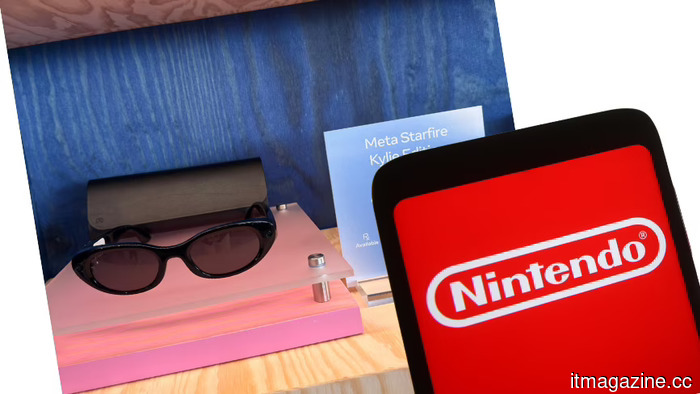 The EU has excluded smart glasses from regulations requiring removable batteries.
Brussels has made exceptions in its battery regulation for wearables, allowing Meta's glasses to proceed. On the other hand, Nintendo is withdrawing the Switch from the European market.
The EU has excluded smart glasses from regulations requiring removable batteries.
Brussels has made exceptions in its battery regulation for wearables, allowing Meta's glasses to proceed. On the other hand, Nintendo is withdrawing the Switch from the European market.
 I didn't fully appreciate this NotebookLM feature until it transformed my study habits entirely.
An upcoming exam prompted me to give NotebookLM's Mind Maps a try. Now, it's the first tool I turn to whenever I begin a new notebook.
I didn't fully appreciate this NotebookLM feature until it transformed my study habits entirely.
An upcoming exam prompted me to give NotebookLM's Mind Maps a try. Now, it's the first tool I turn to whenever I begin a new notebook.
Kalshi creates a forward curve for computing power as exchanges compete to make GPUs a tradable commodity.
Prediction markets platform Kalshi has developed a forward curve that monitors GPU computing expenses, positioning itself alongside CME and ICE in the effort to monetize AI infrastructure.