
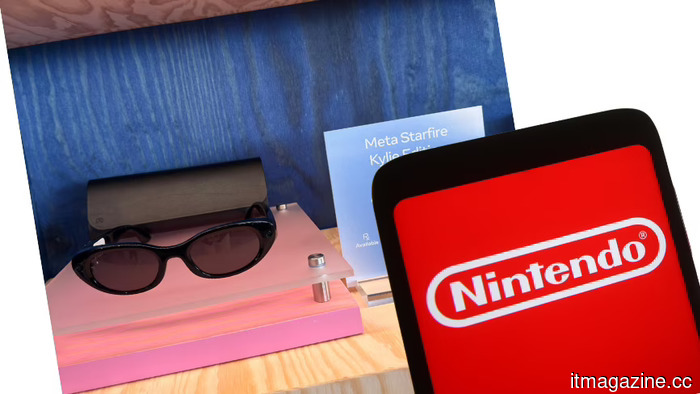
The EU has excluded smart glasses from regulations requiring removable batteries.
The European Commission has exempted wearable technology from regulations that mandate user-removable and replaceable batteries. This change removes a significant barrier for Meta's new smart glasses entering the EU, according to Politico.
The delegated act, which was adopted on Tuesday, adds six categories of products to the exemption list. This includes wearable devices like smartwatches and fitness trackers, electric toys, and equipment designed for use in explosive environments.
The European Parliament and national governments have 20 days to raise objections. If there are none, the exemption will take effect.
The contrast is quite noticeable. These are not obscure regulations; under the Batteries Regulation, portable batteries in products sold in the EU are generally required to be removable and replaceable by consumers to enhance product lifespan and improve recycling efforts.
This law is stringent. Nintendo is ceasing the production of the original Switch in Europe instead of complying, and starting February 2027, portable devices must allow users to replace the batteries.
Thus, while a gaming console must adhere to this standard, a camera worn on the face does not. The regulation was intended to encourage manufacturers to rethink their product designs, and removing an entire category signifies a retreat from that aim.
Regarding the lobbying efforts, they were quite overt. In March, U.S. Ambassador to the EU Andrew Puzder stated that the rules were overly broad and restrictive, hindering the sale of an outstanding, collaboratively developed U.S.-European product. He described the glasses as stylish and urged Europe to prioritize supporting business growth and innovation, which seemed to advocate for a specific American company's offerings.
The Commission firmly denies any implications of yielding to pressure, asserting that it has not succumbed to outside influence. Based on the available evidence, this denial appears more substantiated than the narrative surrounding it.
The timeline is also significant. The Commission's own account is verifiable. It initiated the call for new exemption applications in 2025, a year prior to Puzder's comments. Subsequently, external experts evaluated the technical merits of the applications while also consulting with consumer groups, industry representatives, and member states. This was a pre-existing process, not one created in reaction to an ambassador's statements.
Furthermore, the exemption is narrower than "exempted" suggests. According to the Commission's wording, these batteries must still be removable and replaceable by independent professionals, meaning that the requirement for end-users to remove them has been waived, but not the ability to repair.
There’s precedent for this approach, as medical devices and wet appliances like electric toothbrushes already fall into this category due to safety reasons and are repairable by professionals.
However, some criticism persists. BEUC, Europe’s largest consumer organization, regards it as a dangerous precedent. Their digital policy head, Cláudio Texeira, argued that exemptions should be genuine and based on technical and safety evidence, rather than influenced by industry pressure.
This objection is not dependent on the timeline, as even a well-managed process can yield results that undermine a key environmental law incrementally.
The Commission acknowledges the importance of this issue, noting that improperly discarded small lithium-ion batteries are causing an increase in fires at waste treatment facilities, which is exactly what the removability requirement was intended to mitigate.
The atmosphere is also noteworthy since Europe has been relaxing its regulatory framework to compete with the United States. A defensible choice can still contribute to an indefensible trend.
Nevertheless, this discussion does not address the more complex issue of privacy. Smart glasses remain under intense scrutiny related to privacy concerns, and the battery exemption does not address this.
The European Data Protection Board has commissioned a report on this category, which is expected this summer, after which it will consider potential actions. Irish and Italian regulators expressed concerns as early as 2021 regarding the ability of bystanders to know if they are being recorded.
The most troubling incident was unrelated to the batteries. Meta ended a contract with Sama after Kenyan workers reported reviewing private footage captured through the glasses while annotating data for AI model training.
Meta emphasizes its safety features, including an LED that activates during recording and tamper detection to prevent obstruction. They have since released an update that disables the camera if the light is damaged, a legitimate fix for a genuine vulnerability.
From a commercial perspective, this represents a substantial opportunity. Over 7 million pairs of Meta smart glasses were sold globally in 2025, and EssilorLuxottica reports that U.S. sales are rapidly increasing while European distribution lags, with more than half of potential sales points still unaddressed.
Samsung, Google, and Apple all have plans for smart glasses, and each stands to gain. The category is being made easier to market even as it faces ongoing privacy investigations.
This situation is not contradictory since battery regulations and privacy regulations address different issues. However, Brussels has removed a hardware limitation for a device that has not yet been deemed acceptable, and the responsibility for that decision rests with them.
Other articles
 Upwind: AsyncAPI npm packages affected by a supply chain attack.
Upwind identifies several compromised AsyncAPI npm packages linked to a coordinated supply chain attack aimed at software release processes and publishing identities.
Upwind: AsyncAPI npm packages affected by a supply chain attack.
Upwind identifies several compromised AsyncAPI npm packages linked to a coordinated supply chain attack aimed at software release processes and publishing identities.
 X is instructing its AI algorithm on concepts that social networks used to grasp.
X is enhancing posts among mutual followers after discovering that its algorithm lacked relationship data, highlighting the discrepancy between forecasting engagement and fostering discussions that people truly desire.
X is instructing its AI algorithm on concepts that social networks used to grasp.
X is enhancing posts among mutual followers after discovering that its algorithm lacked relationship data, highlighting the discrepancy between forecasting engagement and fostering discussions that people truly desire.
 Xbox might be on the verge of trying out an unexpectedly intelligent method for digitizing game discs.
Microsoft might soon begin testing Positron, a speculated Xbox feature that transforms physical games into transferable digital licenses while maintaining the ability to lend, resell, and access regular discs.
Xbox might be on the verge of trying out an unexpectedly intelligent method for digitizing game discs.
Microsoft might soon begin testing Positron, a speculated Xbox feature that transforms physical games into transferable digital licenses while maintaining the ability to lend, resell, and access regular discs.
 X is instructing its AI algorithm on concepts that social networks used to grasp.
X is promoting posts among mutual followers after discovering that its algorithm lacked relationship data, highlighting the disparity between forecasting engagement and fostering meaningful conversations people truly desire.
X is instructing its AI algorithm on concepts that social networks used to grasp.
X is promoting posts among mutual followers after discovering that its algorithm lacked relationship data, highlighting the disparity between forecasting engagement and fostering meaningful conversations people truly desire.
 Grok Build was transferring complete Git repositories to xAI's cloud, which included secrets that had been committed.
A researcher demonstrated that Grok Build CLI transferred entire repositories, sending 27,800 times more data than necessary, to a Google Cloud bucket. xAI had claimed that no code was sent.
Anthropic pledges $10 million towards AI research in Canada, collaborating with eight institutions.
Anthropic is providing funding to Amii, Mila, Vector Institute, and five other Canadian organizations. In terms of per-capita Claude usage, Canada holds the second position globally, following the US.
Grok Build was transferring complete Git repositories to xAI's cloud, which included secrets that had been committed.
A researcher demonstrated that Grok Build CLI transferred entire repositories, sending 27,800 times more data than necessary, to a Google Cloud bucket. xAI had claimed that no code was sent.
Anthropic pledges $10 million towards AI research in Canada, collaborating with eight institutions.
Anthropic is providing funding to Amii, Mila, Vector Institute, and five other Canadian organizations. In terms of per-capita Claude usage, Canada holds the second position globally, following the US.
The EU has excluded smart glasses from regulations requiring removable batteries.
Brussels has made exceptions in its battery regulation for wearables, allowing Meta's glasses to proceed. On the other hand, Nintendo is withdrawing the Switch from the European market.