
How AI Tools Are Transforming Product Development in Contemporary Business
AI-powered tools are reducing the time between conceptualization and launch, shifting the competitive edge from mere execution to aspects like product evaluation, visual branding, and integrated social dynamics.
In today's market, a consumer product that engages hundreds of thousands of users in just weeks is often attributed to luck or good timing. This tends to downplay the product's success, perceived as a coincidence rather than a well-crafted outcome, as if the creator were merely a fortunate bystander. The narrative typically revolves around a well-timed idea, an astute post, or a favorable algorithm, minimizing the builder's intentionality.
However, AI tools are enabling founders to work faster and more effectively while allowing them to better predict their new products' potential success. Consequently, these tools demonstrate that genuine success today is a product of dedicated effort and meticulous planning, rather than simply serendipity.
**The Story of GitCity**
A prime illustration of how critical planning is for modern launches and how AI tools help developers keep up with consumer demands is GitCity.
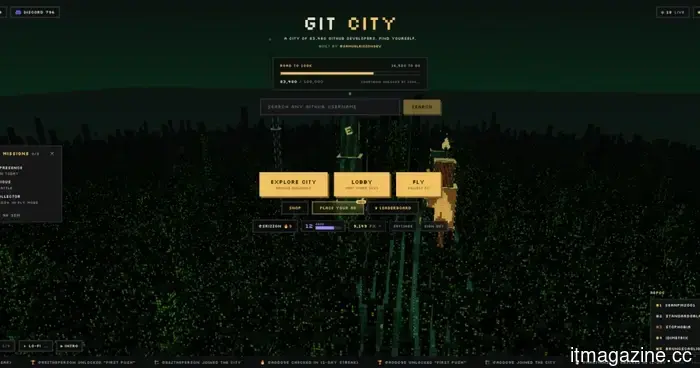
GitCity is a 3D city made from the profiles of GitHub developers, created by Samuel Rizzon, a 29-year-old Brazilian engineer. He claims to have "built the platform in a single day using Claude Code, designing it from the outset to become viral, even when no one was using it." This strategy paid off; according to Rizzon, GitCity attracted about 150,000 visitors and generated around five million social media impressions within its first two months.
**Digital Interactivity and Personalization**
A primary inspiration for GitCity was responding to the expectations of modern consumers. In a time when the internet is ubiquitous in the lives of most consumers, many seek a more personalized, engaging way to interact with it. With the dominance of social media and incessant scrolling, it's easy to become a passive consumer of content, merely accepting what is served by algorithms. By pursuing personalized online experiences that offer unique, interactive engagement, consumers can maintain greater control over their online experiences, leading to increased satisfaction.
GitCity allows users to navigate a digital city on their own terms in a free-roaming virtual environment, rather than being passively shuffled through posts in a linear fashion. From the outset, Rizzon recognized the potential for virality and, in developing the product, aimed for broad accessibility and personalization. “On the first day, when I had the idea of creating the city, I realized it could be a viral product. So I prepared everything for it to go viral,” he states.
**Branding as the Initial Conversion Funnel**
Upon opening GitCity, users are greeted by a cinematic camera movement that sweeps into the skyline before they can engage with anything. This effect is designed to elicit a response and is intentional. Rizzon sought to create the strongest impression as newcomers arrive and then allow them to explore thereafter. The pixel-art style is chosen for its distinctive appearance, easily recognized in screenshots while remaining user-friendly on small mobile screens, a significant advantage given that most traffic comes through social media.
For Rizzon, "the most important thing was branding and the UI of the city: the visuals, the overall aesthetic. I really value that, and I think that's why people like it." He describes a sense of taste that he finds hard to articulate, yet the methodology is clear: he refines the visuals until they meet his standards, then uses that as a benchmark for what users may enjoy. This approach mirrors patterns found in many of his past projects. He mentions that a Bible quiz app he released in 2015 garnered around 22,000 downloads, while a 2020 Google Meet extension he launched—allowing users to mute an entire call with one click—grew to approximately 150,000 users before being acquired by the founder of MP3.com.
**Reducing the Gap to Share**
The most straightforward mechanic Rizzon employs in GitCity is also the most conventional. Every significant action a user takes is paired with a one-click option to share it on X. He implemented this feature after observing users screenshotting their buildings and sharing them manually, subsequently closing the gap between that impulse and posting.
“Every action you take in the city has a ‘share on X’ button. When you attack someone, you can share on X with just one click, then another click to publish. People are continuously sharing,” he explains. This design fosters a product where ordinary engagement results in automatic distribution without interrupting the user experience to prompt sharing.
He applies the same concept in reverse through email. A feature allows one building to assault another, prompting the target with a notification detailing the event. This notification draws users back into the city, often leading to retaliation, which they then share, creating a cycle of action, notification, retaliation, and sharing that transforms GitCity from a static directory into a dynamic environment that users repeatedly visit. Rizzon's takeaway is clear: identify the moment a user
Other articles
 The prominent Privacy Display feature of the Samsung Galaxy S26 Ultra could potentially have an undesirable red tint.
Samsung is looking into reddish stains that have been reported on certain Galaxy S26 Ultra screens, with the atypical Privacy Display panel being a potential reason for the issue.
The prominent Privacy Display feature of the Samsung Galaxy S26 Ultra could potentially have an undesirable red tint.
Samsung is looking into reddish stains that have been reported on certain Galaxy S26 Ultra screens, with the atypical Privacy Display panel being a potential reason for the issue.
 AMD is discreetly developing a frame generation mode that surpasses Nvidia in its own territory.
AMD's newest Radeon drivers feature a Multi-Frame Generation mode that reaches up to 8x, surpassing NVIDIA's 6x. Here's how this could impact your frame rate.
AMD is discreetly developing a frame generation mode that surpasses Nvidia in its own territory.
AMD's newest Radeon drivers feature a Multi-Frame Generation mode that reaches up to 8x, surpassing NVIDIA's 6x. Here's how this could impact your frame rate.
 Intel invests 5 billion euros in its facility in Ireland.
Intel is investing 5 billion euros to expand Fab 34 in Leixlip for data-center processors. This investment represents one-third of its capital expenditures for 2026 and is a unique EUV site in Europe.
Intel invests 5 billion euros in its facility in Ireland.
Intel is investing 5 billion euros to expand Fab 34 in Leixlip for data-center processors. This investment represents one-third of its capital expenditures for 2026 and is a unique EUV site in Europe.
 Apple is reluctant to disclose this AirPods feature to Meta, but the EU might compel it to do so.
Apple is developing AirPods-style pairing for Meta devices in response to EU pressure, utilizing AccessorySetupKit and Proximity Pairing technology. The goal is to launch this feature by spring 2027.
Apple is reluctant to disclose this AirPods feature to Meta, but the EU might compel it to do so.
Apple is developing AirPods-style pairing for Meta devices in response to EU pressure, utilizing AccessorySetupKit and Proximity Pairing technology. The goal is to launch this feature by spring 2027.
 Google has just surpassed its previous Prime Day deal for the Pixel 10 Pro, and the Pixel 11 might shed some light on the reason.
Google has reduced the price of the 128GB Pixel 10 Pro to $699, surpassing its Prime Day price as stock diminishes in anticipation of the anticipated Pixel 11 announcement in August.
Google has just surpassed its previous Prime Day deal for the Pixel 10 Pro, and the Pixel 11 might shed some light on the reason.
Google has reduced the price of the 128GB Pixel 10 Pro to $699, surpassing its Prime Day price as stock diminishes in anticipation of the anticipated Pixel 11 announcement in August.
 Tesla's Cybercab parking lot circuit isn't the main narrative.
Tesla hinted at employee rides in the Cybercab at Giga Texas. The regulatory change that finally allows the wheel-less robotaxi occurred just two days prior.
Tesla's Cybercab parking lot circuit isn't the main narrative.
Tesla hinted at employee rides in the Cybercab at Giga Texas. The regulatory change that finally allows the wheel-less robotaxi occurred just two days prior.
How AI Tools Are Transforming Product Development in Contemporary Business
AI-driven tools are reducing the time required to move from concept to launch, shifting the competitive edge from mere execution to aspects like product evaluation, visual branding, and integrated social interactions. In today's environment, when a consumer product rapidly attracts hundreds of thousands of users within weeks, the outcome is often attributed to […]