
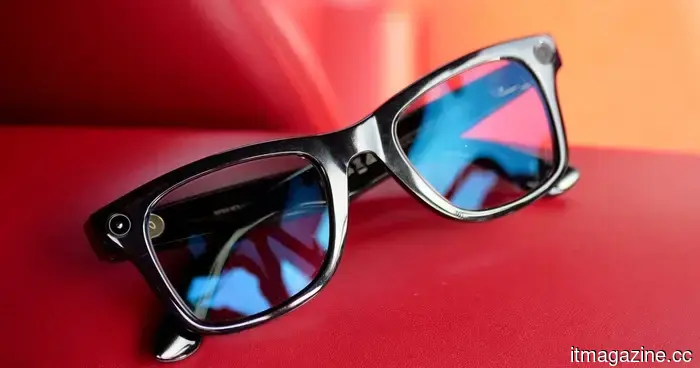
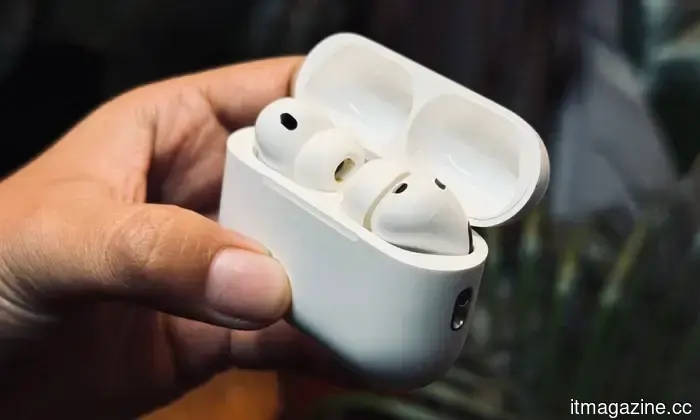
Apple is reluctant to disclose this AirPods feature to Meta, but the EU might compel it to do so.
I have been using AirPods for the past four years, and one of the most difficult aspects of considering a change is the incredibly smooth and nearly magical pairing experience across devices. Simply open an AirPods case near your iPhone, and a pop-up notification appears almost immediately. When you switch to your Mac, the audio transfers seamlessly.
However, this enjoyable experience is restricted to Apple devices. It doesn't matter if you possess one of the most advanced tech products available; if it isn't from Apple, it won't receive the same treatment. This may, however, change for the Meta Quest or the Ray-Ban Meta glasses due to pressure from the EU.
So, what exactly is Apple planning?
According to Apple's EU Interoperability request page, the company is working on a new API based on AccessorySetupKit and Proximity Pairing. In layman's terms, this API will enable third-party accessories, such as Meta's Ray-Ban smart glasses and Quest headsets, to pair effortlessly with an iPhone (a request that Meta made in October 2025).
Once connected, the device will automatically appear on all your Apple devices, eliminating the need for manual pairing. No re-pairing or additional prompts are necessary. It will simply provide the same seamless experience that AirPods users have enjoyed for years.
On February 4, Apple informed Meta that it intends to share cryptographic session keys on a per-accessory, one-time-consent basis. Moreover, development is anticipated to be completed by spring 2027, with shipping expected to start shortly after, likely as part of a future iOS update, with iOS 27.4 being a tentative target (via MacRumors).
Will this work outside of the EU?
Not at this time, which complicates matters since Meta has legitimate concerns. Adopting Apple's AccessorySetupKit would require the company to give up Core Bluetooth, which is its preferred pairing method outside of Europe.
Meta has requested that Apple separate the two, but Apple has declined, while indicating that global expansion is “something we are still considering.” For now, this is an EU-specific move driven by the Digital Markets Act. If Apple eventually separates the two, there is a strong possibility that the feature could be available worldwide.
Until then, it may remain a European exclusive with intriguing potential. To me, it appears to be a gatekeeping strategy for Apple, one that it is hesitant to relinquish, and I understand why. The effortless pairing experience provides an unfair advantage for Apple hardware on iPhones.
Why is Apple so hesitant?
Additionally, it is reported that Apple is currently developing its own pair of smart glasses, which are expected to be released by the end of 2027. Like all other Apple products, these glasses will ideally provide users with all the Continuity features that Apple devices are renowned for. This could entail transitioning audio from an iPhone to a MacBook or using them in conjunction with an iPad.
For Apple, decoupling AccessorySetupKit and Core Bluetooth would mean relinquishing the iconic experience it has protected for many years.
From my perspective, while the company may have to comply in the EU, a pairing experience akin to that of AirPods for Meta Glasses, or any other device, may not be available on a global scale.
Other articles
 How AI Tools Are Transforming Product Development in Contemporary Business
AI-driven tools are reducing the time required to move from concept to launch, shifting the competitive edge from mere execution to aspects like product evaluation, visual branding, and integrated social interactions. In today's environment, when a consumer product rapidly attracts hundreds of thousands of users within weeks, the outcome is often attributed to […]
How AI Tools Are Transforming Product Development in Contemporary Business
AI-driven tools are reducing the time required to move from concept to launch, shifting the competitive edge from mere execution to aspects like product evaluation, visual branding, and integrated social interactions. In today's environment, when a consumer product rapidly attracts hundreds of thousands of users within weeks, the outcome is often attributed to […]
 Nadella's Inverse Information Paradox: The concealed expense of AI
Satya Nadella states that companies employing AI incur costs in both monetary terms and in confidential expertise. He refers to this as the Reverse Information Paradox, which Microsoft contributed to developing.
Nadella's Inverse Information Paradox: The concealed expense of AI
Satya Nadella states that companies employing AI incur costs in both monetary terms and in confidential expertise. He refers to this as the Reverse Information Paradox, which Microsoft contributed to developing.
 Tesla's Cybercab parking lot circuit isn't the main narrative.
Tesla hinted at employee rides in the Cybercab at Giga Texas. The regulatory change that finally allows the wheel-less robotaxi occurred just two days prior.
Tesla's Cybercab parking lot circuit isn't the main narrative.
Tesla hinted at employee rides in the Cybercab at Giga Texas. The regulatory change that finally allows the wheel-less robotaxi occurred just two days prior.
 A report indicates that OnePlus will be concluding its operations in the US shortly.
A report states that OnePlus plans to officially announce its departure from the US and EU markets in a week, while its parent company, Oppo, will step in and expand, particularly in the European market.
A report indicates that OnePlus will be concluding its operations in the US shortly.
A report states that OnePlus plans to officially announce its departure from the US and EU markets in a week, while its parent company, Oppo, will step in and expand, particularly in the European market.
 Google's major Waze AI update features a button that silences the app.
Google has incorporated Gemini voice search and a motorcycle mode into Waze. The feature that users are likely to find most useful is the 'less chatty' mode.
Google's major Waze AI update features a button that silences the app.
Google has incorporated Gemini voice search and a motorcycle mode into Waze. The feature that users are likely to find most useful is the 'less chatty' mode.
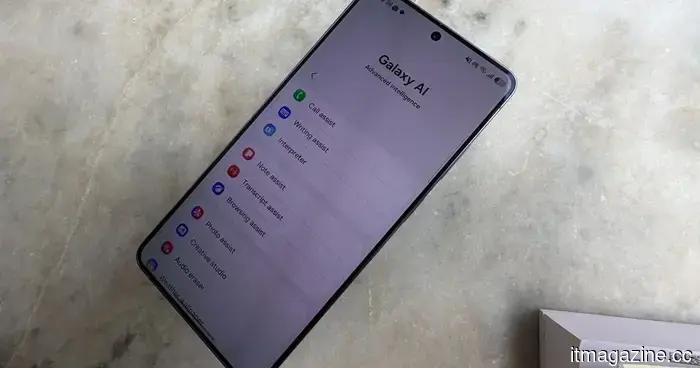 The prominent Privacy Display feature of the Samsung Galaxy S26 Ultra could potentially have an undesirable red tint.
Samsung is looking into reddish stains that have been reported on certain Galaxy S26 Ultra screens, with the atypical Privacy Display panel being a potential reason for the issue.
The prominent Privacy Display feature of the Samsung Galaxy S26 Ultra could potentially have an undesirable red tint.
Samsung is looking into reddish stains that have been reported on certain Galaxy S26 Ultra screens, with the atypical Privacy Display panel being a potential reason for the issue.
Apple is reluctant to disclose this AirPods feature to Meta, but the EU might compel it to do so.
Apple is developing AirPods-style pairing for Meta devices in response to EU pressure, utilizing AccessorySetupKit and Proximity Pairing technology. The goal is to launch this feature by spring 2027.