
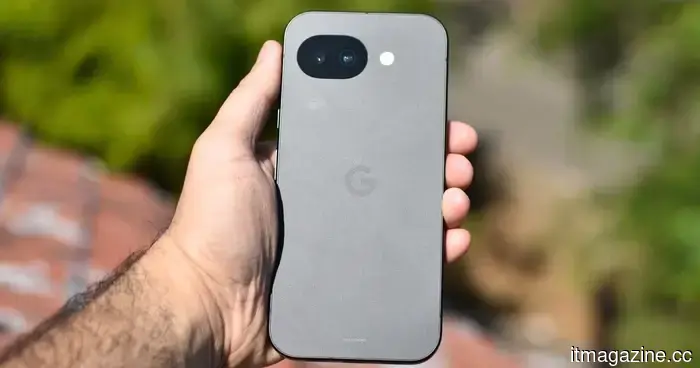
The Pixel 11 is just around the corner, and here are three improvements I'm hoping Google will implement.
We’re just a month away from Google’s upcoming hardware event, where the Pixel 11 series will officially launch on August 12.
Having spent the past year with the Pixel 10 Pro and Pixel 10a, I've gained an appreciation for the strengths of Google’s phones — but also, more critically, their shortcomings. As the smartphone market evolves rapidly, there are three upgrades I hope Google introduces this year. If you’re another Pixel user, you likely share these desires.
Google, it’s time to prevent my Pixel from overheating
Above all, I want Google to address the thermal problems with the Pixel. If you’ve used a Pixel, you probably understand what I mean. This isn’t just a complaint after a short trial; I've been using Pixels since the Pixel 8, so by the time the Pixel 11 launches, it will be my fourth generation. And if there's one persistent issue I’ve faced from one phone to the next, it's overheating.
It's easy to dismiss this as a summer issue. Yes, all phones get warm outside, but I've observed similar behavior while indoors in air-conditioned rooms. Sometimes it occurs after taking several photos, using Google Maps, or seemingly for no reason at all.
This leads me to believe it's not restricted to a specific device. I've encountered it across various Pixel generations, and while Tensor has made strides in several areas, thermal performance still feels erratic. Some days everything functions perfectly, while on others, the phone becomes warmer than expected during normal activities. Out of curiosity, I even subjected several Pixels to CPU throttling tests, including the Pixel 9, Pixel 9a, Pixel 10 Pro, and Pixel 10a. These tests intentionally push the processor to its limits to see how well it maintains performance without overheating. Across all four devices, the findings were consistent: performance dropped significantly as temperatures rose.
This was comforting because it confirmed my everyday experiences. It's one thing for benchmarks to reveal a flaw, but it’s even more compelling when you physically feel it during use. That’s why thermal management is at the top of my Pixel 11 wishlist. If Google can finally resolve this ongoing issue, it will enhance nearly every aspect of the Pixel experience. If not, I might have to consider other options.
My Pixel appears to struggle with fast charging
While we’re discussing this, Google truly needs to enhance the Pixel’s charging speeds. I’ve noticed something peculiar with my Pixel 10a when I plug it in. Not only does it take a long time to charge, but it also tends to get unexpectedly warm during the process — sometimes hot enough that I instinctively check it to see if there's an issue. Given my thermal management concerns, this situation only adds to my frustration.
The slow charging is easy to overlook at home. I can connect it, return to my tasks, and eventually, it’s ready to go. The real challenge arises when time is of the essence. If I suddenly need to go out, charging the battery can become nearly impossible. Waiting over an hour for a full charge feels painfully outdated in 2026.
What’s disheartening is that this isn’t a limitation found across the industry anymore. Many Android phones can offer hours of battery life with just a quick 15 or 20-minute charge, yet the Pixel remains behind.
That’s why faster charging is high on my Pixel 11 wishlist. At this stage, it feels like Pixel users are making excuses for a compromise we shouldn’t have to accept. Google doesn’t need to pursue 100W charging speeds, but it must stop lagging behind the competition.
Tensor, let’s accelerate
I’ve never been someone who buys a phone solely for benchmark scores. I rarely spend much time on demanding games like Call of Duty: Mobile or Genshin Impact. What I do expect is for my phone to manage everyday tasks seamlessly.
That hasn’t always been my experience with Pixel phones. Whenever I’m out discovering a new location, I usually take numerous photos, record plenty of 4K videos, and frequently switch between the Camera and Google Photos apps to check my shots. This is a routine I’ve repeated countless times, and it’s during these moments that my Pixel seems to falter the most.
As the phone heats up, I’ve noticed that everything begins to slow down. Switching between apps can become extremely sluggish, at times taking almost a minute before everything feels responsive again. I’ve even experienced the phone losing its network signal while I was still out taking pictures, which is the last thing you want when relying on Google Maps or trying to share photos with friends.
That’s why I don’t believe this is about seeking more power for its own sake. Tensor already exhibits intelligence in the right areas, but I'd love to see Google extract more consistent performance from it. I want to capture photos, record videos, and multitask without constantly worrying about the phone slowing down from overheating. That’s the dependable performance I’m
Other articles
 Your upcoming song might soon feature an AI warning label, and the music industry fully supports this.
The music industry is urging Spotify and Apple Music to tag AI-generated songs, aiming to provide listeners with more transparency as the use of artificial intelligence in music creation grows.
Your upcoming song might soon feature an AI warning label, and the music industry fully supports this.
The music industry is urging Spotify and Apple Music to tag AI-generated songs, aiming to provide listeners with more transparency as the use of artificial intelligence in music creation grows.
 I invested a lot in a Copilot+ PC, yet I hardly ever use Microsoft's AI.
Although my Copilot+ PC is equipped with specialized AI hardware and comes with its own Copilot key, Microsoft's assistant has not significantly integrated into my everyday tasks.
I invested a lot in a Copilot+ PC, yet I hardly ever use Microsoft's AI.
Although my Copilot+ PC is equipped with specialized AI hardware and comes with its own Copilot key, Microsoft's assistant has not significantly integrated into my everyday tasks.
 What occurs when AI detectors do not succeed? Researchers suggest that we need to learn how to identify fake AI-generated faces.
AI detectors are facing challenges with increasingly convincing deepfakes. Researchers indicate that individuals can significantly enhance their skills in recognizing artificial AI faces by engaging in structured training and developing pattern recognition.
What occurs when AI detectors do not succeed? Researchers suggest that we need to learn how to identify fake AI-generated faces.
AI detectors are facing challenges with increasingly convincing deepfakes. Researchers indicate that individuals can significantly enhance their skills in recognizing artificial AI faces by engaging in structured training and developing pattern recognition.
 What is Copilot? Everything you should know about Microsoft's AI assistant.
Microsoft Copilot now encompasses a range of applications, from free AI chat to Office tools, as well as work features powered by GPT-5.6. Here’s how its various versions are integrated.
What is Copilot? Everything you should know about Microsoft's AI assistant.
Microsoft Copilot now encompasses a range of applications, from free AI chat to Office tools, as well as work features powered by GPT-5.6. Here’s how its various versions are integrated.
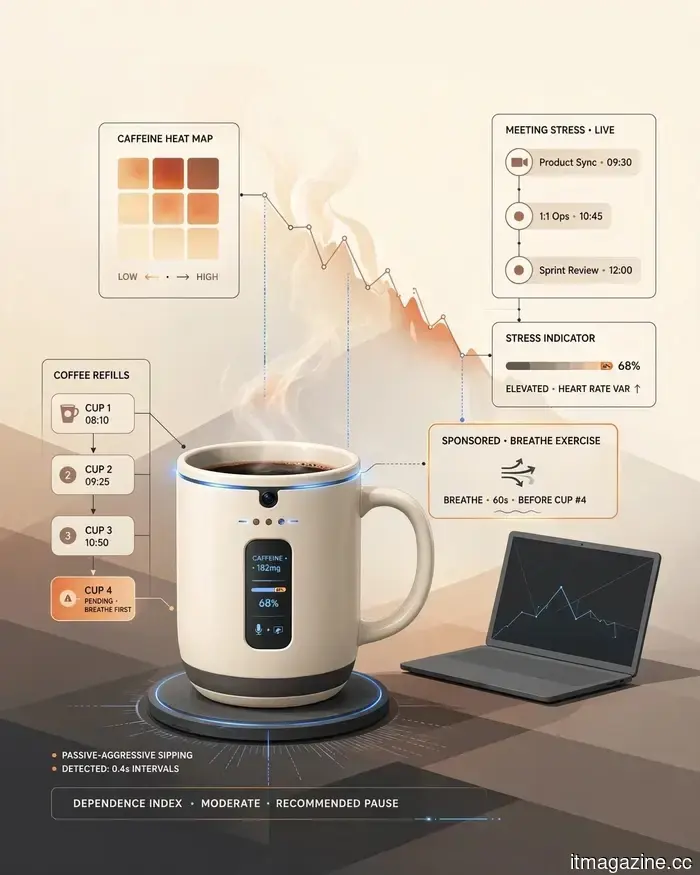 I attempted to create a parody of the most ridiculous AI products, but the tech industry outdid me.
I attempted to create AI devices that were too ridiculous for the tech sector. However, I soon discovered that toothbrushes, litter boxes, headphones, and various appliances had already surpassed my ideas.
I attempted to create a parody of the most ridiculous AI products, but the tech industry outdid me.
I attempted to create AI devices that were too ridiculous for the tech sector. However, I soon discovered that toothbrushes, litter boxes, headphones, and various appliances had already surpassed my ideas.
 I invested a lot of money in a Copilot+ PC, yet I've hardly used Microsoft's AI at all.
My Copilot+ PC is equipped with dedicated AI hardware and features its own Copilot key, but Microsoft's assistant has only marginally integrated into my daily routine.
I invested a lot of money in a Copilot+ PC, yet I've hardly used Microsoft's AI at all.
My Copilot+ PC is equipped with dedicated AI hardware and features its own Copilot key, but Microsoft's assistant has only marginally integrated into my daily routine.
The Pixel 11 is just around the corner, and here are three improvements I'm hoping Google will implement.
The Pixel 11 is approaching, and Google has an opportunity to address three persistent problems that have hindered the Pixel experience for years.