
I attempted to create a parody of the most ridiculous AI products, but the tech industry outdid me.
I aimed to create an AI product so ridiculous that no entrepreneur could secure funding for it.
It needed to address a non-existent problem, gather excessive data irrelevant to the issue, and transform ordinary behavior into insights that subtly expressed disappointment toward its user. By the third feature, it would entice users into paying for a subscription.
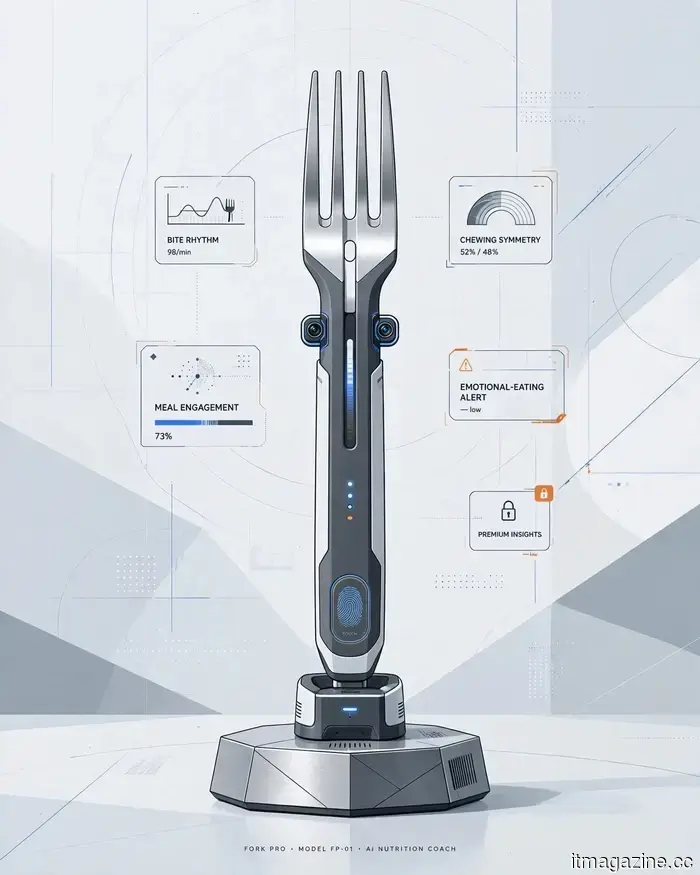
I began with an AI fork that tracks chewing speed, bite symmetry, and something termed meal engagement. When it detects emotional eating, it gives a gentle vibration. Premium users can query the fork about their behaviors.
AI visualization
The most absurd concepts I could imagine
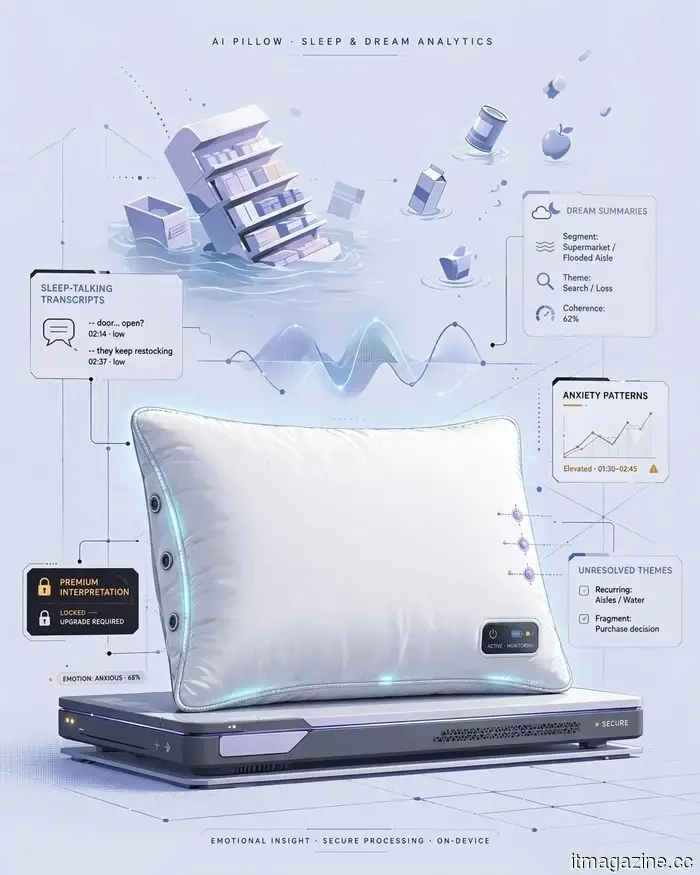
Since the fork was focused on something trivial, I proposed an AI pillow that listens to your sleep talk and summarizes it in the morning. It spotlights recurring worries and questions if last night’s dream about a chicken with human teeth represents uncertainties regarding your personal brand™.
AI visualization
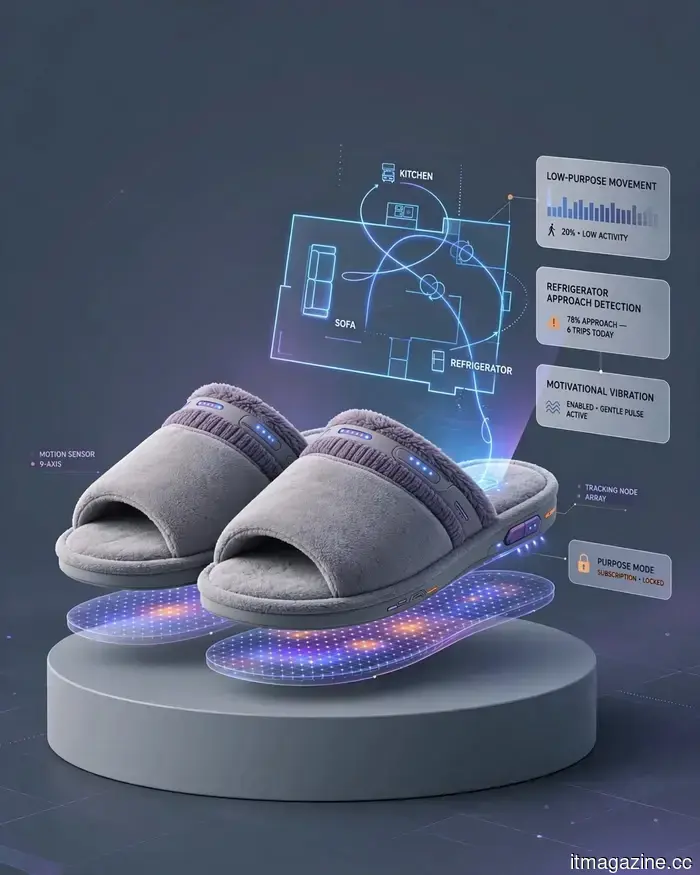
Next were slippers that map every track around the kitchen. They recognize when you approach the refrigerator aimlessly, vibrating to signal low-purpose movement. A Purpose Mode subscription costs $8.99 per month.
AI visualization
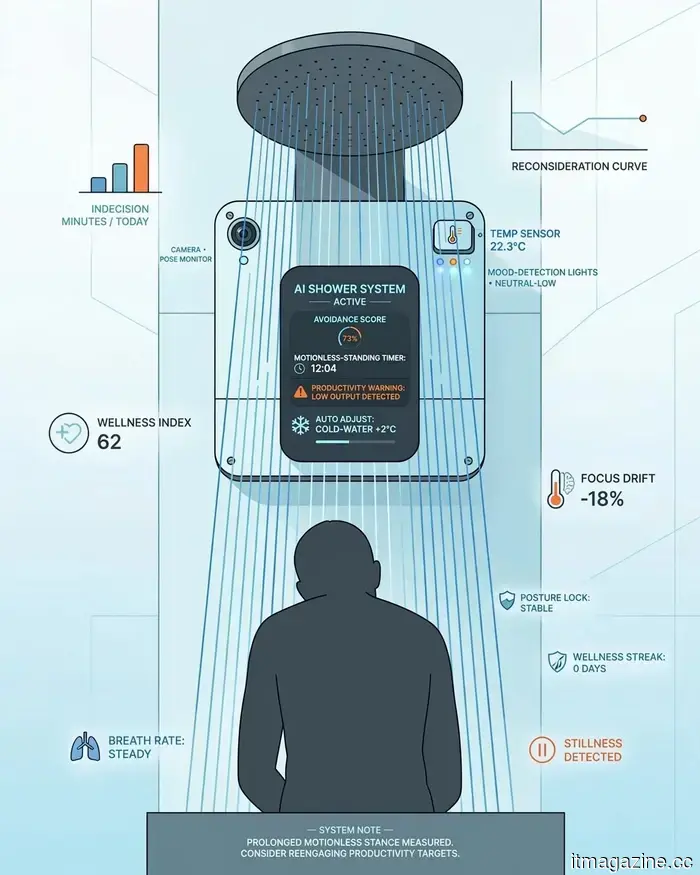
My AI shower is more of a proactive device. It tracks how long you linger under the hot water contemplating your choices, lowering the temperature when your mindset appears insufficiently entrepreneurial.
AI visualization
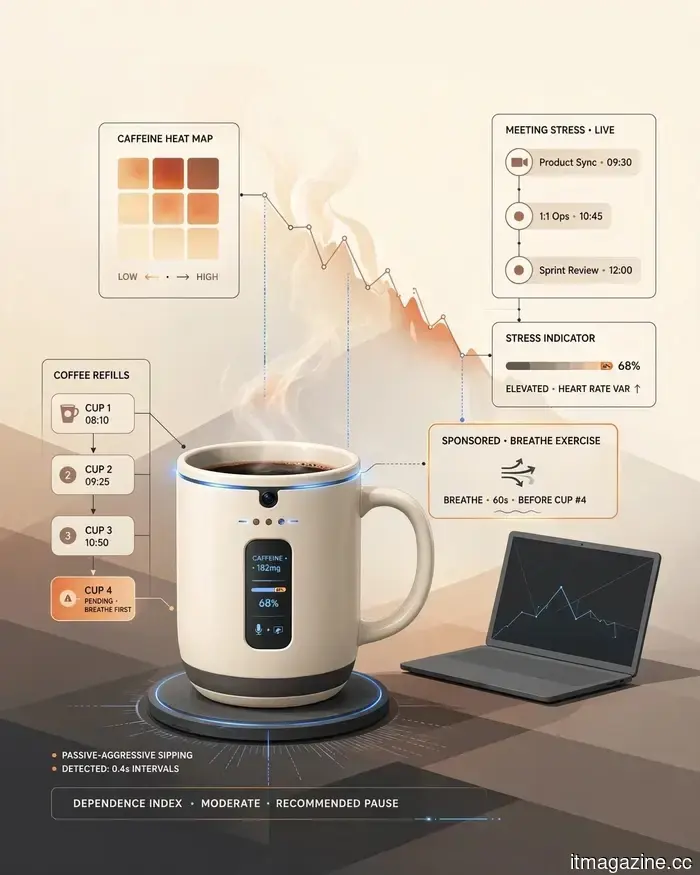
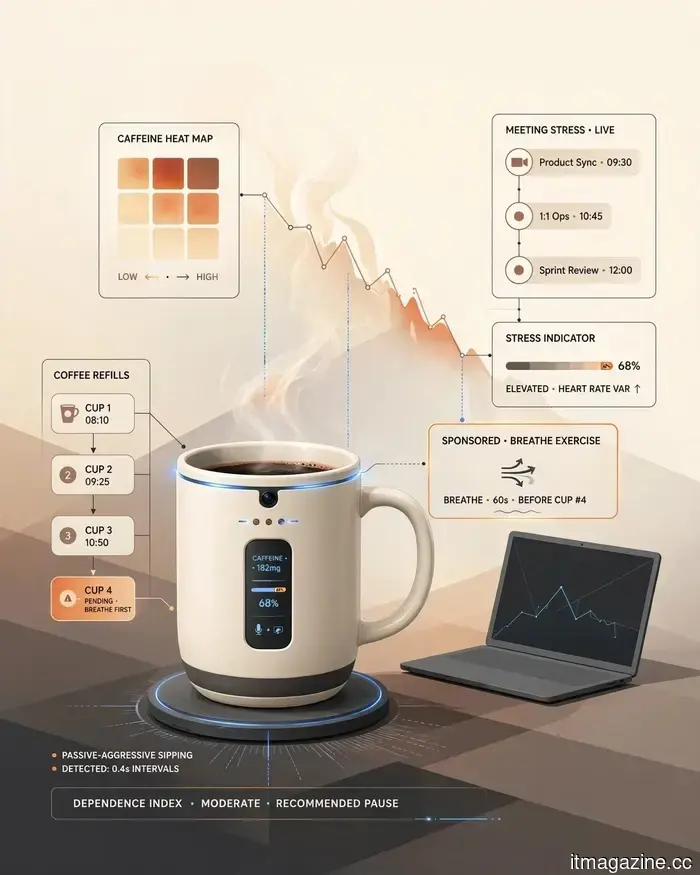
The coffee mug introduced technology into the workplace. It connects each refill to the corresponding meeting and recognizes passive-aggressive sipping during video calls. The chair goes a step further, monitoring posture, procrastination, and authority level while seated. It notes when you open a document and immediately check your phone, then sends a weekly performance report to your manager.
AI visualization
I then envisioned a wallet that audibly announces poor financial decisions during checkouts. After midnight, it locks itself unless you activate Impulse Plus. Anyone feeling emotionally vulnerable must answer a brief quiz to verify if they truly need another mechanical keyboard.
AI visualization
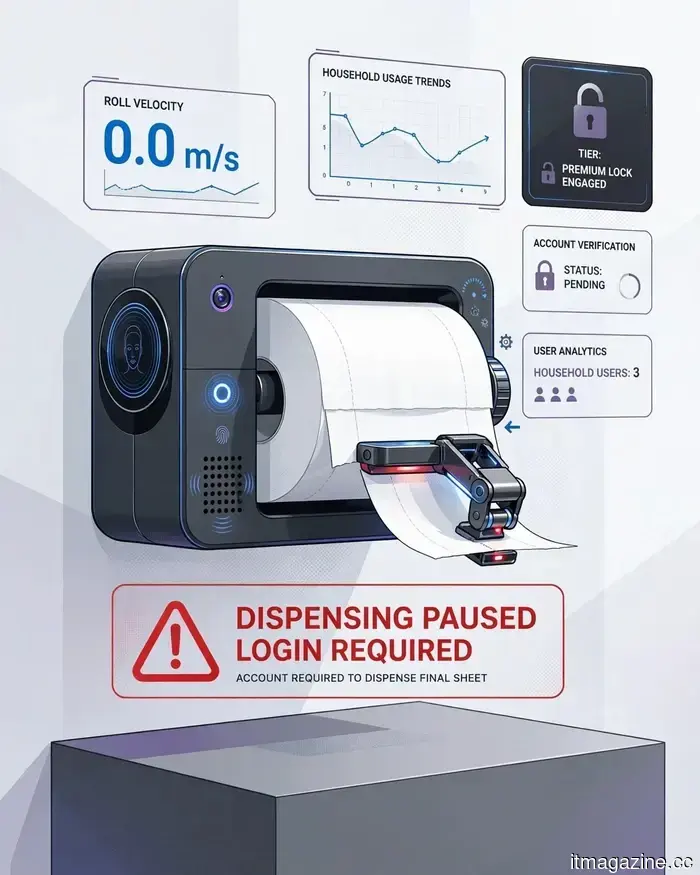
For my last idea, I conceptualized a toilet-paper holder that tracks roll speed, analyzes household digestive trends, and requires account creation before dispensing the final sheet.
This one felt far-fetched enough to be beyond what a genuine company would produce.
AI visualization
Sadly, all of those were purely fictional
None of those products exist. At least, they didn’t at the time I wrote them down.
The judgmental fork already has relatives. The Epitome e1 is an AI toothbrush equipped with over 100 sensors. It maps teeth into 100,000 pixels, detects contamination, and produces thorough oral health insights.
I sought a device that could monitor my mouth only to discover the industry had already ventured there.
The fictional pillow also faces competition from devices designed to listen, remember, interpret moods, and respond emotionally. Razer’s Project Ava observes its owner through a camera, analyzes the computer screen, and provides advice via a holographic character. Loona offers conversation, games, home monitoring, and companionship through ChatGPT.
Razer
Parodying surveillance products becomes increasingly challenging with pets. PETKIT’s Purobot Max Pro 2 employs an AI camera, facial recognition, weight sensors, and multiple profiles for various cats. It logs bathroom visits, captures images of stool and urine clumps, listens for distressed yowling, and sends health alerts through an app.
Such information can enable an owner to identify medical issues early. However, it means one of the most advanced cameras in a household may spend its existence recording cat waste.
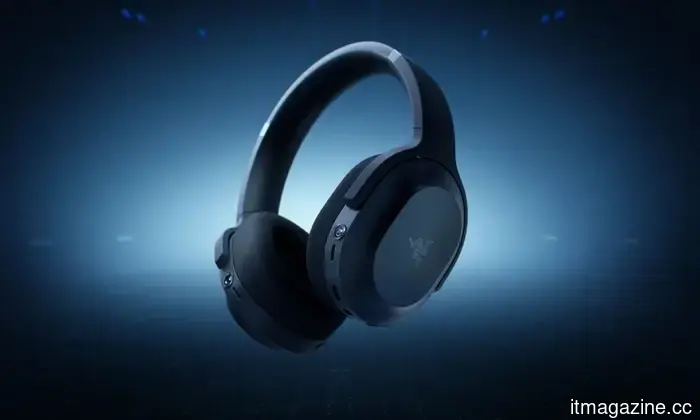
My fictional mug monitored just one part of the day. Razer’s Project Motoko seeks a broader scope. The conceptual headphones equip two 4K cameras near the wearer’s face while microphones capture conversations and surrounding sounds. An AI assistant interprets what the wearer sees, translates signs, identifies objects, suggests recipes, and provides workout guidance. Evidently, headphones that capture everything still lacked context, so someone decided to give them vision.
Razer
Even kitchen appliances have joined the fray. LG has revealed ovens and microwaves with internal cameras that recognize food, oversee cooking, and produce recap videos. Dinner can now be observed and packaged as content before anyone has assessed its taste.
My absurd products aimed to become progressively less believable, yet reality consistently defied that notion.
The eight-step blueprint for integrating AI into anything
After contrasting the fictional items with their real counterparts, I believe I’ve reverse-engineered the approach.
1. Identify an object that operates without requiring an account.
2. Integrate cameras, microphones, or enough sensors to monitor an entire airport.
3. Rename all that scrutiny as personalization.
4. Transform a common habit into a score.
5. Generate advice.
6. Attach the history, interpretation, or useful features as Premium.
7. ???
8. Profit
The final product may not fulfill its intended purpose. Instead, it observes your efforts, evaluates them, and sends a notification explaining how you could improve.
Companies often confuse the capability to monitor something with the ability to assist in it.
Congratulations, your toothbrush is


Other articles
 The remake of Ubisoft's Black Flag is a sign of a problem, rather than a part of a strategy.
Assassin's Creed Black Flag Resynced is a solid remake. Its development was prompted by Ubisoft's cancellation of six games, creating the need for something to generate sales.
The remake of Ubisoft's Black Flag is a sign of a problem, rather than a part of a strategy.
Assassin's Creed Black Flag Resynced is a solid remake. Its development was prompted by Ubisoft's cancellation of six games, creating the need for something to generate sales.
 Your upcoming song might soon feature an AI warning label, and the music industry fully supports this.
The music industry is urging Spotify and Apple Music to tag AI-generated songs, aiming to provide listeners with more transparency as the use of artificial intelligence in music creation grows.
Your upcoming song might soon feature an AI warning label, and the music industry fully supports this.
The music industry is urging Spotify and Apple Music to tag AI-generated songs, aiming to provide listeners with more transparency as the use of artificial intelligence in music creation grows.
 I invested a lot of money in a Copilot+ PC, yet I've hardly used Microsoft's AI at all.
My Copilot+ PC is equipped with dedicated AI hardware and features its own Copilot key, but Microsoft's assistant has only marginally integrated into my daily routine.
I invested a lot of money in a Copilot+ PC, yet I've hardly used Microsoft's AI at all.
My Copilot+ PC is equipped with dedicated AI hardware and features its own Copilot key, but Microsoft's assistant has only marginally integrated into my daily routine.
 I invested in a more promising future, but my online life incurs monthly subscription fees.
Contemporary life operates on subscriptions that tend to be helpful, affordable, and progressively essential. The future has come, but it seems we must continue to pay monthly to access it.
I invested in a more promising future, but my online life incurs monthly subscription fees.
Contemporary life operates on subscriptions that tend to be helpful, affordable, and progressively essential. The future has come, but it seems we must continue to pay monthly to access it.
 Netflix might introduce channels that are always available. That’s essentially the same as cable.
Netflix is said to have explored the idea of 24/7 genre channels and the option to bill competitor subscriptions via its own app, effectively reviving the cable model it previously dismantled.
Netflix might introduce channels that are always available. That’s essentially the same as cable.
Netflix is said to have explored the idea of 24/7 genre channels and the option to bill competitor subscriptions via its own app, effectively reviving the cable model it previously dismantled.
 I invested a lot in a Copilot+ PC, yet I hardly ever use Microsoft's AI.
Although my Copilot+ PC is equipped with specialized AI hardware and comes with its own Copilot key, Microsoft's assistant has not significantly integrated into my everyday tasks.
I invested a lot in a Copilot+ PC, yet I hardly ever use Microsoft's AI.
Although my Copilot+ PC is equipped with specialized AI hardware and comes with its own Copilot key, Microsoft's assistant has not significantly integrated into my everyday tasks.
I attempted to create a parody of the most ridiculous AI products, but the tech industry outdid me.
I attempted to create AI devices that were too ridiculous for the tech sector. However, I soon discovered that toothbrushes, litter boxes, headphones, and various appliances had already surpassed my ideas.