
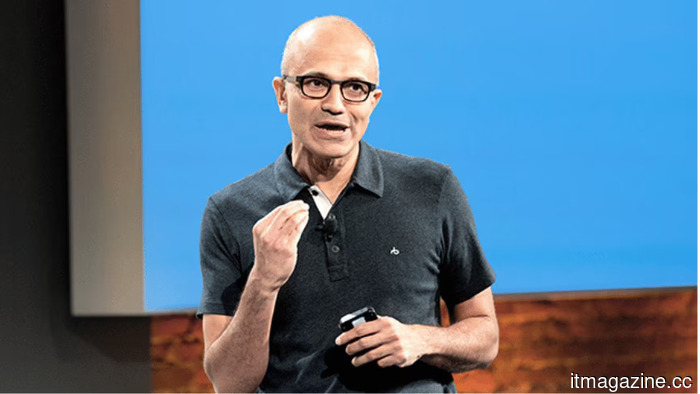
Nadella's Inverse Information Paradox: The concealed expense of AI
Satya Nadella of Microsoft has stated that every company utilizing AI is effectively paying for it twice—once in monetary terms and again by disclosing valuable proprietary information needed to optimize its functionality. He refers to this phenomenon as the Reverse Information Paradox, and he leads the company that contributed to this dilemma.
Nadella warns those investing in AI that they are making this dual payment, with the second payment being their most valuable assets. In an extensive essay on X, which garnered 10 million views, the Microsoft CEO introduced his concept of the Reverse Information Paradox. This notion is insightful yet somewhat complex and feels particularly uncomfortable coming from him.
The concept revolves around paying first in cash, and then in confidential information. The term plays off the ideas of Nobel Prize-winning economist Kenneth Arrow, who identified the seller’s conundrum in information transactions: to sell information, one must often disclose it, which raises the question of why anyone would pay for it once revealed. Nadella reframes this idea; in the era of AI, he contends that the buyer bears the risk. To create a truly effective model, proprietary knowledge must be provided. The more effective the model is desired to be, the more information needs to be shared.
Thus, companies pay both in money and in invaluable expertise—the unique knowledge that distinguishes them. “As you utilize what you have purchased, the seller gains deeper insights about you, while you acquire little understanding of what the seller gains in return," he noted.
The subtlety lies in how this knowledge escapes—through what he refers to as "exhaust," which includes the prompts you enter, the tools utilized by agents, and especially the corrections made when the model makes errors. Every adjustment teaches the model, resulting in a form of intelligence that competitors cannot easily acquire yet leaks gradually—piece by piece, correction by correction, evaluation by evaluation.
Nadella’s conclusion is stark: if learning is unidirectional, then financial benefits flow toward the AI owner rather than the knowledge holder.
However, there is a notable irony in this warning since it comes from Microsoft itself. The company has invested billions in OpenAI and houses ChatGPT on its Azure platform. Their Copilot assistant is designed to delve deeply into a company’s communications, files, and chats. As reported in 2024, around half of the data leaders in one survey had restricted or paused the use of Copilot due to concerns over data privacy.
Acknowledging this double standard, Nadella admits that AI labs request fair-use rights to train on publicly available data yet limit customers from doing the same with the outputs of their models. While he makes a valid point, he also promotes his own solutions.
Nadella proposes establishing a strict "trust boundary" around a company’s data, evaluations, and memory, ensuring that nothing passes this boundary—including "intelligence exhaust"—without consent. He references a viewpoint from Palantir’s Alex Karp about the importance of controlling the means of production.
His recommendations encompass five key points: take ownership of your evaluations, create learning environments within your own secure boundary, keep the orchestration layer free from dependence on any single model, and allow everything to compound over time. Microsoft, of course, markets products designed to accomplish each of these tasks.
Stripping away the promotional aspect, the essential argument remains clear. Nadella is the same individual who has critiqued the AI giants he once helped to establish. The leading labs are quietly accumulating wealth from other companies' expertise, while the firms providing that knowledge are, for now, doing so without compensation.
Other articles
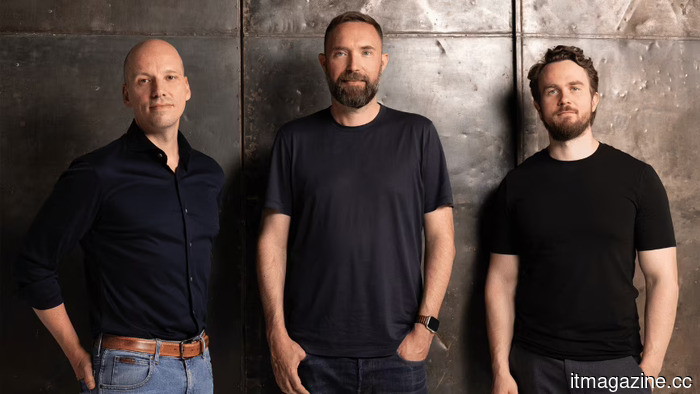 Helsing secures $1.8 billion, reaching an $18 billion valuation.
Helsing has secured $1.8 billion at an $18 billion valuation, establishing itself as Europe’s largest defense startup, despite receiving significant investment from the U.S. for its sovereign-AI round.
Helsing secures $1.8 billion, reaching an $18 billion valuation.
Helsing has secured $1.8 billion at an $18 billion valuation, establishing itself as Europe’s largest defense startup, despite receiving significant investment from the U.S. for its sovereign-AI round.
 Tesla's Cybercab parking lot circuit isn't the main narrative.
Tesla hinted at employee rides in the Cybercab at Giga Texas. The regulatory change that finally allows the wheel-less robotaxi occurred just two days prior.
Tesla's Cybercab parking lot circuit isn't the main narrative.
Tesla hinted at employee rides in the Cybercab at Giga Texas. The regulatory change that finally allows the wheel-less robotaxi occurred just two days prior.
 The prominent Privacy Display feature of the Samsung Galaxy S26 Ultra might come with an undesirable red drawback.
Samsung is looking into reports of reddish spots appearing on certain Galaxy S26 Ultra screens, with the atypical Privacy Display panel being a potential reason.
The prominent Privacy Display feature of the Samsung Galaxy S26 Ultra might come with an undesirable red drawback.
Samsung is looking into reports of reddish spots appearing on certain Galaxy S26 Ultra screens, with the atypical Privacy Display panel being a potential reason.
 Google's major Waze AI update features a button that silences the app.
Google has incorporated Gemini voice search and a motorcycle mode into Waze. The feature that users are likely to find most useful is the 'less chatty' mode.
Google's major Waze AI update features a button that silences the app.
Google has incorporated Gemini voice search and a motorcycle mode into Waze. The feature that users are likely to find most useful is the 'less chatty' mode.
 Meta’s Hyperion data center reaches $50 billion and divides a town.
Meta's Hyperion data center in Louisiana has grown from $10 billion to more than $50 billion in less than two years, resulting in both teacher bonuses and evictions.
Meta’s Hyperion data center reaches $50 billion and divides a town.
Meta's Hyperion data center in Louisiana has grown from $10 billion to more than $50 billion in less than two years, resulting in both teacher bonuses and evictions.
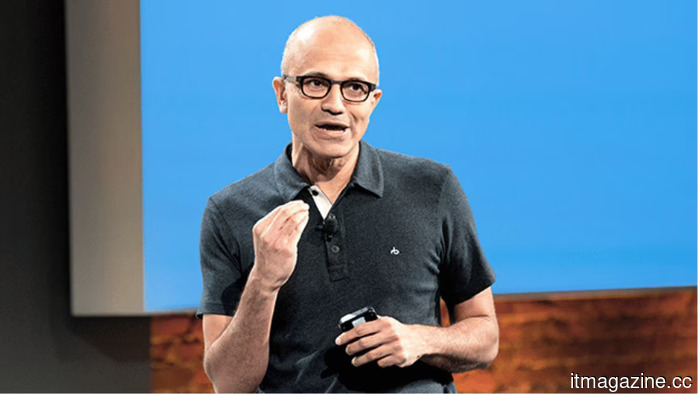 Nadella's Reverse Information Paradox: The unseen cost of AI
Satya Nadella states that companies leveraging AI incur costs in two ways: through direct payments and through proprietary knowledge. He refers to this as the Reverse Information Paradox, which Microsoft played a role in developing.
Nadella's Reverse Information Paradox: The unseen cost of AI
Satya Nadella states that companies leveraging AI incur costs in two ways: through direct payments and through proprietary knowledge. He refers to this as the Reverse Information Paradox, which Microsoft played a role in developing.
Nadella's Inverse Information Paradox: The concealed expense of AI
Satya Nadella states that companies employing AI incur costs in both monetary terms and in confidential expertise. He refers to this as the Reverse Information Paradox, which Microsoft contributed to developing.