
China's BrainCo is wagering that brain technology will come from a headband rather than surgical methods.
The most prominent competition in brain-computer interfaces is focused on surgical approaches. However, one of China's leading neurotechnology companies intentionally chooses not to engage in this area, according to CNBC.
BrainCo, located in Hangzhou, creates devices that can interpret brain activity from outside the skull. Their headbands and caps detect electrical signals via the scalp, avoiding the need for surgical procedures.
The company is among Hangzhou's six "little dragons," a group of startups that represent China's technological ambitions. Founded in 2015, BrainCo originated from the Harvard Innovation Labs.
What they produce
The clinical applications are the most prominent aspect of their offerings. BrainCo's bionic hands, which have received approval from the US FDA, interpret the neural and muscular signals of amputees to translate intended movements into finger motions.
The product range extends to consumer items, including a sleep aid that employs low-intensity electrical pulses targeting neurochemicals linked to stress relief.
This strategy encapsulates their approach: demonstrate the technology's effectiveness in medicine, where the advantages are clear, and then integrate the sensors into everyday consumer products.
Divergent philosophies and funding models
The difference with Neuralink is quite significant. Elon Musk’s company directly implants electrodes into brain tissue, which produces a stronger signal but carries greater risks.
Implants are becoming more prevalent, with Paradromics placing a brain chip in its first patient, and Science Corp preparing for its own human implantations. The invasive sector is now more competitive.
China is pursuing both paths, having approved the first commercial brain implant globally. Non-invasive devices still represent about 82% of the domestic BCI market.
The funding landscape also differs. American neurotechnology is predominantly financed by billionaires, while China benefits from backing by seven ministries and a national BCI plan aimed at achieving significant advancements by 2027.
BrainCo has raised significant funds, securing approximately 2 billion yuan (around $280 million), co-led by IDG Capital, and has confidentially filed for a listing in Hong Kong.
Concerns to consider
Wearables decrease the medical risks but introduce a different set of challenges. Brain implants cannot be casually distributed in a classroom, yet a headband can be easily given to students.
BrainCo is acutely aware of this. In 2019, their Focus headbands, used by children at a primary school in Zhejiang to measure attention for teachers, faced severe backlash.
The local education bureau shut down the trial. BrainCo asserted that the devices were utilized in school trials to enhance learning efficiency and had not been sold to any public institution.
This incident raised crucial questions early on. Neural data is inherently personal, and the technology that's simplest to wear is also the easiest to impose on individuals who may not agree to it.
These concerns are longstanding within the field, with ongoing discussions about the exciting and alarming aspects of brain-computer interfaces. What is new, however, is the possibility of this technology emerging without a surgeon serving as a gatekeeper.
Undefined boundaries
Some within the industry advocate for a clear divide. NeuraLink competitor Inbrain has declared that it will never extend brain implants beyond healthcare, completely rejecting consumer applications.
In contrast, a wearable company cannot make such a commitment, as targeting the consumer market is fundamental to its purpose. This is the choice BrainCo has made, and it seems practical from a business perspective.
Whether this decision is reasonable for everyone else relies on regulations that are, for the most part, still yet to be established. While surgical methods attract attention, it is the headband that is likely to be widely adopted.
Other articles
 The surge in gas power plants due to AI, and the struggle to prevent it.
AI data centers have triggered the most significant surge in gas plant construction to date. Clean energy proponents are unable to match this expansion, so they are targeting regulators instead.
The surge in gas power plants due to AI, and the struggle to prevent it.
AI data centers have triggered the most significant surge in gas plant construction to date. Clean energy proponents are unable to match this expansion, so they are targeting regulators instead.
 The founder of Zhipu advocates for open frontier AI.
Tang Jie argues that AI security is derived from transparency rather than restrictions, while Beijing considers limiting foreign access to China's premier open models.
The founder of Zhipu advocates for open frontier AI.
Tang Jie argues that AI security is derived from transparency rather than restrictions, while Beijing considers limiting foreign access to China's premier open models.
 Ubisoft's remake of Black Flag is a sign of a deeper issue rather than a strategic move.
Assassin's Creed Black Flag Resynced is a decent remake. Its existence is a result of Ubisoft canceling six games and needing a product to market.
Ubisoft's remake of Black Flag is a sign of a deeper issue rather than a strategic move.
Assassin's Creed Black Flag Resynced is a decent remake. Its existence is a result of Ubisoft canceling six games and needing a product to market.
 China's response to SpaceX's reusable rockets involves literally capturing boosters in a net.
China is the only other entity to have retrieved an orbital rocket booster, utilizing a cable net aboard a ship rather than employing landing legs.
China's response to SpaceX's reusable rockets involves literally capturing boosters in a net.
China is the only other entity to have retrieved an orbital rocket booster, utilizing a cable net aboard a ship rather than employing landing legs.
 Netflix might introduce channels that are always on, which is essentially what cable offers.
Netflix is said to have talked about creating 24/7 genre channels and offering subscriptions to competitors through its own app, essentially reviving the cable model it previously dismantled.
Netflix might introduce channels that are always on, which is essentially what cable offers.
Netflix is said to have talked about creating 24/7 genre channels and offering subscriptions to competitors through its own app, essentially reviving the cable model it previously dismantled.
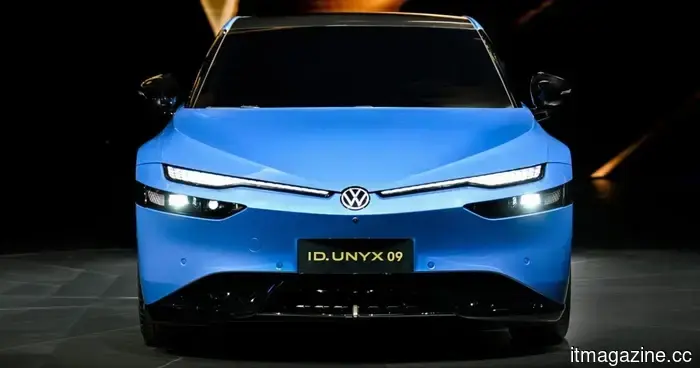 The ID. Unyx 09 from Volkswagen has just been leaked, and it's the type of electric vehicle I'm eager to see in the US.
It may be available for purchase in China in the second half of 2026, and the rest of the world is likely to be frustrated that it won't be released here.
The ID. Unyx 09 from Volkswagen has just been leaked, and it's the type of electric vehicle I'm eager to see in the US.
It may be available for purchase in China in the second half of 2026, and the rest of the world is likely to be frustrated that it won't be released here.
China's BrainCo is wagering that brain technology will come from a headband rather than surgical methods.
BrainCo detects brain activity via the scalp rather than utilizing implants. This makes it simpler to expand compared to Neuralink, while also presenting greater challenges for regulation.