
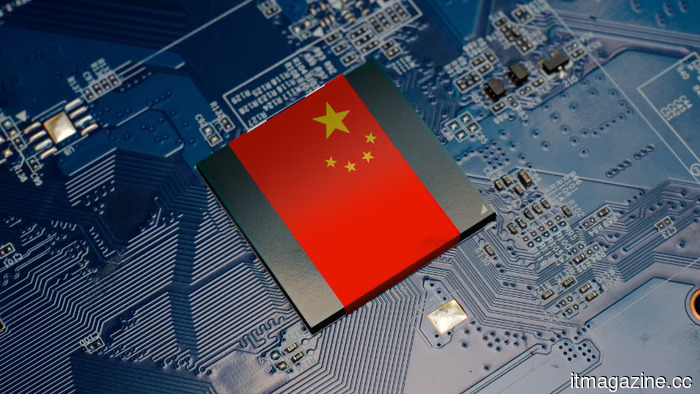
The founder of Zhipu advocates for open frontier AI.
The founder of China's leading AI laboratory has clearly advocated for openness. Tang Jie from Zhipu stated in an internal memo reviewed by Bloomberg that frontier AI should be widely accessible instead of being managed by a select few. He argues that genuine safety arises from widespread participation, sharing, and oversight rather than from technological barriers.
Zhipu has supported this stance with their product offerings, having released GLM-5.2 under an open-source license, making it freely available for download and commercialization.
The timing is notable. Tang's remarks came shortly after Reuters reported that Beijing is contemplating the opposite approach. Chinese officials are considering restrictions on international access to the country's most advanced open models.
This situation puts Zhipu's founder at odds with the prevailing direction in his own capital. Openness has historically been a strategic advantage for China, yet the government is now questioning whether it has given away too much.
The company benefits commercially from maintaining accessibility. Its models have gained global traction precisely because they are free, and affordable Chinese models are now approaching the levels of U.S. frontier labs.
This does not invalidate Tang's argument; however, it suggests that he stands to gain from his advocacy, a position shared by many in this debate.
The open-source security argument is not marginal. Its premise is that a larger pool of independent scrutiny can identify flaws in a system more quickly than a limited team behind closed doors. Defenders of this view echo this sentiment. When Washington imposed restrictions on a frontier model, 100 cybersecurity experts signed an open letter asserting that the ban benefitted attackers more than defenders. They contended that attackers would acquire robust models regardless, while researchers and security teams striving to keep pace are the ones sidelined.
On the opposing side, those favoring closed models have a straightforward counterargument: once an open-weight model is downloaded, it cannot be recalled, patched, or turned off. Making frontier capabilities public means they are accessible to everyone, including individuals developing bioweapons or large-scale cyberattacks. Any safeguards encoded into a model can be removed by anyone possessing the weights and sufficient resources.
Both sides present valid concerns. The disagreement centers on which risk is greater, and currently, there is no clear empirical resolution.
The stakes are high now. Zhipu has moved beyond being a novelty. It has secured billions in funding, gone public in Hong Kong, and its share sale garnered significant interest from investors betting that Chinese AI will fill the void created by restricted U.S. models.
Thus, the matter is no longer just theoretical. If China decides to limit its open models, it would simultaneously close off the world's primary source of free frontier-class AI alongside America's.
Tang is advocating against this potential outcome from within the nation most likely to enact such a decision. Whether anyone in Beijing is paying attention is beyond his control.
Other articles
 Ubisoft's remake of Black Flag is a sign of a deeper issue rather than a strategic move.
Assassin's Creed Black Flag Resynced is a decent remake. Its existence is a result of Ubisoft canceling six games and needing a product to market.
Ubisoft's remake of Black Flag is a sign of a deeper issue rather than a strategic move.
Assassin's Creed Black Flag Resynced is a decent remake. Its existence is a result of Ubisoft canceling six games and needing a product to market.
 The remake of Ubisoft's Black Flag is a sign of a larger issue, rather than a well-thought-out plan.
Assassin's Creed Black Flag Resynced is a solid remake. It was created because Ubisoft terminated six games and requires a product to generate revenue.
The remake of Ubisoft's Black Flag is a sign of a larger issue, rather than a well-thought-out plan.
Assassin's Creed Black Flag Resynced is a solid remake. It was created because Ubisoft terminated six games and requires a product to generate revenue.
 The competition in AI is no longer centered around having the largest model.
Companies are selecting AI models based on specific tasks, costs, and control rather than their rankings in benchmarks. 'Satisfactory' is outperforming 'top-notch', and the expenses shed light on the reasoning behind this choice.
The competition in AI is no longer centered around having the largest model.
Companies are selecting AI models based on specific tasks, costs, and control rather than their rankings in benchmarks. 'Satisfactory' is outperforming 'top-notch', and the expenses shed light on the reasoning behind this choice.
 The remake of Ubisoft's Black Flag is a sign of a problem, rather than a part of a strategy.
Assassin's Creed Black Flag Resynced is a solid remake. Its development was prompted by Ubisoft's cancellation of six games, creating the need for something to generate sales.
China's BrainCo is wagering that brain technology will come from a headband rather than surgical methods.
BrainCo detects brain activity via the scalp rather than utilizing implants. This makes it simpler to expand compared to Neuralink, while also presenting greater challenges for regulation.
The remake of Ubisoft's Black Flag is a sign of a problem, rather than a part of a strategy.
Assassin's Creed Black Flag Resynced is a solid remake. Its development was prompted by Ubisoft's cancellation of six games, creating the need for something to generate sales.
China's BrainCo is wagering that brain technology will come from a headband rather than surgical methods.
BrainCo detects brain activity via the scalp rather than utilizing implants. This makes it simpler to expand compared to Neuralink, while also presenting greater challenges for regulation.
The founder of Zhipu advocates for open frontier AI.
Tang Jie argues that AI security is derived from transparency rather than restrictions, while Beijing considers limiting foreign access to China's premier open models.