
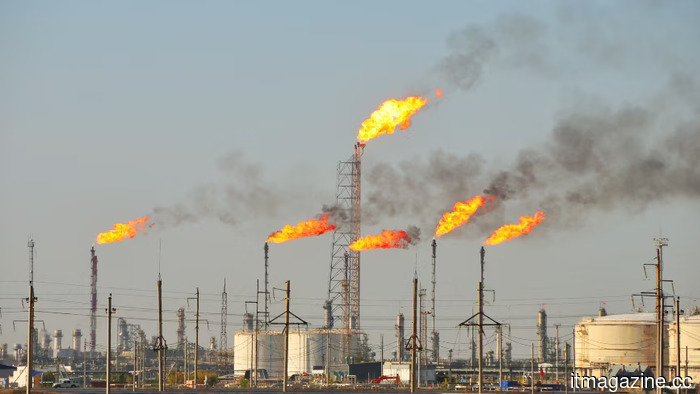
The surge in gas power plants due to AI, and the struggle to prevent it.
The expansion of AI has sparked a massive construction boom in natural gas-fired power plants, something the fossil-fuel industry has struggled to achieve on its own, as reported by the Associated Press. Aging coal plants are also being kept operational beyond their planned retirement as utilities, plant owners, and the federal government push to delay shutdowns.
The driving factor is straightforward mathematics. Certain data centers use more electricity than a medium-sized city, and wind and solar energy cannot be developed fast enough to meet the demand.
Several states are attempting to address the situation through legislation. A bill awaiting New York Governor Kathy Hochul's approval would require large data centers to meet renewable energy benchmarks starting in 2030, aiming for at least 90% renewable energy by 2040. State Senator Kristen Gonzalez, the bill's author, believes these targets are attainable, arguing that the wealthiest companies can invest billions in data centers and also fund the necessary power sources.
Michigan, Oregon, and Minnesota have taken the lead, passing laws within the past 18 months to uphold commitments to emissions-free electricity by 2040. Michigan has linked this initiative to financial incentives, mandating that hyperscale data centers achieve 90% clean energy within six years to retain a significant sales tax exemption. Similar legislative efforts have emerged in California, Illinois, New Jersey, Pennsylvania, and Virginia.
Interestingly, a frank acknowledgment comes from Bob Jenks of the Oregon Citizens’ Utility Board, who noted that the 2040 goal is difficult to meet with the presence of data centers, and even harder without them. This highlights the dilemma, as the clean-energy target was already ambitious, and the rise of AI has pushed it even further out of reach.
Households are experiencing the impact first, with rising electricity bills across many utility areas, partly driven by AI data centers increasing power costs at factories in the Rust Belt.
In response to the construction boom, advocates have shifted their focus to regulatory measures. Their strategy is to encourage regulators to allow large power consumers to create their own clean energy generation and connect it to the grid. Colorado has instructed Xcel Energy to establish such a program. In an April filing, Xcel acknowledged that this could benefit customers, referencing Google’s projects that integrate 115 megawatts of geothermal energy in Nevada and 1,900 megawatts from wind, solar, and storage in Minnesota.
Google's agreement with NV Energy is seen as a groundbreaking arrangement, with the company asserting that similar projects are approved or in progress in eight additional states. The Corporate Energy Buyers Association (CEBA) has secured a similar deal with Georgia Power and is currently working in North Carolina.
The appeal to utilities is largely commercial rather than ethical. Utilities can secure a significant long-term customer that helps finance grid expansion instead of losing that customer to independent energy generation.
The crucial battles are fought over grid access, not in the legislature. Regulators are expediting connections for data centers, and the entity that manages this queue has significant influence over what infrastructure is developed. Investment is flocking to this bottleneck, with Nvidia-backed startups raising funds to address data center energy needs; now, energy has become the critical limitation for AI, rather than silicon.
Communities are also taking a stand, having blocked 75 data center projects valued at $130 billion in just one quarter. Congress is also getting involved, with the House voting on a bill aimed at shifting energy costs from data centers back to the companies responsible for them.
According to CEBA’s policy chief, the decisions being made currently will shape energy policy for the next two to three decades. This perspective underscores the importance of the technical discussions surrounding grid interconnection, which deserve more attention than they currently receive.
As construction of gas plants progresses, the regulatory framework is still under development. In such scenarios, concrete typically prevails.
Other articles
 The demand for AI is 'boundless'. So why are stock prices for chip companies declining?
Executives claim that the demand for AI is insatiable and that order books are filled for the next five years. Despite this, chip stocks continue to fluctuate. The issue lies in the expectations rather than the actual demand.
The demand for AI is 'boundless'. So why are stock prices for chip companies declining?
Executives claim that the demand for AI is insatiable and that order books are filled for the next five years. Despite this, chip stocks continue to fluctuate. The issue lies in the expectations rather than the actual demand.
 The competition in AI is no longer centered around having the largest model.
Companies are selecting AI models based on specific tasks, costs, and control rather than their rankings in benchmarks. 'Satisfactory' is outperforming 'top-notch', and the expenses shed light on the reasoning behind this choice.
The competition in AI is no longer centered around having the largest model.
Companies are selecting AI models based on specific tasks, costs, and control rather than their rankings in benchmarks. 'Satisfactory' is outperforming 'top-notch', and the expenses shed light on the reasoning behind this choice.
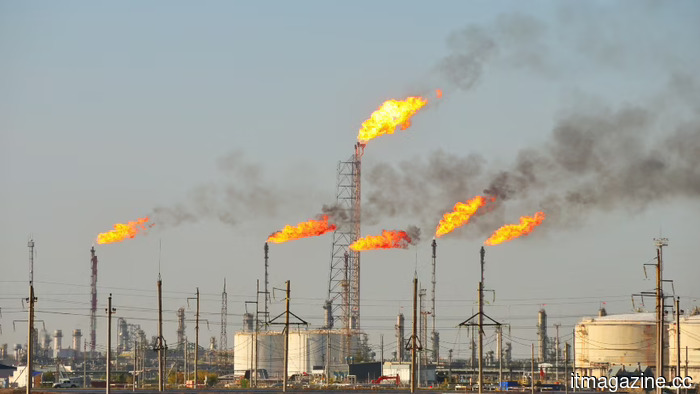 The surge in gas plants driven by AI and the efforts to combat it.
AI data centers have triggered the most significant surge in gas plant construction to date. Advocates for clean energy are unable to match this pace, so they are targeting regulators instead.
The surge in gas plants driven by AI and the efforts to combat it.
AI data centers have triggered the most significant surge in gas plant construction to date. Advocates for clean energy are unable to match this pace, so they are targeting regulators instead.
 Your upcoming song might soon feature an AI warning label, and the music industry fully supports this.
The music industry is urging Spotify and Apple Music to tag AI-generated songs, aiming to provide listeners with more transparency as the use of artificial intelligence in music creation grows.
Your upcoming song might soon feature an AI warning label, and the music industry fully supports this.
The music industry is urging Spotify and Apple Music to tag AI-generated songs, aiming to provide listeners with more transparency as the use of artificial intelligence in music creation grows.
 Meta's strongest week since 2024 can be summed up in one word: compute.
On Friday, Meta's stock rose by 6%, and for the week, it increased by 15% following the announcement of Meta Compute, a strategy to offer AI computing capacity to external clients.
Meta's strongest week since 2024 can be summed up in one word: compute.
On Friday, Meta's stock rose by 6%, and for the week, it increased by 15% following the announcement of Meta Compute, a strategy to offer AI computing capacity to external clients.
 Amazon's reduction of 57,000 jobs and its impact on those remaining.
Los empleados de Amazon que fueron despedidos enfrentan búsquedas de empleo que se prolongan más de un año, mientras que sus compañeros que permanecieron asumen la carga laboral. El costo humano de los recortes en el sector tecnológico.
Amazon's reduction of 57,000 jobs and its impact on those remaining.
Los empleados de Amazon que fueron despedidos enfrentan búsquedas de empleo que se prolongan más de un año, mientras que sus compañeros que permanecieron asumen la carga laboral. El costo humano de los recortes en el sector tecnológico.
The surge in gas power plants due to AI, and the struggle to prevent it.
AI data centers have triggered the most significant surge in gas plant construction to date. Clean energy proponents are unable to match this expansion, so they are targeting regulators instead.