
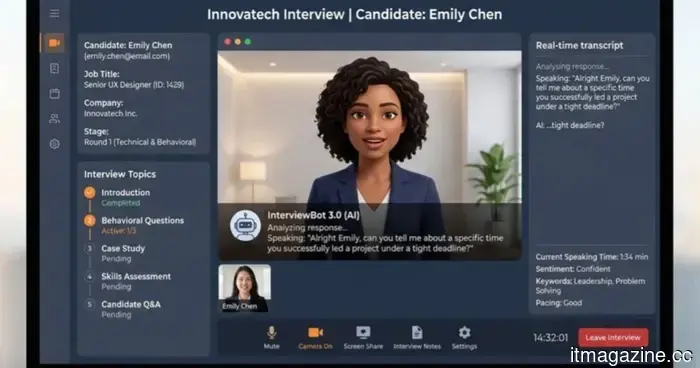
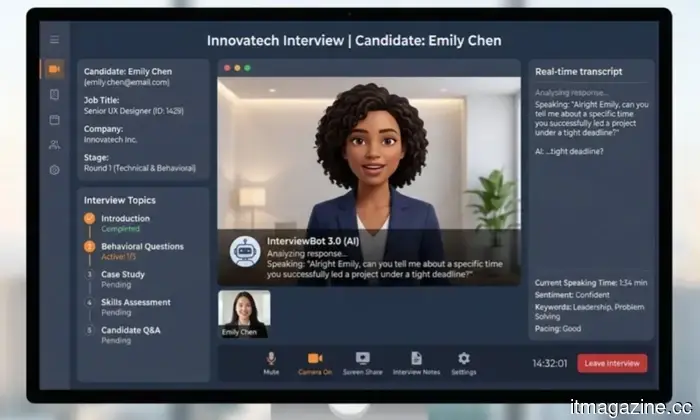
The appearance of an AI interviewer might be just as important as the choices it makes.
Researchers discovered that the matching of race and gender between applicants and automated interview avatars influenced how fairly rejected candidates perceived the interview, despite everyone receiving the same outcome.
An automated hiring system can apply uniform treatment to all applicants, yet some individuals may feel singled out. The study revealed that rejected candidates evaluated an automated interview differently based on the race and gender of the avatar presenting the results.
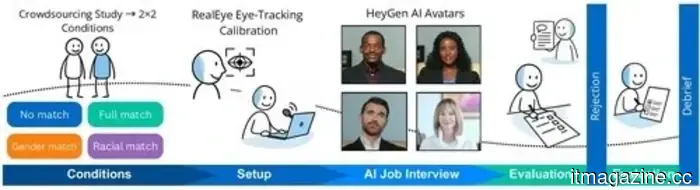
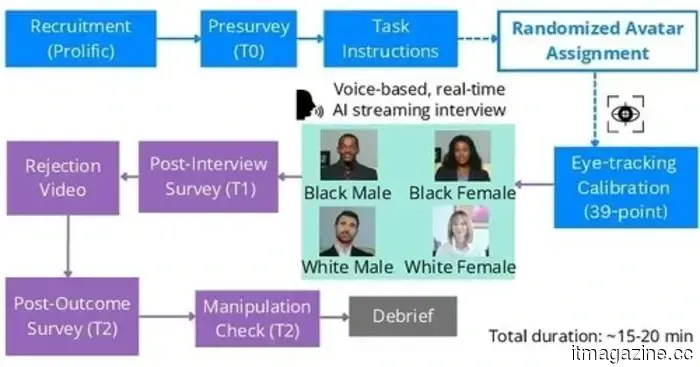
Approximately 220 participants took part in a simulated interview for a fictional customer support position with one of four lifelike AI avatars. Although all were rejected, perceptions of fairness varied according to the interviewer's appearance. An audit of the algorithms might overlook this reaction since candidates engage with a human-like face rather than mere code.
Why partial matching was perceived negatively
Candidates who shared only one attribute—either gender or skin tone—with the avatar deemed the process less fair than those who matched on both attributes or neither.
The research did not clarify why partial matching elicited the strongest reactions. Limited resemblance could have altered candidates' expectations during the interaction, making the rejection feel more personal. Regardless of the reason, assigning a familiar face to an AI interviewer does not ensure applicants will view it as neutral.
What changed post-rejection
Before the decision, trust in the AI consistently remained high, regardless of the avatar combinations. Eye-tracking data showed that participants focused more on faces that did not match their skin tone.
After the rejection, candidates grew increasingly skeptical of the process. A racial mismatch made them more inclined to attribute the result to bias. Despite the automated outcome remaining constant, the persona on-screen influenced how candidates interpreted it.
The experiment utilized a fictional role and a standardized rejection, so it does not confirm that actual hiring avatars yield the same responses. However, it illustrates how quickly perceptions of fairness can shift once an automated decision becomes personal.
Recommendations for companies to test next
Organizations employing AI interviewers should assess both the interface and the decision-making model. Consistent scoring does not prevent candidates from ascribing social meanings to an avatar's appearance.
Fairness testing should include applicants from diverse demographic backgrounds and analyze their reactions before and after a negative result. Companies should also evaluate whether a less human-like interface raises fewer concerns compared to a photorealistic one. The most prudent choice may be the design that establishes clear expectations, rather than the one that strives to appear relatable.
Paulo Vargas is an English major who transitioned into reporting and then technical writing, with a career that has consistently circled back to...
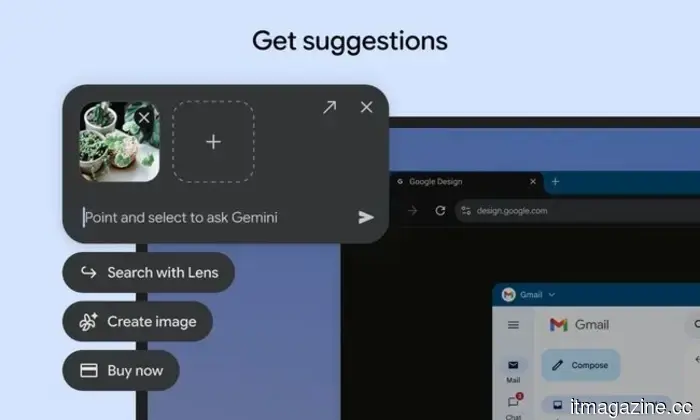
Google recently unveiled an unannounced app on the Play Store called Magic Pointer, designed for Googlebooks. This new app, updated on July 10, transforms the cursor into a Gemini shortcut that can perform actions based on user selections on the screen. Magic Pointer allows users to send images to Lens, generate related images, or initiate shopping actions without requiring them to open a separate chatbot. Currently, regular Android devices are marked as incompatible, indicating that the listing is more of an early preview than a general release.
Many individuals are attempting to reduce their AI usage, but a new report suggests that completely escaping AI may be unrealistic. A survey conducted with 2,055 adults in the UK found that 42% intentionally limit their AI exposure. Additionally, 70% of respondents believe that avoiding AI is challenging or impossible, even when they actively try to use less of it.
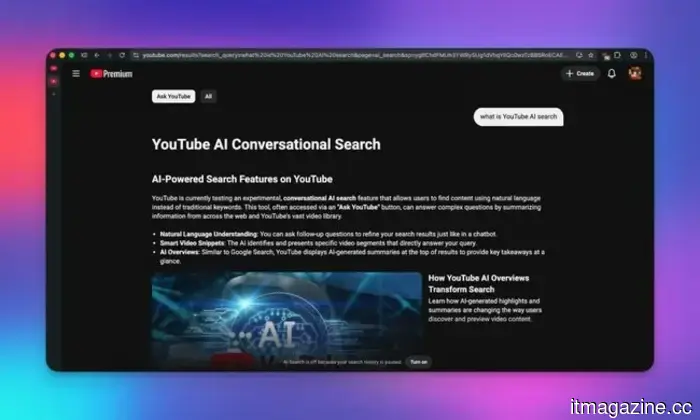
YouTube is rolling out a new AI-powered search feature in the U.S. called Ask YouTube, which allows users to find videos based on descriptions of situations they provide. This feature expands beyond the Premium-only test introduced at Google I/O 2026, enabling users to pose complete questions rather than just input keywords and browse through a traditional list of results. It is intended for broader searches where the specific video, channel, or topic may not be clearly defined.


Other articles
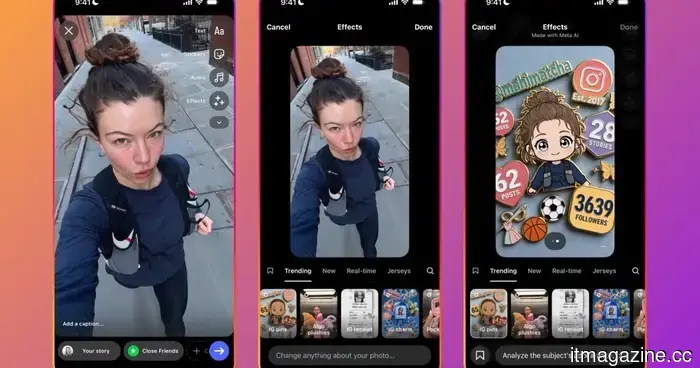 Meta has just removed its most contentious AI image generation feature only days after it was released.
Meta introduced a feature that allowed anyone to create AI images of public Instagram users who were automatically opted in but later retracted it.
Meta has just removed its most contentious AI image generation feature only days after it was released.
Meta introduced a feature that allowed anyone to create AI images of public Instagram users who were automatically opted in but later retracted it.
 Google might finally move away from Samsung’s modem in the Pixel 11, and the Tensor G6 could be an improvement as a result.
The FCC documentation for Google’s Pixel 11 includes a reference to MediaTek, indicating that the Tensor G6 might move away from Samsung’s Exynos modem in an effort to enhance battery efficiency and improve daily connectivity.
Google might finally move away from Samsung’s modem in the Pixel 11, and the Tensor G6 could be an improvement as a result.
The FCC documentation for Google’s Pixel 11 includes a reference to MediaTek, indicating that the Tensor G6 might move away from Samsung’s Exynos modem in an effort to enhance battery efficiency and improve daily connectivity.
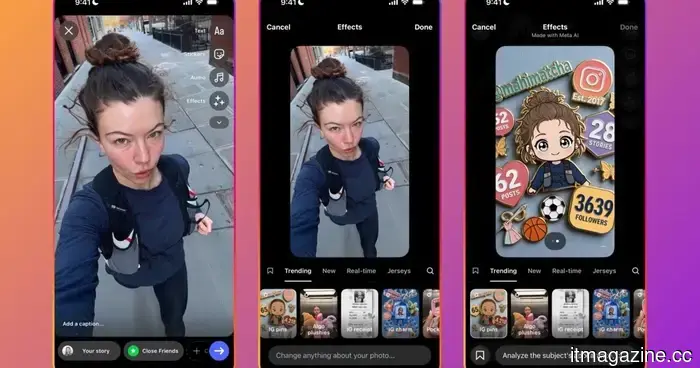 Meta has just removed its most contentious AI image generation feature only days after its debut.
Meta introduced a feature that allowed users to create AI images of public Instagram accounts, with the opt-in setting enabled by default, but then decided to retract it.
Meta has just removed its most contentious AI image generation feature only days after its debut.
Meta introduced a feature that allowed users to create AI images of public Instagram accounts, with the opt-in setting enabled by default, but then decided to retract it.
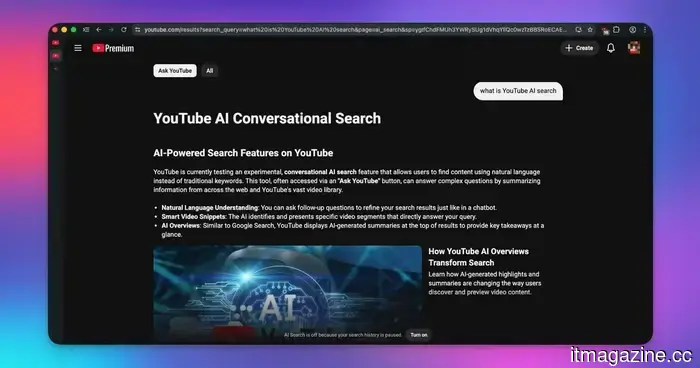 YouTube's AI-driven search is being launched in the US, allowing users to discover videos by describing specific situations.
U.S. users can now pose conversational questions on YouTube to search for videos related to specific situations, ideas, and activities.
YouTube's AI-driven search is being launched in the US, allowing users to discover videos by describing specific situations.
U.S. users can now pose conversational questions on YouTube to search for videos related to specific situations, ideas, and activities.
 You may choose to stop utilizing AI, but this recent report suggests that you are likely unable to avoid it.
A recent survey in the UK reveals that individuals are intentionally restricting their use of AI, despite the fact that many feel it has become challenging or even impossible to avoid exposure to AI.
You may choose to stop utilizing AI, but this recent report suggests that you are likely unable to avoid it.
A recent survey in the UK reveals that individuals are intentionally restricting their use of AI, despite the fact that many feel it has become challenging or even impossible to avoid exposure to AI.
The appearance of an AI interviewer might be just as important as the choices it makes.
Candidates responded variably to the same AI hiring rejections based on the race and gender of the avatar, indicating that issues of fairness can originate from interface design even before the algorithm is reviewed.