

You may choose to stop utilizing AI, but this recent report suggests that you are likely unable to avoid it.
A survey conducted in the UK revealed that a significant number of individuals feel that exposure to AI is inevitable, prompting deeper considerations regarding consent, privacy, and the practicality of opting out.
The survey, which involved 2,055 adults in the UK, indicated that 42% consciously try to limit their usage of AI. Additionally, 70% reported that avoiding AI exposure would be challenging or unattainable, even when they wished to reduce it.
Simply deleting a chatbot app only removes the most apparent option. In reality, people have much less control when automated systems are integrated into workplace tools or essential services they rely on.
Reasons for scaling back on AI usage
Privacy concerns are the primary reason individuals are setting limits. Twenty-nine percent mentioned worries about data privacy, security, and compliance, making this the most cited reason for reducing AI use.
Another 22% preferred maintaining their current working methods. The lack of skills wasn't the leading barrier; many respondents who understood the technology chose not to incorporate it into their routines.
This contradicts the industry's common belief that familiarity with AI leads to increased acceptance. Some users recognize the advantages of these tools but still deem the trade-offs unacceptable.
Is opting out still a viable option?
Consent becomes less clear when individuals cannot identify where AI is utilized or what information it handles. It is straightforward to refrain from accessing ChatGPT, but avoiding automated decisions embedded within other services is far more complicated.
Individuals can decline to use visible tools while unnoticed systems continue to operate in the background. A true opt-out would require transparent disclosure, practical controls, and alternatives that do not penalize users for choosing not to engage.
Without such options, exposure to AI becomes the norm. Consent starts to resemble a hidden settings menu rather than a genuine choice.
Why discontent may continue to rise
Public opinion is already changing. The percentage of UK adults who believe that AI poses more risks than rewards increased from 48% in 2023 to 52% in 2026. Conversely, those who perceive more benefits dropped from 38% to 34%.
The perspective of Generation Z adds complexity to the situation. While younger adults utilize AI more, they are also more inclined to impose restrictions and express concerns about the risks involved.
This signals a clear warning to employers and tech companies. The effectiveness of transparent disclosure and practical opt-out options may determine whether caution remains manageable or escalates into broader rejection.






Other articles
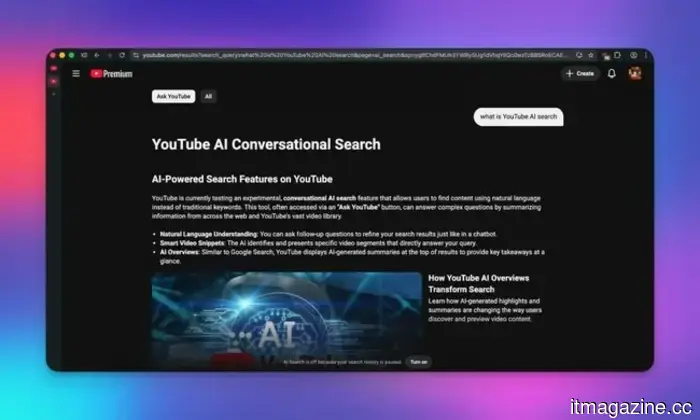
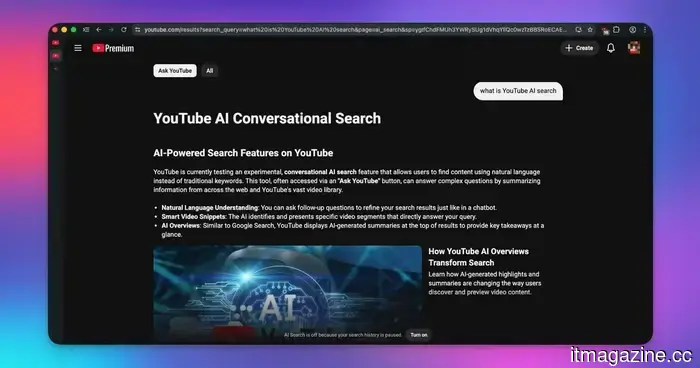 YouTube's AI-driven search is being launched in the US, allowing users to discover videos by describing specific situations.
U.S. users can now pose conversational questions on YouTube to search for videos related to specific situations, ideas, and activities.
YouTube's AI-driven search is being launched in the US, allowing users to discover videos by describing specific situations.
U.S. users can now pose conversational questions on YouTube to search for videos related to specific situations, ideas, and activities.
 Meta has just removed its most contentious AI image generation feature only days after it was released.
Meta introduced a feature that allowed anyone to create AI images of public Instagram users who were automatically opted in but later retracted it.
Meta has just removed its most contentious AI image generation feature only days after it was released.
Meta introduced a feature that allowed anyone to create AI images of public Instagram users who were automatically opted in but later retracted it.
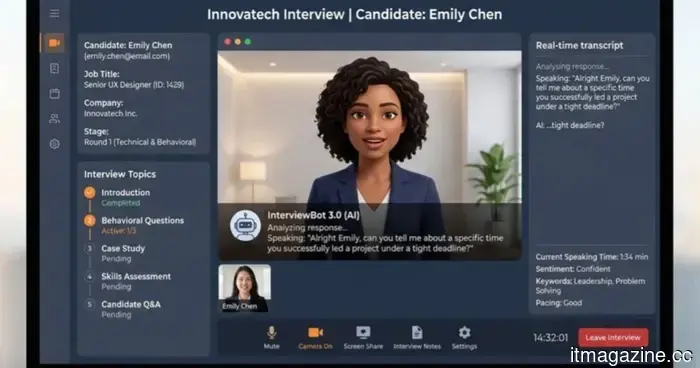 The appearance of an AI interviewer might be just as important as the choices it makes.
Candidates responded variably to the same AI hiring rejections based on the race and gender of the avatar, indicating that issues of fairness can originate from interface design even before the algorithm is reviewed.
The appearance of an AI interviewer might be just as important as the choices it makes.
Candidates responded variably to the same AI hiring rejections based on the race and gender of the avatar, indicating that issues of fairness can originate from interface design even before the algorithm is reviewed.
 Google might finally move away from Samsung’s modem in the Pixel 11, and the Tensor G6 could be an improvement as a result.
The FCC documentation for Google’s Pixel 11 includes a reference to MediaTek, indicating that the Tensor G6 might move away from Samsung’s Exynos modem in an effort to enhance battery efficiency and improve daily connectivity.
Google might finally move away from Samsung’s modem in the Pixel 11, and the Tensor G6 could be an improvement as a result.
The FCC documentation for Google’s Pixel 11 includes a reference to MediaTek, indicating that the Tensor G6 might move away from Samsung’s Exynos modem in an effort to enhance battery efficiency and improve daily connectivity.
 Meta has just removed its most contentious AI image generation feature only days after its debut.
Meta introduced a feature that allowed users to create AI images of public Instagram accounts, with the opt-in setting enabled by default, but then decided to retract it.
Meta has just removed its most contentious AI image generation feature only days after its debut.
Meta introduced a feature that allowed users to create AI images of public Instagram accounts, with the opt-in setting enabled by default, but then decided to retract it.
You may choose to stop utilizing AI, but this recent report suggests that you are likely unable to avoid it.
A recent survey in the UK reveals that individuals are intentionally restricting their use of AI, despite the fact that many feel it has become challenging or even impossible to avoid exposure to AI.