
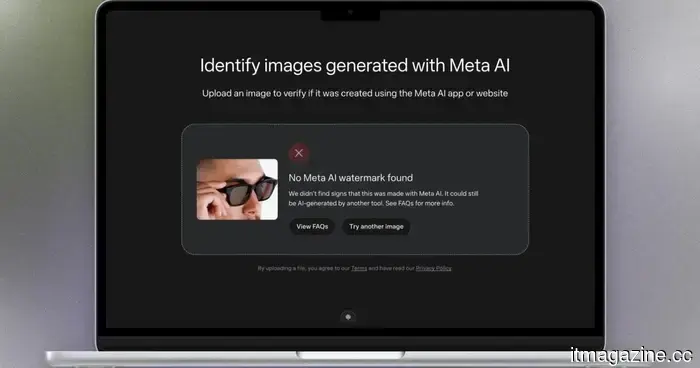
Meta's detection tool is unable to recognize images created by its own Muse Image AI.
Meta has developed a tool for invisible watermarking named Content Seal, which is integrated into all images produced by the Muse Image AI.
Earlier this week, Meta unveiled two new AI offerings, Muse Image and Muse Video. As their names imply, these are generative AI tools for creating images and videos using natural language prompts. Shortly after their launch, these tools generated controversy due to Meta automatically enrolling Instagram users, allowing others to access their publicly shared media and transform it into remixed AI content. Unfortunately for Meta, it seems they have encountered yet another setback.
What seems to be the issue?
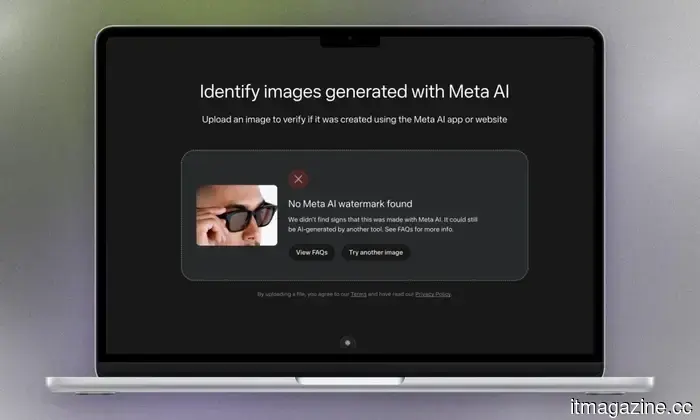
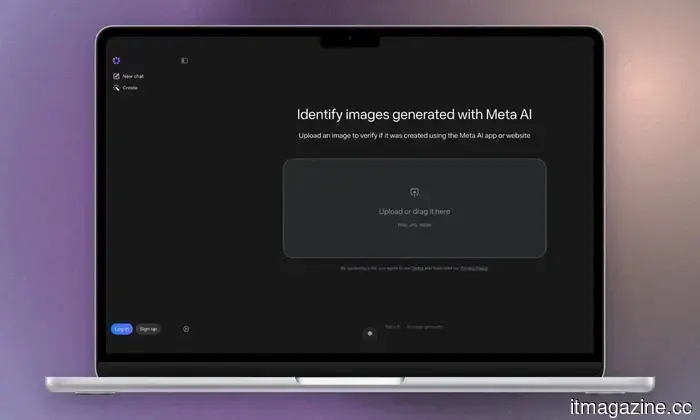
With the launch of its new AI tools, Meta also introduced Content Seal, an invisible watermarking system. Technically, every image created by Muse Image AI includes a hidden signal that helps determine if it was generated by AI. Alongside this, the company introduced its own AI identification tool capable of reading this invisible Content Seal watermark. However, it seems that Meta's AI detection tool is not as effective as the company has asserted.
According to a review by Reuters, images produced by Muse Image AI cannot be reliably identified as AI-generated by Meta's identification software. The outlet examined 40 images created by Muse Image, discovering that the software only managed to recognize them as AI-generated in 45% of the instances. In the remaining 55% of cases, when the images were cropped to one-third or one-fourth of their original size, Meta's AI detection tool effectively failed.
That's quite a blunder!
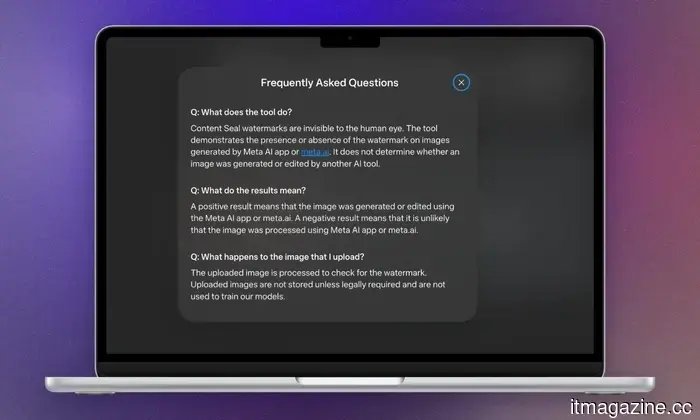
This is a significant oversight. On its website, Meta asserts that the Content Seal system contains a “hidden provenance signal” that remains intact even when images are cropped, compressed, resized, or screenshotted. Following the Reuters analysis, Meta informed the publication that its AI detection tool is still in preview and is not reliable when an image is “heavily cropped.” Additionally, on an FAQ page on its AI detection site, Meta clarifies that if an image was generated using a third-party AI tool rather than Muse Image, the detection tool will be ineffective.
Meta is not the only AI titan to create a system like Content Seal. Google already has its own AI image detection and watermarking system known as SynthID. This system has been adopted by companies like OpenAI as well. Therefore, if an image is generated using ChatGPT or Gemini, it includes the invisible SynthID watermark and can be detected by Google's AI identification tool, which is now accessible on Google Search. However, Google also emphasizes that SynthID is not completely foolproof.
Nadeem is the Managing Editor at Digital Trends.
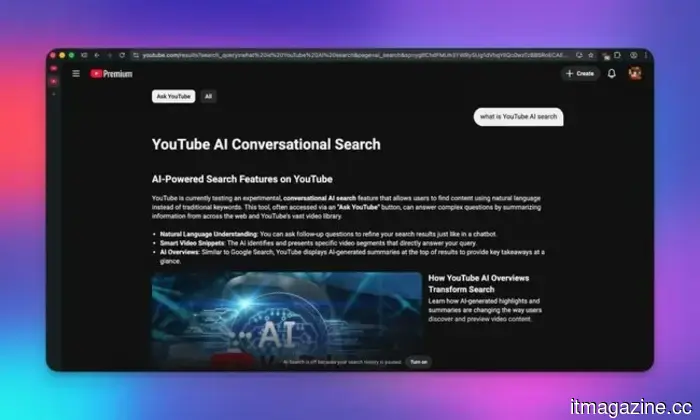
YouTube’s AI-enhanced search feature is now being rolled out in the U.S. to allow users to find videos based on described scenarios.
YouTube users in the U.S. are gaining a new method to search for videos online. The company has begun rolling out Ask YouTube, its conversational AI search function, beyond the Premium-only test that was announced at Google I/O 2026. Instead of typing in a few keywords and browsing a typical list of results, users can pose a complete question to YouTube. This feature is intended for broader searches when the precise video, channel, or topic may not be immediately clear.
Read more
Your Google AI Studio applications can now feature polished, presentable web links.
AI Studio web applications can now utilize personalized subdomains.
Google AI Studio has made the process of building a web application surprisingly simple. You can describe what you wish to create, refine the design through prompts, and publish the result without needing to establish a traditional development environment. A point of inconvenience arises post-deployment, as the finished application typically resides behind a lengthy, unmemorable Cloud Run link. Google is simplifying this last step. AI Studio allows you to assign a personalized address to a deployed web app under the “ai.studio” domain, such as “your-app-name.ai.studio.” A recognizable URL will enhance the project's presentation in a portfolio, client demonstration, social media post, or internal project page.
Read more
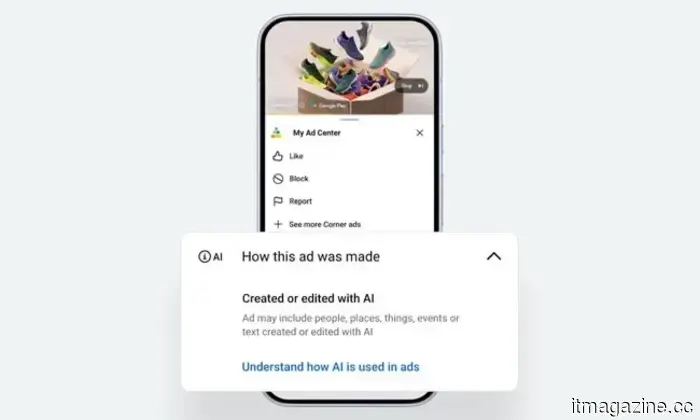
You can now verify if a Google ad was generated using AI.
Google will automatically label its own AI-created ads, while third-party AI ads will still depend on advertisers being transparent.
Have you ever seen an ad and questioned whether it was created by a real person or generated by AI in moments? Google now provides a way to find out. The company has recently introduced a new AI transparency label that indicates whether an ad was created or modified using generative AI tools. This label will be featured in Google's My Ad Center and is being rolled out across Google Search, YouTube, and Discover on a global scale.
Read more

Other articles
 Apple is filing a major lawsuit against OpenAI for allegedly stealing trade secrets.
Apple has filed a lawsuit against OpenAI, claiming that the company has conducted a scheme to obtain confidential product details via former employees, as both firms compete to develop advanced AI hardware.
Apple is filing a major lawsuit against OpenAI for allegedly stealing trade secrets.
Apple has filed a lawsuit against OpenAI, claiming that the company has conducted a scheme to obtain confidential product details via former employees, as both firms compete to develop advanced AI hardware.
 The upcoming "flagship killer" is being developed by Motorola, but it might not arrive in the US in the near future.
With a 7,100mAh battery, magnetic charging similar to MagSafe, and a 7,000-nit QHD+ LTPO display, it boasts remarkable features, yet it's truly inaccessible to buyers in the US.
The upcoming "flagship killer" is being developed by Motorola, but it might not arrive in the US in the near future.
With a 7,100mAh battery, magnetic charging similar to MagSafe, and a 7,000-nit QHD+ LTPO display, it boasts remarkable features, yet it's truly inaccessible to buyers in the US.
 Apple has filed a lawsuit against OpenAI, claiming that its employees took hardware designs and brought prototypes to the company.
Apple asserts that OpenAI utilized current and former employees to acquire hardware secrets while developing a competitor to the iPhone. More than 400 former Apple employees are now employed at OpenAI.
Apple has filed a lawsuit against OpenAI, claiming that its employees took hardware designs and brought prototypes to the company.
Apple asserts that OpenAI utilized current and former employees to acquire hardware secrets while developing a competitor to the iPhone. More than 400 former Apple employees are now employed at OpenAI.
 Apple is suing OpenAI for allegedly pilfering hardware designs, claiming that employees brought prototypes to
Apple alleges that OpenAI employed both current and former employees to obtain hardware secrets while developing a competitor to the iPhone. More than 400 former Apple employees are now part of OpenAI.
Apple is suing OpenAI for allegedly pilfering hardware designs, claiming that employees brought prototypes to
Apple alleges that OpenAI employed both current and former employees to obtain hardware secrets while developing a competitor to the iPhone. More than 400 former Apple employees are now part of OpenAI.
 Claude Code now has the ability to browse the web without needing to open Chrome.
Anthropic has incorporated an in-app browser into Claude Code on desktop, enabling the AI coding assistant to visit websites, access documentation, and engage with web pages right within the application.
Claude Code now has the ability to browse the web without needing to open Chrome.
Anthropic has incorporated an in-app browser into Claude Code on desktop, enabling the AI coding assistant to visit websites, access documentation, and engage with web pages right within the application.
Meta's detection tool is unable to recognize images created by its own Muse Image AI.
A Reuters analysis reveals that Meta's AI image detector is unable to recognize images produced by Muse Image in over half of the instances, even after simply cropping the AI-generated pictures.