
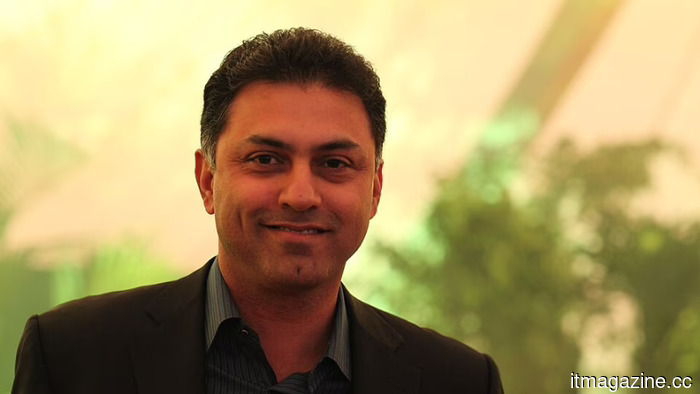
Palo Alto CEO: Prices of AI tokens need to decrease by as much as 90%
Palo Alto Networks CEO Nikesh Arora stated in an interview with CNBC that for businesses to adopt AI on a large scale, token prices may need to decrease by as much as 90%. He described OpenAI's claim of a 54% efficiency improvement with its new GPT-5.6 model as “a good start,” but emphasized that it is not sufficient. Arora expressed that demand for AI is “infinite” and that costs will “rationalize over time.” He pointed out the paradox that while per-token prices have plummeted, total expenses for enterprise AI have continued to rise due to increased usage.
During the interview, Arora highlighted the necessity of significantly lower AI operating costs before widespread business implementation becomes feasible. He acknowledged OpenAI’s assertion about the improved efficiency of its model but insisted that more advancements are essential for making mass enterprise adoption economically viable.
He remains optimistic about demand, stating that it continues to be limitless and suggesting that as demand grows, costs will eventually stabilize. Arora believes that either the market will absorb the expenditures or prices will inevitably decrease. He anticipates that as the technology becomes more efficient, budgets will become more manageable.
Arora's concerns highlight a notable contradiction in the realm of enterprise AI. Despite a significant drop in per-token prices, total expenses have surged, with some reporting a 98% reduction in token costs alongside a threefold increase in enterprise AI expenditures. This is largely attributed to agentic AI, which frequently utilizes a model to complete tasks, leading to excessive costs for individual projects. For instance, one developer incurred a token bill of $1.3 million in just one month.
As a result, the declining headline prices do not necessarily lead to lower overall costs, with usage rates outpacing the reduction in prices, causing bills to rise nonetheless. In response to rising expenses, some companies are already limiting the amount of AI usage among staff, indicating shared frustrations across enterprises.
On a positive note, Arora mentioned that a price competition is currently underway, with DeepSeek offering a permanent 75% discount and competitors striving to keep pace. A number of startups are also pursuing more affordable inference options to maximize output from each chip.
However, whether this leads to the 90% reduction Arora anticipates remains uncertain, as efficiency improvements can be offset by increased usage. Ultimately, he believes that scale will prevail, and the economic dynamics will stabilize over time. As a leader of a major cybersecurity company, his message to AI vendors is clear: their product remains too costly for widespread application. This perspective from such a significant customer is one that AI developers will certainly take seriously.
Other articles
 ChatGPT can now complete what you've begun, and this is a more significant development than it may seem.
OpenAI's ChatGPT Work has the potential to be one of its most significant AI enhancements to date, offering the ability to streamline hours of tedious tasks with just one request.
ChatGPT can now complete what you've begun, and this is a more significant development than it may seem.
OpenAI's ChatGPT Work has the potential to be one of its most significant AI enhancements to date, offering the ability to streamline hours of tedious tasks with just one request.
 If you're feeling exhausted from supervising ChatGPT, the new GPT-5.6 models could be the solution you need.
OpenAI has introduced GPT-5.6 Sol, Terra, and Luna, a new series of AI models designed to enhance workflow speed, reduce costs, and minimize the need for subsequent prompts.
If you're feeling exhausted from supervising ChatGPT, the new GPT-5.6 models could be the solution you need.
OpenAI has introduced GPT-5.6 Sol, Terra, and Luna, a new series of AI models designed to enhance workflow speed, reduce costs, and minimize the need for subsequent prompts.
 The surge for data centers in the AI industry extends to Native reservations.
Developers of AI data centers are targeting tribal land due to its availability of space, water, and power, creating a divide within Native communities over the potential for economic benefits and concerns about "data colonialism."
The surge for data centers in the AI industry extends to Native reservations.
Developers of AI data centers are targeting tribal land due to its availability of space, water, and power, creating a divide within Native communities over the potential for economic benefits and concerns about "data colonialism."
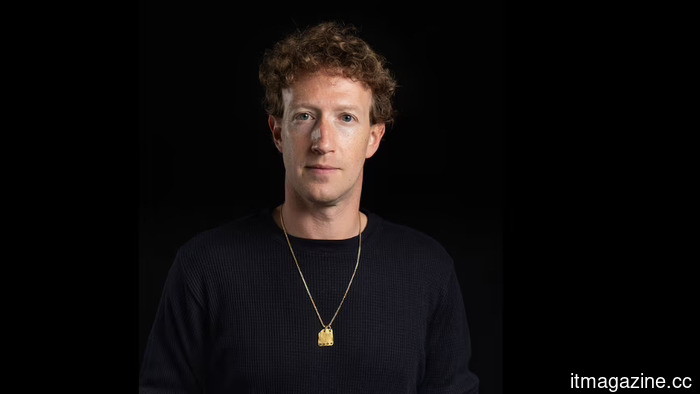 Zuckerberg: an AI cloud venture for Meta 'is logical'
Mark Zuckerberg has confirmed that Meta is investigating the possibility of selling AI computing resources, a strategy that would compete with AWS and Azure and pose a challenge to emerging cloud providers such as CoreWeave.
Zuckerberg: an AI cloud venture for Meta 'is logical'
Mark Zuckerberg has confirmed that Meta is investigating the possibility of selling AI computing resources, a strategy that would compete with AWS and Azure and pose a challenge to emerging cloud providers such as CoreWeave.
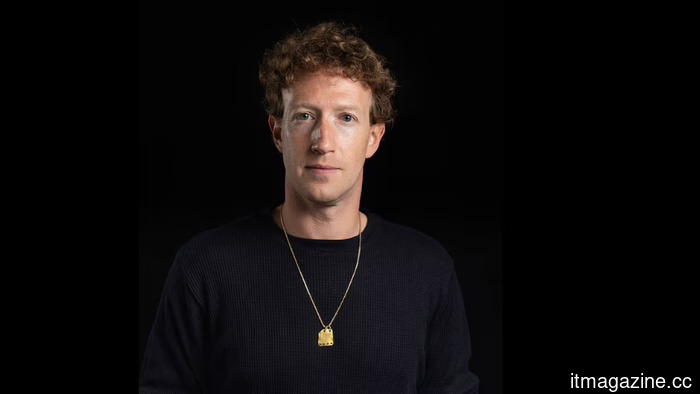 Zuckerberg: an AI cloud venture is logical for Meta.
Mark Zuckerberg has stated that Meta is looking into the possibility of selling AI computing services, a step that would compete with AWS and Azure and pose a challenge to emerging cloud providers like CoreWeave.
Zuckerberg: an AI cloud venture is logical for Meta.
Mark Zuckerberg has stated that Meta is looking into the possibility of selling AI computing services, a step that would compete with AWS and Azure and pose a challenge to emerging cloud providers like CoreWeave.
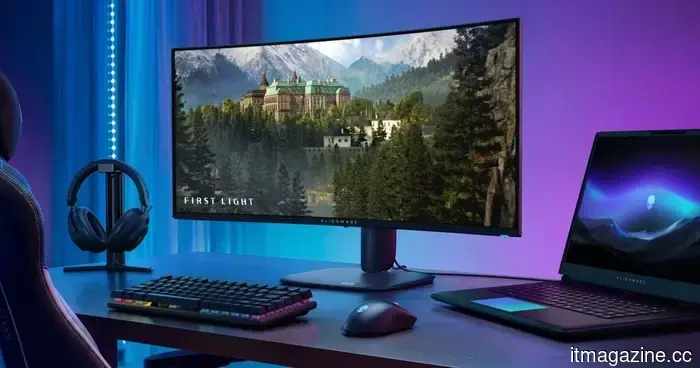 Dell’s latest Alienware monitors offer increased brightness, improved sharpness, and are more affordable than anticipated for an OLED upgrade.
Dell has introduced three new Alienware gaming monitors, highlighted by a brighter and quicker 34-inch QD-OLED model that comes with a price tag of $799.99.
Dell’s latest Alienware monitors offer increased brightness, improved sharpness, and are more affordable than anticipated for an OLED upgrade.
Dell has introduced three new Alienware gaming monitors, highlighted by a brighter and quicker 34-inch QD-OLED model that comes with a price tag of $799.99.
Palo Alto CEO: Prices of AI tokens need to decrease by as much as 90%
Nikesh Arora states that the costs of AI tokens must decrease by as much as 90% to achieve widespread enterprise adoption, describing OpenAI's 54% efficiency increase as merely "a good start."