
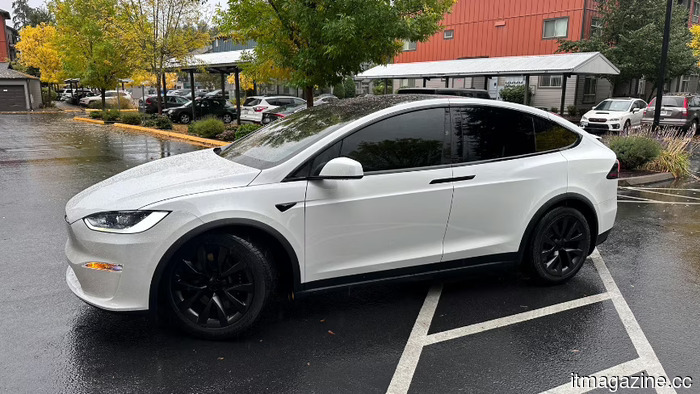
New Jersey's robotaxi legislation may prohibit Tesla due to its use of lidar.
For over ten years, the primary dispute concerning self-driving vehicles has unfolded in corporate offices and engineering departments. Now, New Jersey seeks to resolve it through legislation.
A bill progressing through the state legislature would require any company operating fully autonomous vehicles in New Jersey to equip them with a camera system along with two other sensing methods, typically lidar and radar. Tesla manufactures its vehicles with cameras only; thus, if the bill is enacted, its Robotaxi would be unable to function in the state unless it modified its hardware. The Verge was the first to report these details.
If passed, this legislation would make New Jersey the first state to implement a sensor requirement legally. A nearly identical bill is also pending in New York. Should either of these bills pass, it's possible that other states would follow suit, directly impacting Elon Musk's reliance on camera-only technology.
The bill outlines its content as a Senate committee substitute for Senate Bill 1677, which was approved by the Senate Transportation Committee on May 11. It is sponsored by state Senator Andrew Zwicker, a physicist at the Princeton Plasma Physics Laboratory.
The bill establishes a three-year pilot program for fully autonomous vehicles, with the Department of Transportation determining eligibility for participation.
The sensor requirement appears in section four. Each vehicle in the pilot must be equipped with “a camera system and two distinct sensing modalities” that can still detect and monitor obstacles if the cameras fail. These systems must manage pedestrian detection, automatic emergency braking, and lane-keeping capabilities.
In simpler terms, a camera alone is insufficient.
Additional provisions in the bill are also unfavorable for Tesla. Vehicles must record data from the 30 seconds leading up to any crash, complete 50,000 miles of testing before being deemed driverless, and possess a minimum of $5 million in insurance. They would also be prohibited from operating in school zones, construction areas, or regions with high pedestrian accident rates.
A subtle critique of ‘Full Self-Driving’
One section targets the marketing of these systems. Dealers and manufacturers must provide buyers with a written explanation of the capabilities and limitations of partial automation systems. They cannot promote a partial system in a manner that suggests the vehicle can operate independently. Violating this rule could be classified as consumer fraud under state law.
Tesla markets a driver-assist feature termed Full Self-Driving, which still requires human oversight. This naming has faced legal challenges and regulatory scrutiny for several years. New Jersey aims to clarify the discrepancy between the designation and the actual functionality at the point of sale.
Cameras facing the competition
Musk has invested heavily in the belief that cameras paired with artificial intelligence can manage the entire driving task. “We turned off the radars in Teslas to enhance safety,” he stated last year. “Cameras for the win.” He contends that adding more sensors leads to conflicting signals, a situation he describes as sensor contention.
Most others in the industry disagree. Waymo, the leading market player, utilizes cameras alongside lidar and radar, which perform significantly better in fog, rain, and low-light conditions. In Europe, a startup is even testing a Level 4 vehicle that does not use AI for navigation but relies entirely on sensors and regulations.
“To operate continuously across most public roads in New Jersey today, lidar is essential,” Carnegie Mellon professor Philip Koopman informed The Verge. “It is evident that current camera-only technology cannot meet this challenge.”
The results support his claim. Tesla has a fleet of 42 driverless Robotaxis on public roads in Texas, while Waymo has 577 authorized there, plus several thousand more across ten U.S. metropolitan areas. Musk had pledged hundreds of thousands of Tesla robotaxis by the end of this year, but that has yet to materialize.
Not targeting Tesla, claims the sponsor
Zwicker counters the notion that he is specifically targeting Tesla. “This is not anti-Tesla,” he explained to The Verge. “I’m advocating for safety in New Jersey.” After experiencing a ride in a Waymo in Phoenix, he became a proponent of the technology, noting how quickly the experience felt typical. His concern lies not with the technology’s potential but with its timeline.
He doubts that cameras and software alone can currently perform all the tasks a human driver is capable of.
Tesla is actively opposing this bill. Company representatives are lobbying legislators, and Tesla has contacted its New Jersey customers via email, encouraging them to reach out to legislators and oppose the measure.
Why this is significant
There is currently no federal framework for self-driving cars, leading each state to create its own regulations. This fragmented approach has allowed Tesla to advance its Robotaxi initiative in more accommodating states, even as safety concerns accumulate. New Jersey, along with New York's similar bill, would reverse this trend by making hardware requirements a legal stipulation.
Meanwhile, Europe is tightening its driving regulations in tandem, mandating various safety features in new vehicles. If the sensor requirement gains traction, Musk may face a
Other articles
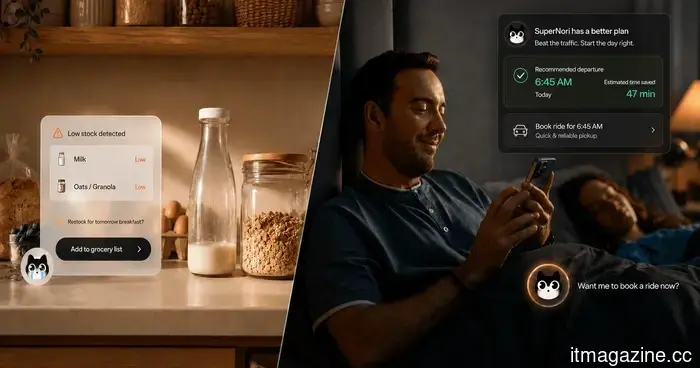 The Family AI Home Economy: The Growing Consumer Opportunity of AI
Instead of concentrating exclusively on workplace efficiency, a new wave of AI companies is investigating how smart home systems might impact family choices, buying habits, budgeting, and daily expenditures. Throughout the last ten years, artificial intelligence has primarily been viewed as a technology for the workplace. Businesses have concentrated on assisting professionals in writing more quickly, analyzing data, and automating […]
The Family AI Home Economy: The Growing Consumer Opportunity of AI
Instead of concentrating exclusively on workplace efficiency, a new wave of AI companies is investigating how smart home systems might impact family choices, buying habits, budgeting, and daily expenditures. Throughout the last ten years, artificial intelligence has primarily been viewed as a technology for the workplace. Businesses have concentrated on assisting professionals in writing more quickly, analyzing data, and automating […]
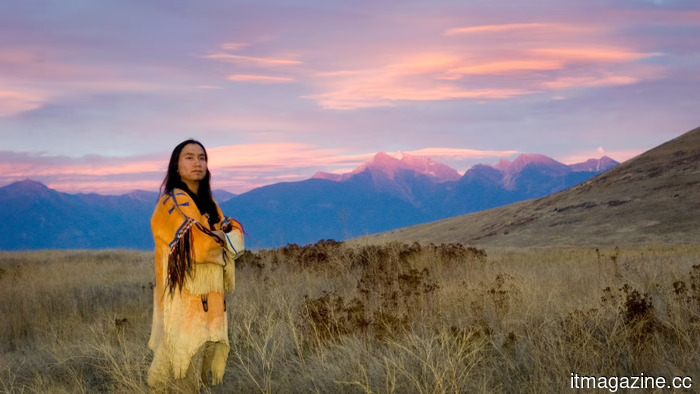 The surge for data centers in the AI industry extends to Native reservations.
Developers of AI data centers are targeting tribal land due to its availability of space, water, and power, creating a divide within Native communities over the potential for economic benefits and concerns about "data colonialism."
The surge for data centers in the AI industry extends to Native reservations.
Developers of AI data centers are targeting tribal land due to its availability of space, water, and power, creating a divide within Native communities over the potential for economic benefits and concerns about "data colonialism."
 What Factors Should You Consider When Choosing an Online Payment Platform for Your Business?
This message is presented to you in collaboration with QuickBooks. QuickBooks Payments often ranks among the top results when searching for an online payment solution, alongside well-known names like Stripe, Square, and PayPal, among others, all of which pledge the same two benefits: faster payments and retaining more of your revenue.
What Factors Should You Consider When Choosing an Online Payment Platform for Your Business?
This message is presented to you in collaboration with QuickBooks. QuickBooks Payments often ranks among the top results when searching for an online payment solution, alongside well-known names like Stripe, Square, and PayPal, among others, all of which pledge the same two benefits: faster payments and retaining more of your revenue.
 EXCLUSIVE: The producer of The Mandela Catalogue reveals fresh insights about the forthcoming horror adaptation.
Producer Aaron B. Koontz discusses with Digital Trends the adaptation of The Mandela Catalogue alongside Steven Spielberg, why creator Alex Kister was the ideal director, and what audiences can look forward to in the forthcoming horror film.
EXCLUSIVE: The producer of The Mandela Catalogue reveals fresh insights about the forthcoming horror adaptation.
Producer Aaron B. Koontz discusses with Digital Trends the adaptation of The Mandela Catalogue alongside Steven Spielberg, why creator Alex Kister was the ideal director, and what audiences can look forward to in the forthcoming horror film.
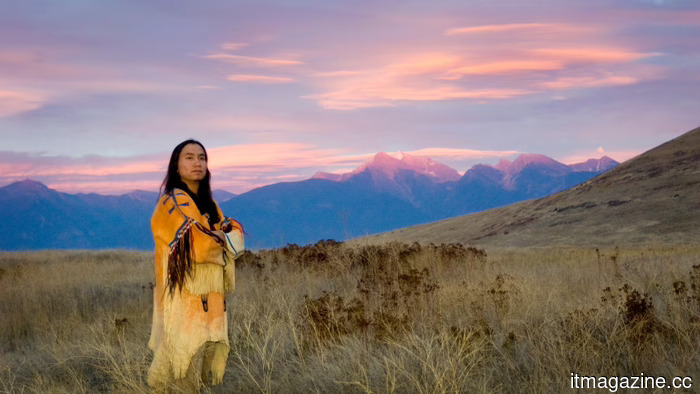 The rush for data center land by AI is now extending to Native reservations.
Developers of AI data centers are looking at tribal land due to its resources of space, water, and power, creating a divide within Native communities between the potential for economic gains and concerns over "data colonialism."
The rush for data center land by AI is now extending to Native reservations.
Developers of AI data centers are looking at tribal land due to its resources of space, water, and power, creating a divide within Native communities between the potential for economic gains and concerns over "data colonialism."
 What AI companies are seeking for their midterm millions
AI super PACs supported by OpenAI and a16z are inundating the 2026 midterm elections to prevent state AI regulations and penalize legislators who advocate for them.
What AI companies are seeking for their midterm millions
AI super PACs supported by OpenAI and a16z are inundating the 2026 midterm elections to prevent state AI regulations and penalize legislators who advocate for them.
New Jersey's robotaxi legislation may prohibit Tesla due to its use of lidar.
New Jersey requires that driverless vehicles be equipped with both lidar and cameras. As a result, Tesla's camera-only Robotaxi would be excluded unless it modifies its hardware.