
What AI companies are seeking for their midterm gains
TL;DRAI companies and their supporters are investing hundreds of millions into the 2026 US midterm elections through super PACs, primarily via Leading the Future (backed by a16z's Andreessen and Horowitz and OpenAI's Greg Brockman) and the newer Innovation Council Action. Their unified objective is to create a single national framework for AI that preempts regulations on a state level, as well as to defeat lawmakers advocating for stricter regulations. This movement follows the Senate removing a federal preemption clause, raising concerns about "dark money" from watchdog groups, although the industry is not uniform (Anthropic's contributions are limited to policy education).
AI firms and their financiers are allocating substantial resources to the 2026 US midterms through super PACs, with spending reaching into the hundreds of millions, according to CNBC. Their main demand remains consistently clear: they seek a singular national AI framework instead of a fragmented collection of state laws. The industry contends that having 50 different regulatory environments would hinder progress and provide an advantage to China.
The leading organization in this effort is Leading the Future, a super PAC network established in 2025. Reportedly, Marc Andreessen and Ben Horowitz, co-founders of Andreessen Horowitz, each contributed $25 million, alongside OpenAI president Greg Brockman. This group supports candidates who advocate for what it terms a “responsible national framework” and opposes those against it. Thus far, it has spent tens of millions in races across Texas, Georgia, Illinois, and Montana.
It isn’t alone; the newer pro-deregulation group, Innovation Council Action, has committed roughly $100 million. Its reported donors include figures from the crypto and AI sectors, such as the Winklevoss twins and those affiliated with Elon Musk’s xAI.
The influx of money isn't coincidental. Washington has attempted and failed to halt state AI regulations, with the Senate stripping a preemption clause by a vote of 99 to 1 before passing the bill. After losing that battle in Congress, the industry is now targeting the ballot box. This push parallels White House attempts to exchange state preemption for federal online-safety legislation, a deal that remains unmade.
While states are advancing, with over a thousand AI-related bills introduced in 2025 alone, this contradiction between a stagnant federal approach and an active state legislative agenda is precisely what the funding aims to address.
Not every AI company approaches regulation in the same manner. The industry is not uniform in its views. Anthropic has reportedly donated $20 million, but with the stipulation that it is focused on educating the public about AI policy rather than engaging in political campaigning, and it advocates for governments to have the ability to restrict dangerous AI.
This division is significant, as “pro-AI” funding does not uniformly oppose regulation. Microsoft’s Brad Smith has expressed concerns that the US regulates AI without any clear guidelines, a void that this spending could help address on the industry's terms.
The democracy question is a more complex issue. Critics are concerned that this trend reflects something more problematic than standard lobbying. Watchdog organizations have labeled the surge as “dark money” and cautioned against corporations attempting to secure favorable regulations before the technology is fully understood. Advocates argue that political expenditures are legal, partially disclosed, and comparable to other industries that defend their interests. This tension is intensified by a public that is already skeptical of AI, as evidenced by grassroots movements opposing data-center developments.
Ultimately, the money secures not just advertisements but also a narrative: that AI regulations should be national, lenient, and created with industry input. Whether voters will embrace this perspective is the challenge that this substantial financial backing aims to overcome.
Other articles
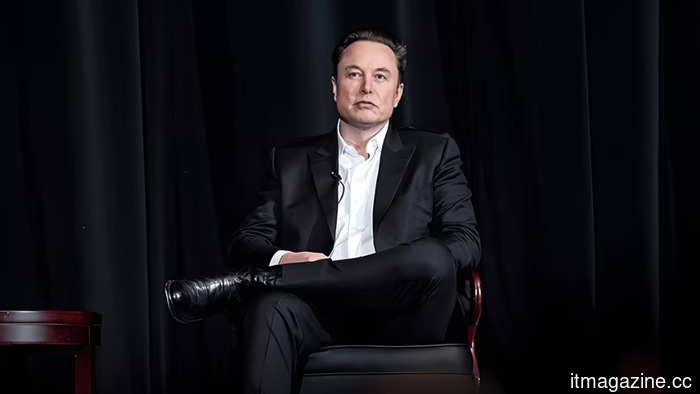 Musk: The SpaceX IPO created millions for thousands of employees.
Elon Musk states that SpaceX's record initial public offering probably turned thousands of employees, including welders, into millionaires, although a declining share price is putting that fortune to the test.
Musk: The SpaceX IPO created millions for thousands of employees.
Elon Musk states that SpaceX's record initial public offering probably turned thousands of employees, including welders, into millionaires, although a declining share price is putting that fortune to the test.
 INIU SnapGo Air review: A convenient power bank that I'm comfortable taking with me every day.
I became fed up with bulky chargers, but INIU came to my rescue. The SnapGo Air is a sleek, lightweight 10,000mAh magnetic power bank featuring fast Qi2.2 charging and an integrated cable that you'll genuinely want to take with you every day.
INIU SnapGo Air review: A convenient power bank that I'm comfortable taking with me every day.
I became fed up with bulky chargers, but INIU came to my rescue. The SnapGo Air is a sleek, lightweight 10,000mAh magnetic power bank featuring fast Qi2.2 charging and an integrated cable that you'll genuinely want to take with you every day.
 The rush for data center land by AI is now extending to Native reservations.
Developers of AI data centers are looking at tribal land due to its resources of space, water, and power, creating a divide within Native communities between the potential for economic gains and concerns over "data colonialism."
The rush for data center land by AI is now extending to Native reservations.
Developers of AI data centers are looking at tribal land due to its resources of space, water, and power, creating a divide within Native communities between the potential for economic gains and concerns over "data colonialism."
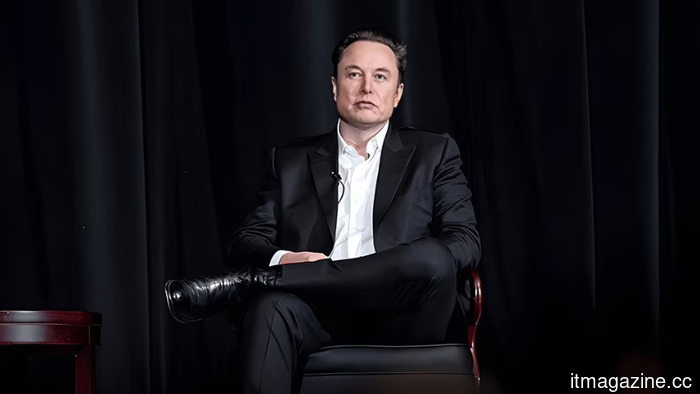 Musk: SpaceX's IPO turned thousands of employees into millionaires.
Elon Musk states that SpaceX's record initial public offering likely turned thousands of employees into millionaires, including welders, although the declining share price is challenging the value of that windfall.
Musk: SpaceX's IPO turned thousands of employees into millionaires.
Elon Musk states that SpaceX's record initial public offering likely turned thousands of employees into millionaires, including welders, although the declining share price is challenging the value of that windfall.
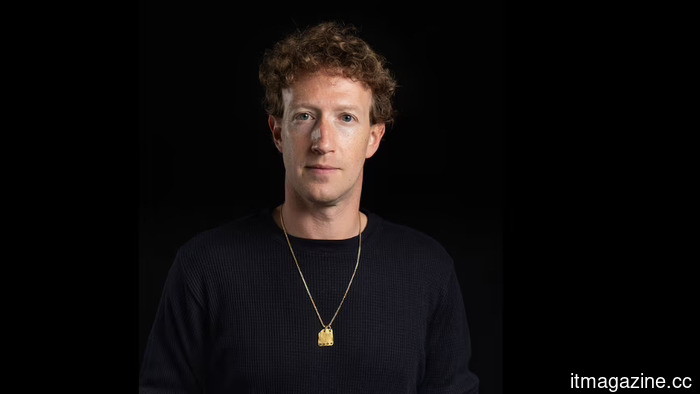 Zuckerberg: an AI cloud venture for Meta 'is logical'
Mark Zuckerberg has confirmed that Meta is investigating the possibility of selling AI computing resources, a strategy that would compete with AWS and Azure and pose a challenge to emerging cloud providers such as CoreWeave.
Zuckerberg: an AI cloud venture for Meta 'is logical'
Mark Zuckerberg has confirmed that Meta is investigating the possibility of selling AI computing resources, a strategy that would compete with AWS and Azure and pose a challenge to emerging cloud providers such as CoreWeave.
 What Criteria Should You Consider When Choosing an Online Payment Platform for Your Business?
This post is presented in collaboration with QuickBooks. QuickBooks Payments often ranks among the top options when you look for an online payment solution, alongside Stripe, Square, PayPal, and several other companies all claiming to deliver the same two benefits: receive payments quickly and retain a larger portion of your earnings.
What Criteria Should You Consider When Choosing an Online Payment Platform for Your Business?
This post is presented in collaboration with QuickBooks. QuickBooks Payments often ranks among the top options when you look for an online payment solution, alongside Stripe, Square, PayPal, and several other companies all claiming to deliver the same two benefits: receive payments quickly and retain a larger portion of your earnings.
What AI companies are seeking for their midterm gains
AI super PACs supported by OpenAI and a16z are inundating the 2026 midterm elections to thwart state AI regulations and penalize legislators who advocate for them.