
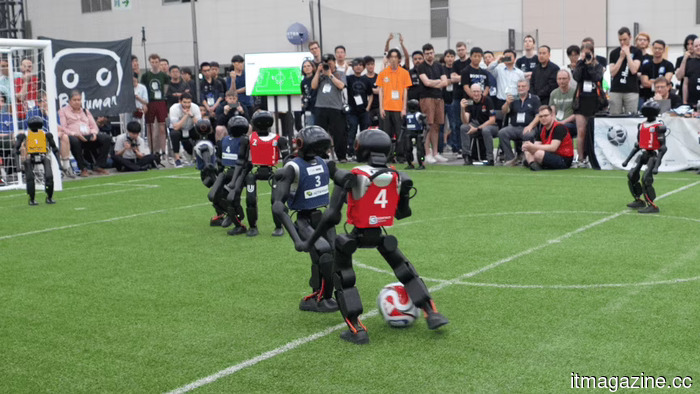
Robots dominated RoboCup 2026, and they are aiming for the human World Cup.
While the world followed the World Cup, robots participated in their own competition in Incheon. RoboCup 2026 took place from June 30 to July 6 in Songdo, attracting teams from numerous countries. When the games began, a single name was associated with every victor. Teams utilizing robots from Beijing's Booster Robotics achieved a clean sweep in all three humanoid football categories.
The statistics reveal the situation. Out of the 59 teams in the humanoid leagues, 38 used Booster machines, securing gold, silver, and most podium spots in the Small, Middle, and Large divisions. Tsinghua University’s Hephaestus team clinched the Large division title with the Booster T1, Germany’s B-Human won the Middle division on the K1, while a team named Invic took home the Small division trophy using the K1 Air.
The shift in the field is evident. For years, each team constructed their own robot from the ground up, focusing heavily on mechanics, hardware, and teaching the robots to walk. This has evolved; most leading teams now purchase the robot bodies and concentrate their efforts on software, emphasizing perception, quick decision-making, and coordination among multiple robots. Booster handles the hardware and continually enhances the challenging areas like running, sudden stops, and recovering from falls. The competition has transitioned from “who can build the robot” to “who can enhance its intelligence.”
This distinction extends beyond football. Reliable legs and a stable body allow researchers to experiment with complex “embodied intelligence” in real-world scenarios rather than just simulations. A football-playing robot essentially learns to see, balance, and react quickly.
The aspiration of surpassing human champions is not a new claim; it is the founding mission of RoboCup, established in 1997. The goal is that by 2050, a team of autonomous humanoid robots will defeat the reigning World Cup champions under standard FIFA rules. “Our team’s ultimate aim is to triumph over the FIFA champions in 2050,” a competitor stated to Reuters in Incheon.
The gap remains significant, and the event acknowledged this reality. RoboCup 2026 marked the first occasion that two complete teams of humanoid robots played 11 against 11 on actual hardware. The result was modest: B-Human defeated the German team HTWK Robots 4:0. These robots are small and unsteady, not comparable to a player like Messi. A decade ago, even maintaining a stable walk was a challenge. However, humanoids have already outperformed human records in half-marathons elsewhere.
Booster's achievement is also a strategic business move. The company is not merely selling robots but aims to dominate the platform on which they operate. It recently introduced Booster Studio, promoting it as the first complete development environment for embodied intelligence. Engineers utilize it to program, simulate, and deploy robotic behaviors before engaging with actual hardware.
One of the youngest teams at Incheon came from a middle school in Macau. These students practiced their code in the simulator before transferring it to real robots. Booster has also initiated its own 3v3 robot football league to attract more developers, promoting an open ecosystem where Booster serves as the foundational layer.
This aligns with a broader trend. China accounted for approximately 90% of the world's humanoid robots shipped last year, led by brands like Unitree. The sector is crowded and generally unprofitable for most, prompting Beijing to start assigning IDs to humanoids. Winning a global competition is an economical and impactful way to gain visibility.
However, caution is warranted. The impressive videos are heavily edited. A viral clip depicted a Booster T1 kicking a penalty kick straight through a wall, which is entertaining until one remembers these machines share a field with humans. Robots capable of such powerful kicks have previously injured bystanders at other events.
For the moment, robot football serves as a research tool dressed as entertainment. The disparity compared to a genuine World Cup team remains vast, and 2050 is still a long way off. Yet, the trajectory is unmistakable; the significant challenge is no longer the robot's body but its brain, which is indeed the aspect evolving most rapidly.
Other articles
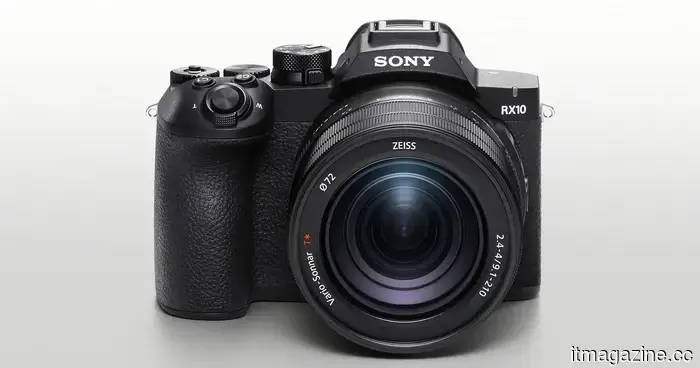 Sony breathes new life into the RX10 by incorporating AI autofocus, enabling 4K recording at 120fps, and enhancing the battery life.
The fifth-generation RX10 from Sony features AI subject tracking from the Alpha series, 4K recording at 120fps, and an improved battery life that is 50 percent longer.
Sony breathes new life into the RX10 by incorporating AI autofocus, enabling 4K recording at 120fps, and enhancing the battery life.
The fifth-generation RX10 from Sony features AI subject tracking from the Alpha series, 4K recording at 120fps, and an improved battery life that is 50 percent longer.
 Your phone isn't attempting to contaminate your water, but influencers have discovered a $50 solution regardless.
Influencers are marketing $50 EMF straws as a safeguard against daily electronics, yet the supporting evidence is scarce, and the actual offering might be just technology-induced anxiety disguised as wellness.
Your phone isn't attempting to contaminate your water, but influencers have discovered a $50 solution regardless.
Influencers are marketing $50 EMF straws as a safeguard against daily electronics, yet the supporting evidence is scarce, and the actual offering might be just technology-induced anxiety disguised as wellness.
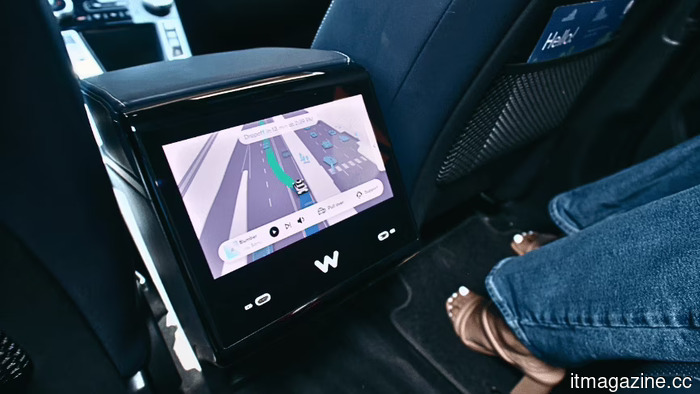 A Waymo reported two teenagers engaging in joyriding to the police.
A Waymo robotaxi alerted the police about two teenagers consuming alcohol and firing toy guns, as the company contends with a regulatory delay in California regarding who is permitted to use its vehicles.
A Waymo reported two teenagers engaging in joyriding to the police.
A Waymo robotaxi alerted the police about two teenagers consuming alcohol and firing toy guns, as the company contends with a regulatory delay in California regarding who is permitted to use its vehicles.
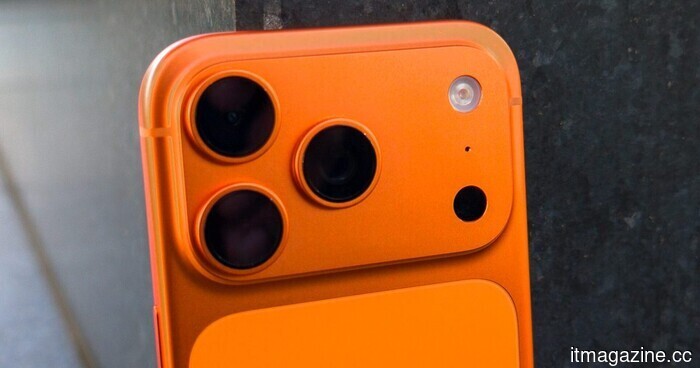 The speculations regarding a $300 price increase for the iPhone 18 Pro series appear to be becoming more plausible.
A third supply chain analysis corroborates what the WSJ and IDC have previously indicated: the iPhone 18 Pro Max is experiencing a notable rise in its bill of materials (BOM).
The speculations regarding a $300 price increase for the iPhone 18 Pro series appear to be becoming more plausible.
A third supply chain analysis corroborates what the WSJ and IDC have previously indicated: the iPhone 18 Pro Max is experiencing a notable rise in its bill of materials (BOM).
 AMD's CTO explains the necessity of additional CPUs for agentic AI.
At RAISE, Mark Papermaster from AMD stated that agentic AI relies more on CPUs rather than solely on GPUs, which accounts for AMD's pursuit of a trillion-dollar valuation.
AMD's CTO explains the necessity of additional CPUs for agentic AI.
At RAISE, Mark Papermaster from AMD stated that agentic AI relies more on CPUs rather than solely on GPUs, which accounts for AMD's pursuit of a trillion-dollar valuation.
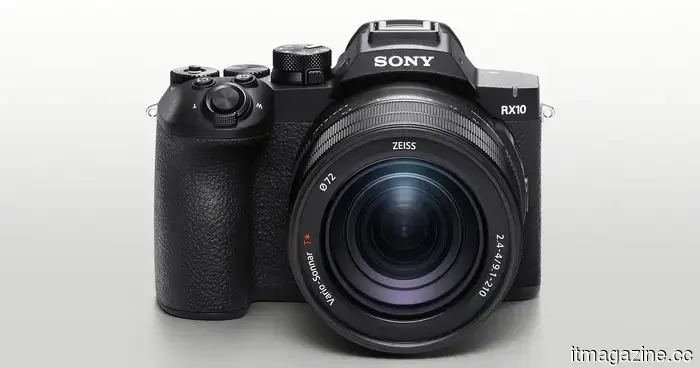 Sony brings back the RX10, now featuring AI autofocus, 4K at 120fps, and an improved battery life.
Sony's fifth-generation RX10 features AI subject tracking from the Alpha series, 4K recording at 120fps, and an improved battery life that is 50 percent longer.
Sony brings back the RX10, now featuring AI autofocus, 4K at 120fps, and an improved battery life.
Sony's fifth-generation RX10 features AI subject tracking from the Alpha series, 4K recording at 120fps, and an improved battery life that is 50 percent longer.
Robots dominated RoboCup 2026, and they are aiming for the human World Cup.
Beijing's Booster Robotics supported all the champion teams at RoboCup 2026 in South Korea. The objective of the sport is to surpass the human World Cup champions by the year 2050.