
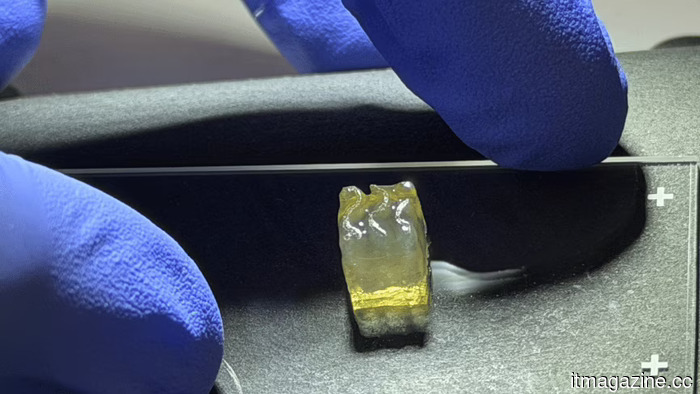
A startup created kidney and liver tissue using 3D printing technology in space.
Auxilium Biotechnologies has successfully bioprinted kidney and liver tissues aboard the International Space Station, marking the first instance of either being created in space. The samples returned to Earth last month on a SpaceX cargo capsule, and the company shared the outcomes on Thursday.
This was not an isolated event. During the same mission, Auxilium’s AMP-1 orbital printer also produced cartilage tissue and 28 nerve-repair implants. The company claims that this is the first time a single spaceflight has generated three tissue types and a milestone for a multi-product manufacturing setup in orbit.
Why conduct printing in space at all?
The reason lies in gravity—or the absence of it. On Earth, soft living tissues tend to droop before solidifying, leading printers to utilize scaffolds and thickeners to maintain shape. In microgravity, tissues can maintain their structure while cells distribute uniformly. Dr. Anthony Atala from Wake Forest, whose institute provided the cells and designs, noted that the “uniform cell distribution” observed in orbit indicates significant potential.
It is important to clarify what this does not entail. These are small tissue samples, not fully functional organs for transplantation. A bioprinted kidney suitable for a patient is still several years away, as the complex challenge of integrating blood vessels into dense tissue remains unresolved.
The immediate benefit
The more immediate benefit lies in research applications. The same technique can produce organoids—tiny lab-grown tissue models that replicate real organs. Pharmaceutical companies utilize these models to assess whether a compound is effective or harmful, bypassing the need for human or animal testing.
This development comes at a pivotal time, as U.S. regulators are advocating for reduced animal testing, with the FDA identifying organoids as a preferred alternative. Currently, labs create these models on Earth and transport them to space. Being able to produce them on demand in orbit could significantly reduce the delivery time.
A wager on the post-ISS era
There is a commercial strategy behind the science. The ISS is set to retire around 2031, and a series of commercial space stations are preparing to take its place. Auxilium is fitting its printers for this transition, naming station builders Vast and Starlab as partners and even discussing the possibility of manufacturing on the Moon in the future.
This work builds upon a prior mission by Auxilium that printed nerve-repair devices in space. For now, orbital bioprinting serves primarily as a research tool, not as a manufacturing facility. However, the belief is that cultivating human tissue—a complex and precise process—might be one aspect that is more effectively accomplished beyond our planet.
Other articles
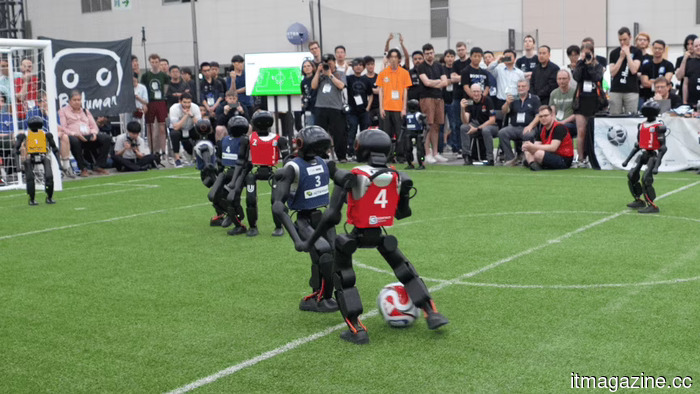 Robots dominated RoboCup 2026, and they are aiming for the human World Cup.
Beijing's Booster Robotics supported all the champion teams at RoboCup 2026 in South Korea. The objective of the sport is to surpass the human World Cup champions by the year 2050.
Robots dominated RoboCup 2026, and they are aiming for the human World Cup.
Beijing's Booster Robotics supported all the champion teams at RoboCup 2026 in South Korea. The objective of the sport is to surpass the human World Cup champions by the year 2050.
 Ensuring the security of Shadow IT in the corporate setting
Shadow IT introduces security vulnerabilities for enterprises that are not covered by monitoring, patching, and access controls. This article explores the increasing exposure of shadow IT, including unauthorized SaaS, shadow AI, and risks related to geopolitical data sovereignty, and discusses how vendor risk assessment manages third-party risks on a broader scale.
Ensuring the security of Shadow IT in the corporate setting
Shadow IT introduces security vulnerabilities for enterprises that are not covered by monitoring, patching, and access controls. This article explores the increasing exposure of shadow IT, including unauthorized SaaS, shadow AI, and risks related to geopolitical data sovereignty, and discusses how vendor risk assessment manages third-party risks on a broader scale.
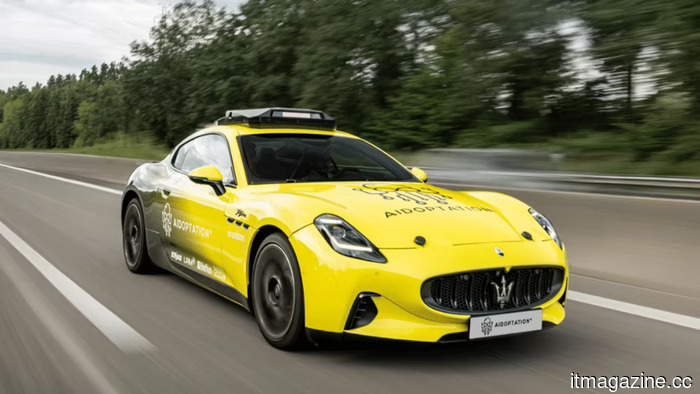 EU's inaugural Level 4 autonomous driving highway test: Aidoptation
Belgium's Aidoptation has secured the EU's inaugural permit to test a Level 4 self-driving vehicle on highways at a speed of 120 km/h, employing deterministic models rather than AI.
EU's inaugural Level 4 autonomous driving highway test: Aidoptation
Belgium's Aidoptation has secured the EU's inaugural permit to test a Level 4 self-driving vehicle on highways at a speed of 120 km/h, employing deterministic models rather than AI.
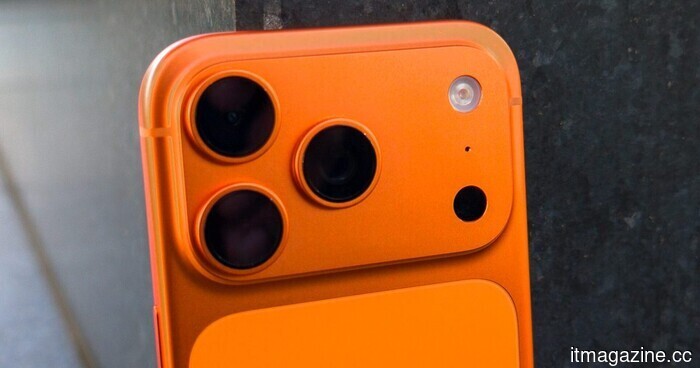 The speculations regarding a $300 price increase for the iPhone 18 Pro series appear to be becoming more plausible.
A third supply chain analysis corroborates what the WSJ and IDC have previously indicated: the iPhone 18 Pro Max is experiencing a notable rise in its bill of materials (BOM).
The speculations regarding a $300 price increase for the iPhone 18 Pro series appear to be becoming more plausible.
A third supply chain analysis corroborates what the WSJ and IDC have previously indicated: the iPhone 18 Pro Max is experiencing a notable rise in its bill of materials (BOM).
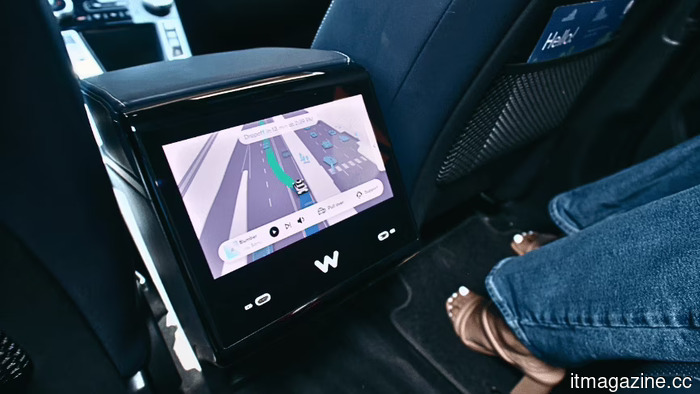 A Waymo reported two teenagers engaging in joyriding to the police.
A Waymo robotaxi alerted the police about two teenagers consuming alcohol and firing toy guns, as the company contends with a regulatory delay in California regarding who is permitted to use its vehicles.
A Waymo reported two teenagers engaging in joyriding to the police.
A Waymo robotaxi alerted the police about two teenagers consuming alcohol and firing toy guns, as the company contends with a regulatory delay in California regarding who is permitted to use its vehicles.
 Microdramas are thriving, and Character.AI is transforming it into a mutual obsession.
Character.AI is pursuing the rapidly growing microdrama market with three AI-enhanced vertical series, where characters are accessible for chats, inquiries, and new role-playing even after each episode concludes.
Microdramas are thriving, and Character.AI is transforming it into a mutual obsession.
Character.AI is pursuing the rapidly growing microdrama market with three AI-enhanced vertical series, where characters are accessible for chats, inquiries, and new role-playing even after each episode concludes.
A startup created kidney and liver tissue using 3D printing technology in space.
Auxilium claims to have bioprinted kidney and liver tissue aboard the ISS, marking a first in this field. The immediate benefit is in drug-testing organoids rather than creating transplantable organs.