
I was aware that there was a lot of low-quality AI content on LinkedIn. A startling report indicates that the issue is even more severe than we thought.
Shutter Speed / Unsplash
I was already aware that LinkedIn was saturated with AI-generated posts, recycled leadership insights, and those cringe-worthy entrepreneurship lessons. A recent report indicates that the situation is significantly worse than it seems from the platform's feed.
The AI-detection firm Pangram examined over one million posts analyzed through its Chrome extension across LinkedIn, X, Reddit, Medium, and Substack. LinkedIn accounted for about a third of all scanned content but generated 62% of the content Pangram identified as AI-produced.
LinkedIn
LinkedIn is leading the AI mess
Among all platforms in the dataset, 13.8% of the scanned content was identified as completely AI-generated. This percentage rose sharply for longer posts, hitting 25.72% for items longer than 250 words. LinkedIn performed particularly poorly in this regard. More than 40% of its long-form posts were labeled as fully AI-generated, the highest percentage among the five platforms. A top-tier LinkedIn post was also 1.35 times more likely to be identified as AI-generated compared to a comment.
The comment section wasn't immune either. After considering length, LinkedIn comments showed a slightly higher likelihood of containing AI writing compared to posts. X also revealed concerning figures, with Pangram categorizing 23.9% of long-form articles on X as entirely AI-generated and an additional 22.9% as a mix of human and AI writing. Only 53.2% were deemed fully authored by humans.
LinkedIn
The data comes with notable disclaimers
Pangram collected this data from users who installed its extension and voluntarily shared anonymous scanning results. Thus, it forms a large convenience sample rather than a random, representative view of everything published on LinkedIn. The findings also depend on Pangram’s own model, which the company claims has a 0.01% false-positive rate, though no detection method can confirm authorship with absolute certainty.
In May, LinkedIn acknowledged its content problem and announced plans to limit the recommendation reach of repetitive AI-generated content. The company claimed its initial system identified generic content correctly 94% of the time.
Vikhyaat Vivek is a tech journalist and reviewer with seven years of experience focusing on consumer hardware.
Your phone isn't harming your water, but influencers have found a $50 solution anyway
EMF straws are being promoted as a way to protect wellness from common electronics, despite a lack of evidence supporting their effectiveness.
If you’ve ever been concerned that your phone could be contaminating your water, wellness influencers have a new solution. It's a curved stainless steel straw priced around $50. Dubbed an “EMF straw” or “frequency straw,” this accessory is trending on Instagram and TikTok, according to WIRED. Influencers assert that it can protect users from electromagnetic frequencies, with some claiming it enhances energy, bolsters immunity, or improves overall wellness.
Read more
X might soon notify you when a post you interacted with is fact-checked
Elon Musk announced that X will soon begin sending DMs when a post you've engaged with receives a Community Note.
X has one of the more effective anti-misinformation tools available on social media, allowing volunteer contributors to attach brief notes to posts that may be misleading or lack crucial information. Meta and TikTok appreciated this model enough to introduce their own versions last year, called Community Notes and Footnotes, respectively. However, X’s Community Notes system has a significant drawback.
Community Notes' timing issue
Meta’s new AI can create images of you from your Instagram, and you’re automatically opted in
Meta's handling of Instagram likeness rights with Muse Image raises concerns that a mere watermark does not address.
Meta launched Muse Image on July 7, 2026, and while it's an exciting advancement, there’s an important aspect within the announcements that merits closer examination. If your Instagram account is public, strangers can utilize your photos to create AI images of you through Muse Image. More critically, this feature is enabled by default.
Read more




Other articles
 The speculations regarding a $300 price increase for the iPhone 18 Pro series appear to be becoming more plausible.
A third supply chain analysis corroborates what the WSJ and IDC have previously indicated: the iPhone 18 Pro Max is experiencing a notable rise in its bill of materials (BOM).
The speculations regarding a $300 price increase for the iPhone 18 Pro series appear to be becoming more plausible.
A third supply chain analysis corroborates what the WSJ and IDC have previously indicated: the iPhone 18 Pro Max is experiencing a notable rise in its bill of materials (BOM).
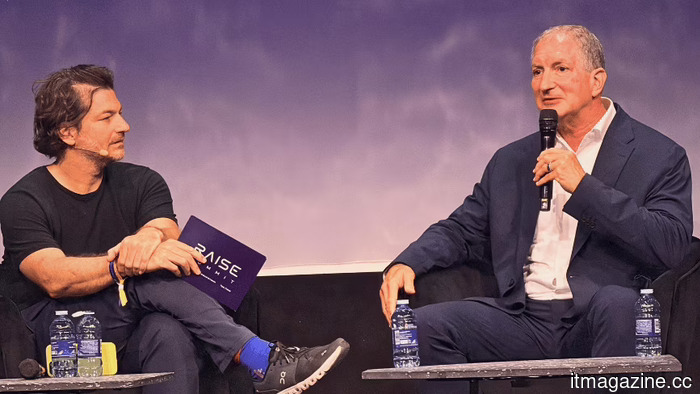 AMD's CTO explains the necessity of additional CPUs for agentic AI.
At RAISE, Mark Papermaster from AMD stated that agentic AI relies more on CPUs rather than solely on GPUs, which accounts for AMD's pursuit of a trillion-dollar valuation.
AMD's CTO explains the necessity of additional CPUs for agentic AI.
At RAISE, Mark Papermaster from AMD stated that agentic AI relies more on CPUs rather than solely on GPUs, which accounts for AMD's pursuit of a trillion-dollar valuation.
 Your phone isn't attempting to contaminate your water, but influencers have discovered a $50 solution regardless.
Influencers are marketing $50 EMF straws as a safeguard against daily electronics, yet the supporting evidence is scarce, and the actual offering might be just technology-induced anxiety disguised as wellness.
Your phone isn't attempting to contaminate your water, but influencers have discovered a $50 solution regardless.
Influencers are marketing $50 EMF straws as a safeguard against daily electronics, yet the supporting evidence is scarce, and the actual offering might be just technology-induced anxiety disguised as wellness.
 Robots dominated RoboCup 2026, and they are aiming for the human World Cup.
Beijing's Booster Robotics supported all the champion teams at RoboCup 2026 in South Korea. The objective of the sport is to surpass the human World Cup champions by the year 2050.
Robots dominated RoboCup 2026, and they are aiming for the human World Cup.
Beijing's Booster Robotics supported all the champion teams at RoboCup 2026 in South Korea. The objective of the sport is to surpass the human World Cup champions by the year 2050.
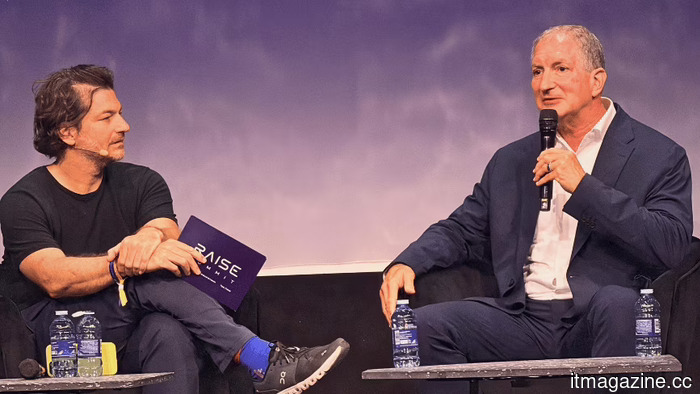 AMD's CTO explains the necessity for additional CPUs for agentic AI.
At RAISE, AMD's Mark Papermaster stated that agentic AI places greater emphasis on CPUs rather than solely on GPUs, which he believes supports AMD's pursuit of a trillion-dollar valuation.
AMD's CTO explains the necessity for additional CPUs for agentic AI.
At RAISE, AMD's Mark Papermaster stated that agentic AI places greater emphasis on CPUs rather than solely on GPUs, which he believes supports AMD's pursuit of a trillion-dollar valuation.
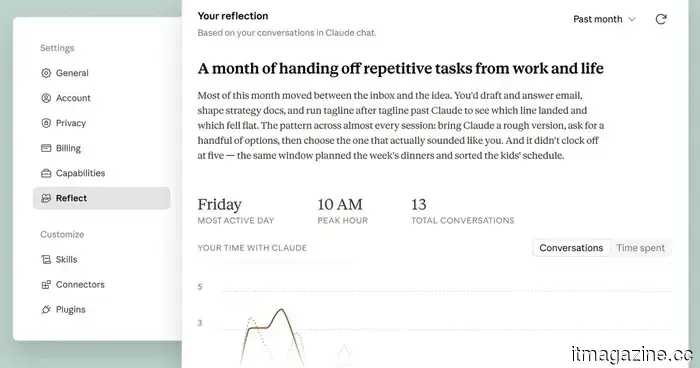 Claude Reflect has arrived. It’s your typical annual Wrapped, but this time featuring Anthropic's AI.
Anthropic introduced Claude Reflect, a usage dashboard that monitors your AI usage patterns over time and then inquires if you'd like to reduce your engagement.
Claude Reflect has arrived. It’s your typical annual Wrapped, but this time featuring Anthropic's AI.
Anthropic introduced Claude Reflect, a usage dashboard that monitors your AI usage patterns over time and then inquires if you'd like to reduce your engagement.
I was aware that there was a lot of low-quality AI content on LinkedIn. A startling report indicates that the issue is even more severe than we thought.
In a review of one million posts, LinkedIn accounted for nearly two-thirds of the AI-generated social content that was identified, even though it constituted only one-third of the content examined.