

Quant fund Qube is recruiting human stock selectors to work alongside its algorithms.
Qube Research & Technologies, one of the largest quantitative hedge funds in London, is engaging in a practice that would have previously seemed radical for a code-based firm: it is hiring humans to select stocks. This development, reported by Business Insider, aligns the fund with a select group of systematic managers who are starting to combine algorithms with traditional investment conviction.
Throughout the past year, Qube has reportedly been building a team of in-house fundamental analysts, as highlighted by Business Insider and Hedgeweek. This team is led by Stephen Irvine, who previously managed Balyasny’s London office and subsequently established, then closed, his own firm, Lijaro Asset Management.
The analysts are grouped by sector and focus on areas such as consumer goods, financials, chemicals, technology, pharmaceuticals, transportation, and industrials. Each analyst manages a specific capital allocation ranging from $200 million to $500 million, depending on their experience, under Irvine's supervision.
Qube has brought in at least seven specialists in various sectors for this initiative, attracting talent from firms like Millennium, Rokos, BNP Paribas, and Barclays, according to reports. Business Insider, which estimated the firm’s assets to be around $34 billion when covering this news, stated that the first internal team was expected to become operational shortly after the report was published.
This recruitment effort signifies a notable shift from the firm’s roots as a purely signals-and-backtesting operation. Qube was established in 2016 from the quantitative and systematic asset management division of Credit Suisse and became independent through a management buyout, earning recognition for its algorithmic trading approach, which focuses on encoding statistical signals into automated systems rather than investing directly in individual companies.
This strategy has proven successful, with Qube’s primary fund achieving a return of approximately 30% in 2025. Additionally, industry reports indicate that the firm's assets grew to about $38 billion by early 2026, up from around $23 billion the previous year, with smaller funds also performing well.
So, why the shift toward human analysts? The reasoning, which resonates throughout the industry, is that discretionary managers can identify opportunities that models may overlook, especially concerning complex, one-off events like mergers, restructures, and regulatory changes. The theory behind combining these two approaches is that it broadens the range of potential returns a firm can pursue and provides stability during periods when a strictly systematic strategy faces challenges. Moreover, it offers an additional avenue for growth at a time when there is a substantial influx of capital into both quantitative and fundamental strategies, and top analysts are able to demand significant compensation to join.
Qube is not the only firm making this transition. DE Shaw and Engineers Gate, both known for their systematic methods, have ventured into fundamental investing in recent years, and several hedge funds renowned for their algorithmic strategies have discreetly established discretionary divisions.
The firm has also supported external stock pickers, allocating investments to numerous external fundamental teams via separately managed accounts. This approach enables Qube to gain exposure to discretionary strategies without employing every analyst on its payroll, with reports estimating the number of these teams at 44.
However, this strategy is not without risks. Human teams can be costly, fiercely compete for top talent, and could negatively impact performance if their decisions do not pan out. Multi-manager rivals like Millennium and Citadel have long illustrated how expensive and competitive the race for talent can become, and Qube is now entering the same arena as firms such as Jane Street.
For now, Qube has remained largely quiet publicly. Known for its secrecy, the firm did not comment on the reports, leaving much of the information available to the public sourced from anonymous insiders and a consistent stream of senior appointments reported by recruiters and competing firms.
What happens next will test whether a company founded on algorithms can effectively oversee human capital as well. If Irvine’s analysts succeed, Qube is likely to expand the initiative; if they falter, the algorithms will continue to operate as usual. London is still the ideal location for this experiment, boasting Europe’s most significant pool of both quantitative and fundamental talent.
Other articles
 Apple supplier Luxshare experiences a decline in its historic debut on the Hong Kong stock market.
Luxshare dropped by as much as 9.6% on its debut following its $3.1 billion raise in the largest listing in Hong Kong for 2026, marking a subdued beginning for the Apple supplier.
Apple supplier Luxshare experiences a decline in its historic debut on the Hong Kong stock market.
Luxshare dropped by as much as 9.6% on its debut following its $3.1 billion raise in the largest listing in Hong Kong for 2026, marking a subdued beginning for the Apple supplier.
 Quant fund Qube is recruiting human stock pickers to work alongside its algorithms.
Qube Research & Technologies, one of the largest quantitative funds in London, is assembling an internal team of human stock pickers headed by Stephen Irvine.
Quant fund Qube is recruiting human stock pickers to work alongside its algorithms.
Qube Research & Technologies, one of the largest quantitative funds in London, is assembling an internal team of human stock pickers headed by Stephen Irvine.
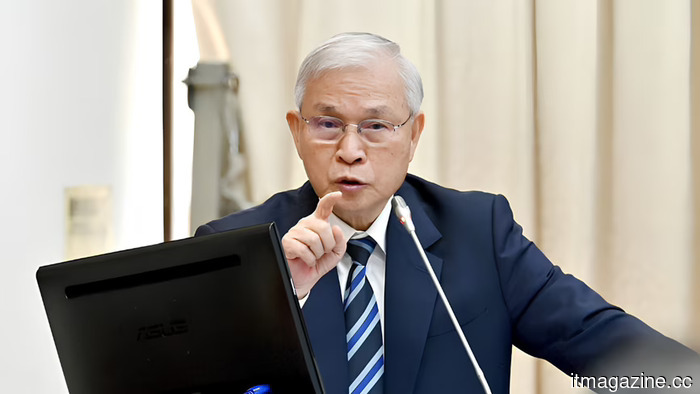 The head of Taiwan's central bank is advising caution regarding leverage as the stock surge driven by AI continues to gain momentum.
Governor Yang Chin-long cautioned Taiwanese investors about over-leveraging to pursue AI-driven stocks, while downplaying concerns regarding systemic risk.
The head of Taiwan's central bank is advising caution regarding leverage as the stock surge driven by AI continues to gain momentum.
Governor Yang Chin-long cautioned Taiwanese investors about over-leveraging to pursue AI-driven stocks, while downplaying concerns regarding systemic risk.
 A new study indicates that your child isn't the only one with a phone addiction.
A recent study published in Frontiers in Psychology indicates that excessive smartphone usage by parents may diminish emotional connections with their children, potentially resulting in lasting developmental and psychological impacts.
A new study indicates that your child isn't the only one with a phone addiction.
A recent study published in Frontiers in Psychology indicates that excessive smartphone usage by parents may diminish emotional connections with their children, potentially resulting in lasting developmental and psychological impacts.
 New research warns that Europe’s aspirations for sovereign AI may be impeded by limitations on data centres.
An Onnec survey reveals that 74% of operators view sovereign cloud as a significant opportunity, although challenges related to power, planning, and retrofitting may hinder progress.
New research warns that Europe’s aspirations for sovereign AI may be impeded by limitations on data centres.
An Onnec survey reveals that 74% of operators view sovereign cloud as a significant opportunity, although challenges related to power, planning, and retrofitting may hinder progress.
 Apple supplier Luxshare sees a decline in its record debut on the Hong Kong stock exchange.
Luxshare dropped by as much as 9.6% on its debut after securing $3.1 billion in Hong Kong's largest listing of 2026, marking a lackluster start for the Apple supplier.
Apple supplier Luxshare sees a decline in its record debut on the Hong Kong stock exchange.
Luxshare dropped by as much as 9.6% on its debut after securing $3.1 billion in Hong Kong's largest listing of 2026, marking a lackluster start for the Apple supplier.
Quant fund Qube is recruiting human stock selectors to work alongside its algorithms.
Qube Research & Technologies, one of the largest quantitative funds in London, is assembling an internal team of human stock selectors under the leadership of Stephen Irvine.