

Sonos experiences the departure of a decade’s worth of design expertise as layoffs affect its upper management.
Senior design, product, and research leaders with over a decade at the company have been let go as part of a restructuring that the chief executive describes as focusing on speed, while some employees label it as cost-cutting.
“The design team has shrunk a bit,” Edward Mitchell, a Sonos designer with around 12 years of tenure, mentioned on LinkedIn following the dismissal of several senior product and design leaders at the audio company.
In recent weeks, Sonos has dismissed several long-tenured executives, a move that affects high-ranking positions rather than just a standard downsizing. Among those departing are Dana Krieger, a vice president of design with 12 years at the company; Kate Wojogbe, a senior user-experience executive with nearly 10 years; and Scott Fink, who has been with the company for 15 years and played a key role in developing its home-theater business, which contributed significantly to Sonos's living-room identity.
The departures impact teams responsible for the design and feel of Sonos products. Michelle Enright, who led packaging and product sustainability, left after 14 years, while hardware product manager Sara Lincoln exited after 11 years.
Rebecca Phillips, a user-experience researcher, noted that “almost the entire UX research team was let go,” and Kristen Leclerc, who managed user research, was also among those affected.
These departures contribute to a broader staff reduction. Sonos confirmed last month it was laying off approximately 3% of its workforce, primarily affecting the user-experience and product teams responsible for its app—software that has been painstakingly rebuilt following a failed 2024 update that led to customer dissatisfaction.
Chief executive Tom Conrad characterized the changes as a focus on speed rather than cost savings. In an internal memo obtained by Bloomberg, he expressed a desire for “a Sonos that moves with more conviction and more velocity," advocating for “fewer months in conference rooms” and “more prototypes in our labs.”
The goal, as stated, is to eliminate management layers and increase the company’s agility. A company spokesperson remarked that Sonos still possesses experienced leaders within the impacted teams and that user-research activities would persist, insisting that the layoffs were not connected to artificial intelligence. However, this assertion seems somewhat contradictory considering Conrad's previous comments.
During a May earnings call, he stated that AI was “already transforming how we operate internally, from the way we build software to how we execute marketing to how I run the company.”
Sonos's claim that the cuts are unrelated to automation places it at odds with many other firms currently attributing layoffs to AI.
Not all employees are aligned with the official narrative. Some long-time staff reportedly view the layoffs primarily as a cost-reduction strategy and fear that losing experienced designers and researchers could negatively impact both future products and the culture that fostered them.
The timing is sensitive. Conrad succeeded Patrick Spence, who resigned in early 2025 following a 2024 app redesign that triggered a rare consumer backlash and tarnished Sonos’s hard-earned reputation for quality. Initially appointed on an interim basis, Conrad was later confirmed as the permanent CEO.
For a company whose reputation hinges on design and hardware quality, losing over a decade of institutional knowledge in a single round could be risky. Many of those let go were instrumental in developing the packaging, interfaces, and home-theater systems that established the brand’s premium feel.
Sonos claims to be continuing the development of new products, including a second-generation Ace headphone and updated home-theater equipment, with Conrad betting that a leaner, faster organization will expedite their release.
The appeal to both investors and staff is that reduced meetings and increased prototyping will lead to a faster pace of launches. However, the question remains whether speed can replace the expertise being lost with these layoffs.
Concerns expressed by former employees are not about Sonos's capability to create its next speaker, but rather that the more challenging and less visible work of conceiving a groundbreaking product relies on the senior judgment that is now being diminished.
Other articles
 According to reports, Xbox has canceled the sequel to Avowed in order to prioritize a new Fallout game directed by the creator of New Vegas.
Bloomberg states that Obsidian Entertainment has redirected its focus to a new Fallout game, with Josh Sawyer, the director of Fallout: New Vegas, at the helm, leading to the cancellation of the anticipated Avowed sequel.
According to reports, Xbox has canceled the sequel to Avowed in order to prioritize a new Fallout game directed by the creator of New Vegas.
Bloomberg states that Obsidian Entertainment has redirected its focus to a new Fallout game, with Josh Sawyer, the director of Fallout: New Vegas, at the helm, leading to the cancellation of the anticipated Avowed sequel.
 Recruiters pursue specialized AI positions as their own roles face potential risks.
Confronted with tools capable of screening and shortlisting in mere seconds, staffing agencies are shifting their focus to the limited and difficult-to-fill positions in the AI economy to maintain their relevance.
Recruiters pursue specialized AI positions as their own roles face potential risks.
Confronted with tools capable of screening and shortlisting in mere seconds, staffing agencies are shifting their focus to the limited and difficult-to-fill positions in the AI economy to maintain their relevance.
 Thick phone or depleted nervous system?
Imagine you are in an unfamiliar city, a bill rustles in your pocket, but the smartphone screen is dead, like a mammoth. A power outlet is a myth, the power bank was left at home. For 48.7% of Russians, this nightmare is comparable in stress level to having no money at all.
Thick phone or depleted nervous system?
Imagine you are in an unfamiliar city, a bill rustles in your pocket, but the smartphone screen is dead, like a mammoth. A power outlet is a myth, the power bank was left at home. For 48.7% of Russians, this nightmare is comparable in stress level to having no money at all.
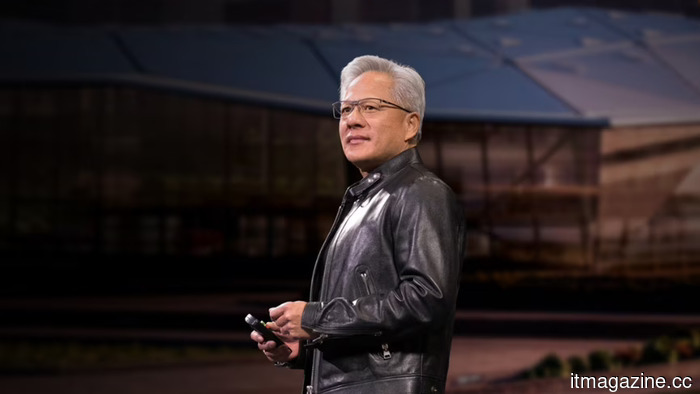 Jensen Huang mentioned that his engineers prefer creating agents to writing code.
Nvidia's CEO Jensen Huang stated that all of his engineers favor developing AI agents over coding in Python, asserting that AI is generating jobs rather than eliminating them.
Jensen Huang mentioned that his engineers prefer creating agents to writing code.
Nvidia's CEO Jensen Huang stated that all of his engineers favor developing AI agents over coding in Python, asserting that AI is generating jobs rather than eliminating them.
 A survey reveals that half of parents are concerned that their children depend too heavily on AI.
A back-to-school survey conducted by Deloitte involving 1,150 parents reveals that half are concerned their child depends too heavily on AI, despite many stating that schools provide insufficient instruction on AI skills.
A survey reveals that half of parents are concerned that their children depend too heavily on AI.
A back-to-school survey conducted by Deloitte involving 1,150 parents reveals that half are concerned their child depends too heavily on AI, despite many stating that schools provide insufficient instruction on AI skills.
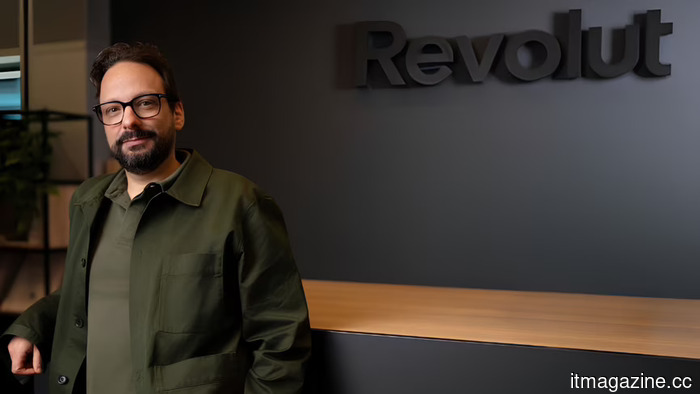 Revolut appoints former Chase UK chief Kuba Fast to head its European banking operations.
Revolut has appointed Kuba Fast, the former chief of Chase UK, as the new CEO of Revolut Bank UAB and its European operations, succeeding Joe Heneghan.
Revolut appoints former Chase UK chief Kuba Fast to head its European banking operations.
Revolut has appointed Kuba Fast, the former chief of Chase UK, as the new CEO of Revolut Bank UAB and its European operations, succeeding Joe Heneghan.
Sonos experiences the departure of a decade’s worth of design expertise as layoffs affect its upper management.
Sonos has let go of senior design and product leaders who had been with the company for ten years or longer, in a restructuring that the CEO describes as a move towards greater speed, while some employees refer to it as cost-cutting.