
Inside Wimbledon’s concealed 'Court 19' at IBM
A serve flashes on the Wimbledon scoreboard just before the ball stops bouncing. That figure comes from a collaboration that predates most players on the court.
IBM has been the technology partner for Wimbledon for 36 years, having introduced serve-speed radar behind the baselines in 1991. Recently, they extended their partnership until 2030, according to Fortune.
The reach of this partnership extends beyond the grass courts. More than half a million spectators attend during the two weeks of the tournament, but they represent only a small fraction of the overall audience. In 2025, Wimbledon achieved approximately 18 billion impressions across its digital platforms, reaching an estimated 730 million individuals, as reported by the All England Lawn Tennis and Croquet Club.
Traffic to the website and app increased by over 20 percent in the previous year.
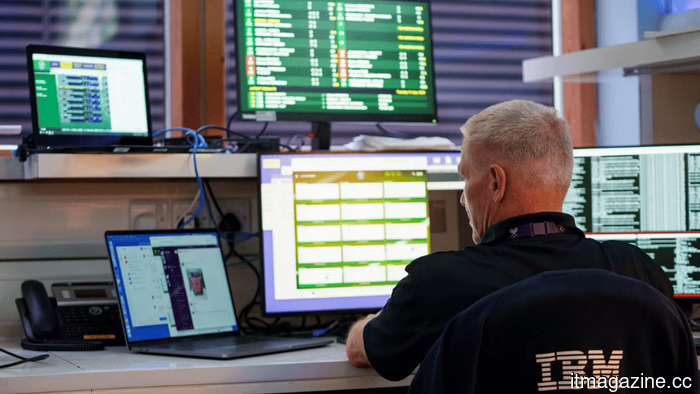
The operations hub remains hidden from view. IBM’s center, referred to as “Court 19,” is located beneath the 18th grass court. During the tournament, it processes around 2.7 million data points, including ball speed, shot placement, and momentum shifts, which then translate into features for fans on the app.
For IBM, tennis serves a greater purpose. Wimbledon acts as a testing ground. Kameryn Stanhouse, the vice president of global sports and entertainment partnerships at IBM, notes that there is “a real fear around AI” among corporate leaders.
“Not because they doubt the necessity,” she explains, but because their positions may be at stake if they implement it incorrectly. A high-stakes environment like Wimbledon demonstrates IBM’s ability to apply the technology effectively.
When the machine makes mistakes
That apprehension is not unfounded. In 2025, Wimbledon replaced its 300 line judges, a longstanding presence for 147 years, with automated electronic line-calling. The initial launch faced challenges. The system incorrectly called three shots during one quarter-final and exclaimed “fault” mid-rally, prompting an umpire to intervene. Jack Draper expressed concerns about its accuracy, while Emma Raducanu referred to some decisions as “dodgy.”
This line-calling technology operates on Sony's Hawk-Eye, not IBM’s system. However, this incident looms over discussions regarding the reliance on machines for pivotal match calls. IBM emphasizes that its features are “human-led.” A governance layer assesses confidence and checks for bias before anything is presented to the fans. This is a nuanced distinction that an upset fan may not notice if a screen malfunctions.
Some of the traditional excitement has diminished, too. Players used to challenge calls, creating a hush in the crowd while a replay illuminated the big screen. Even IBM’s “Likelihood to Win,” which recalibrates odds after each point, diminishes some of the suspense. Stanhouse believes this is an acceptable trade-off: “Fans argue less about the marginal calls and more about the tennis itself,” she states.
A showcase for enterprise AI
The commercial reasoning is clear. The global sports market might exceed $600 billion by 2030, as predicted by Kearney. IBM is not the only company showcasing its AI in the sports arena before transitioning it to other sectors. Stanhouse explains that a match provides what few enterprise trials can offer: vast amounts of live data, under pressure, and in a public setting.
The productivity argument is even more compelling. To revamp the app and website, IBM employed an accelerator known as Bob. They transitioned over 15,000 digital assets to a new platform. A task that would have required five experts months to complete took just one engineer a month, according to Stanhouse. The final data transfer occurred in 47 minutes.
Future developments are anticipated to be more personalized and remote. IBM has already created a Masters golf app for Apple's Vision Pro and expects to apply similar innovations in tennis. Quantum computing may also play a role as IBM continues to explore its applications in sports.
Why it matters
Wimbledon serves as a unique public assessment of whether AI can integrate into a beloved experience without ruining it. A 2025 study by Capgemini revealed that 70 percent of fans desire real-time data, yet over half are concerned that excessive technology may detract from the authentic feel of live sports. This creates a delicate balance. As Stanhouse aptly notes, no technology will ever forecast the outcome of a match in advance.
“Someone could wake up with a sore neck and be unable to serve like they used to.”
Other articles
 Brad Smith: The United States oversees AI without well-defined regulations.
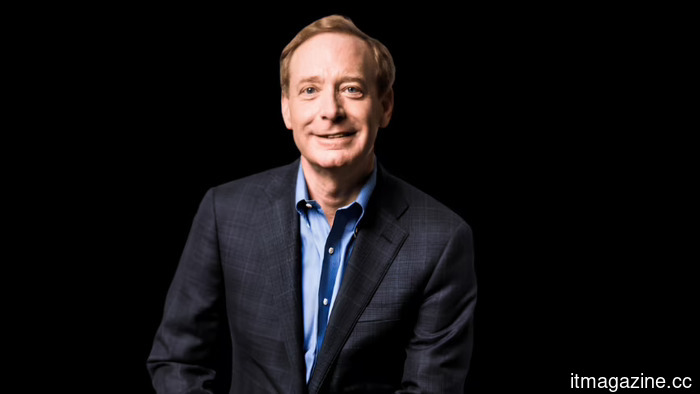
Microsoft president Brad Smith stated that Washington is regulating AI without clear guidelines, following sudden export-control actions regarding Anthropic and OpenAI.
Brad Smith: The United States oversees AI without well-defined regulations.
Microsoft president Brad Smith stated that Washington is regulating AI without clear guidelines, following sudden export-control actions regarding Anthropic and OpenAI.
 Lyzr utilized its own AI agent to assist in securing a $100 million funding round.
Enterprise AI startup Lyzr reports that its agent, Agent Sam, engaged with over 130 investors during its $100 million Series B funding round, achieving a valuation of approximately $500 million.
Lyzr utilized its own AI agent to assist in securing a $100 million funding round.
Enterprise AI startup Lyzr reports that its agent, Agent Sam, engaged with over 130 investors during its $100 million Series B funding round, achieving a valuation of approximately $500 million.
 Is the Galaxy Z Flip 8 potentially Samsung's final compact foldable? A recent leak suggests that it could be.
The Galaxy Z Flip 8 hasn't arrived yet, but a new rumor has fans speculating that Samsung's popular compact foldable may be coming to an end.
Is the Galaxy Z Flip 8 potentially Samsung's final compact foldable? A recent leak suggests that it could be.
The Galaxy Z Flip 8 hasn't arrived yet, but a new rumor has fans speculating that Samsung's popular compact foldable may be coming to an end.
 Is the Galaxy Z Flip 8 set to be Samsung's final compact foldable? A recent leak suggests that it might be the case.
The Galaxy Z Flip 8 isn't available yet, but a new rumor has fans speculating whether Samsung's popular compact foldable may be reaching its conclusion.
Is the Galaxy Z Flip 8 set to be Samsung's final compact foldable? A recent leak suggests that it might be the case.
The Galaxy Z Flip 8 isn't available yet, but a new rumor has fans speculating whether Samsung's popular compact foldable may be reaching its conclusion.
 Meta addresses privacy issue in Ray-Ban glasses with a fix.
Meta's update turns off the camera if the recording light is damaged, effectively disabling a spy-camera modification, while rival Even Realities, which doesn't use cameras, reaches a valuation of $1 billion.
Meta addresses privacy issue in Ray-Ban glasses with a fix.
Meta's update turns off the camera if the recording light is damaged, effectively disabling a spy-camera modification, while rival Even Realities, which doesn't use cameras, reaches a valuation of $1 billion.
 Block, founded by Jack Dorsey, resolves Cash App fraud allegations with 46 states for $45 million.
Block will compensate $45 million to 46 US states for its handling of Cash App fraud, as state regulators step in to fill the void left by the diminished CFPB.
Block, founded by Jack Dorsey, resolves Cash App fraud allegations with 46 states for $45 million.
Block will compensate $45 million to 46 US states for its handling of Cash App fraud, as state regulators step in to fill the void left by the diminished CFPB.
Inside Wimbledon’s concealed 'Court 19' at IBM
Under Wimbledon’s 18th court, IBM's 'Court 19' processes 2.7 million data points during each tournament, showcasing artificial intelligence at the Championships.