
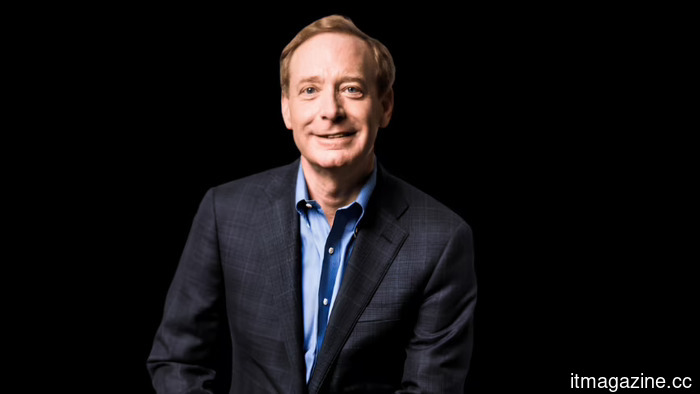
Brad Smith: The United States oversees AI without well-defined regulations.
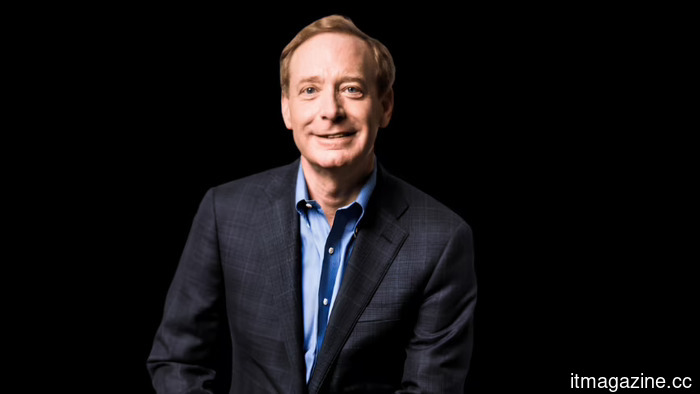
Brad Smith, president of Microsoft, states that the US is currently regulating AI without a comprehensive set of rules. He emphasizes that this uncertainty poses a challenge for the entire industry. He conveyed this perspective to Fortune during the AI for Good Global Summit.
“What we currently have is regulation without clear or full guidelines,” Smith explained. “Without these guidelines, businesses struggle to plan.”
His concerns come in the wake of two sudden actions taken by the Trump administration. Last month, the Commerce Department utilized export-control laws to restrict Anthropic's Fable 5 and Mythos 5 models globally, citing cybersecurity risks. A few weeks later, officials urged OpenAI to postpone the public release of its GPT-5.6 family, allowing early access only to government-approved partners.
Both restrictions have since been relaxed, with Fable 5 returning online this month and GPT-5.6 being rolled out publicly. Smith acknowledges that Washington was justified in acting on the Fable situation but critiques the regulatory approach used.
“The government received information indicating an urgent cybersecurity risk. When that happens, I believe it is appropriate to act,” he said. “However, it found it had only one regulatory instrument: export control.” Legal analysts point out that these controls predate API-based models, raising doubts about the regulation's survivability in a legal challenge.
Critics argue that the outcome resembles a licensing system lacking legislative backing. A June executive order established a voluntary pre-release review process but fell short of formal approval regulations. The government has not disclosed who qualifies as a “trusted partner” or which models will undergo future vetting.
“The government lacks the necessary tools,” Smith stated. “Common sense dictates avoiding a heavy-handed approach while still being precise enough to take required actions.”
The Anthropic incident has also intensified discussions around sovereign AI, which is the effort by governments to regulate models and the underlying infrastructure. In Europe, a French politician compared the shutdown to a blockade of the Strait of Hormuz, while Canadian Prime Minister Mark Carney viewed it as a warning against relying on too few providers.
Smith believes people mistakenly interpret the export action as a strategy to isolate foreign entities, asserting that the intention was to remove the model from the market universally. “They asked Anthropic to withdraw Fable from the market,” he explained. “Anthropic refused, so they employed an export-control measure to enforce it both domestically and internationally.”
Regardless, he insists the responsibility now lies with Washington and US companies to demonstrate their systems' reliability. “Customers will not purchase our offerings unless they are assured of consistent supply,” he noted. In contrast, Salesforce CEO Marc Benioff expressed a more favorable opinion about the ban at the same event, suggesting that Europe misinterpreted a security measure as an act of hostility.
Why this is significant:
The situation illustrates the extent of power the US currently wields over which AI models can be accessed globally, all without having formally documented this authority. For companies that market AI internationally, this ambiguity poses a greater concern. While one can argue over established rules, navigating an invisible policy is significantly more challenging.
Other articles
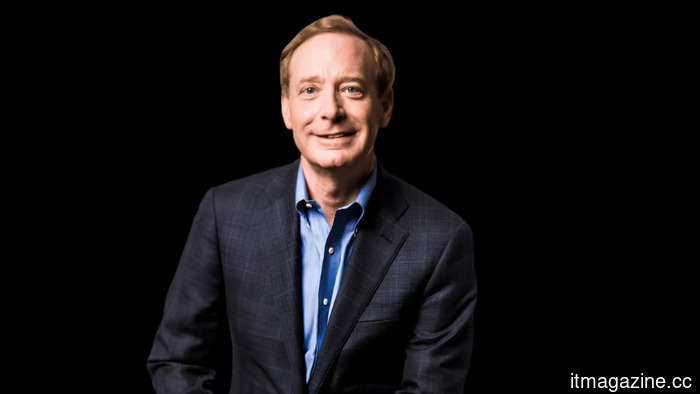 Brad Smith: the United States oversees AI without defined regulations.
Microsoft president Brad Smith states that Washington is imposing regulations on AI without clear guidelines, following sudden export-control actions against Anthropic and OpenAI.
Brad Smith: the United States oversees AI without defined regulations.
Microsoft president Brad Smith states that Washington is imposing regulations on AI without clear guidelines, following sudden export-control actions against Anthropic and OpenAI.
 Researchers bypass the safety measures of GitHub Copilot through a workflow.
Researchers at the Alan Turing Institute were able to get GitHub Copilot to generate harmful content that it typically rejects in a chat setting, by distributing the request throughout a coding workflow.
Researchers bypass the safety measures of GitHub Copilot through a workflow.
Researchers at the Alan Turing Institute were able to get GitHub Copilot to generate harmful content that it typically rejects in a chat setting, by distributing the request throughout a coding workflow.
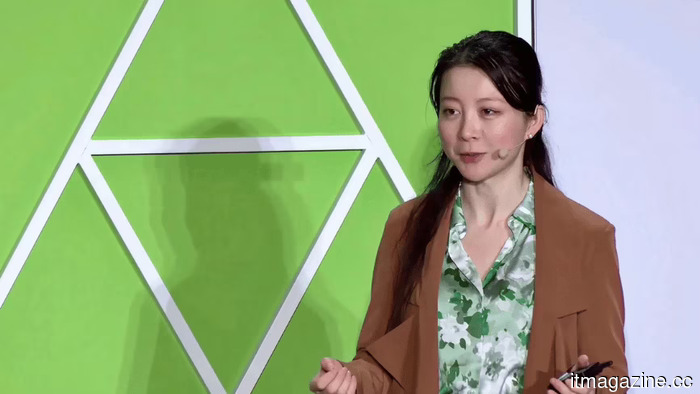 Databento secures $97 million to compete with Bloomberg's terminal.
Market data startup Databento has secured $97 million in a Series B financing round led by NEA, expanding its challenge to the Bloomberg terminal into Europe, APAC, and AI research laboratories.
Databento secures $97 million to compete with Bloomberg's terminal.
Market data startup Databento has secured $97 million in a Series B financing round led by NEA, expanding its challenge to the Bloomberg terminal into Europe, APAC, and AI research laboratories.
 Suspected Chinese agents infiltrate university email servers.
Proofpoint reports that a group aligned with China is exploiting vulnerabilities in Roundcube to infiltrate mailboxes at universities in the US and Canada, aiming to steal research related to physics and defense.
Suspected Chinese agents infiltrate university email servers.
Proofpoint reports that a group aligned with China is exploiting vulnerabilities in Roundcube to infiltrate mailboxes at universities in the US and Canada, aiming to steal research related to physics and defense.
 Brad Smith: The United States governs AI without specific regulations.
Microsoft president Brad Smith has stated that Washington is imposing regulations on AI without clear guidelines, following sudden export control actions affecting Anthropic and OpenAI.
Brad Smith: The United States governs AI without specific regulations.
Microsoft president Brad Smith has stated that Washington is imposing regulations on AI without clear guidelines, following sudden export control actions affecting Anthropic and OpenAI.
 Xiaomi has created an SUV that also functions as a camping tent, and its range specifications are just as impressive.
Xiaomi has introduced its new sub-brand, Sky Nomad, which launches with a 5.3-meter family EREV SUV featuring a retractable camper-tent roof in one of its trims.
Xiaomi has created an SUV that also functions as a camping tent, and its range specifications are just as impressive.
Xiaomi has introduced its new sub-brand, Sky Nomad, which launches with a 5.3-meter family EREV SUV featuring a retractable camper-tent roof in one of its trims.
Brad Smith: The United States oversees AI without well-defined regulations.
Microsoft president Brad Smith stated that Washington is regulating AI without clear guidelines, following sudden export-control actions regarding Anthropic and OpenAI.