
Fi places Starlink satellites inside a dog collar.
The smart-collar manufacturer Fi is incorporating Starlink technology into a dog collar. Its new Fi Ultra utilizes SpaceX’s direct-to-cell satellites, enabling tracking of dogs even in areas without mobile tower coverage.
The next gadget to utilize satellite technology isn't a smartphone, but a dog collar. Fi, a company specializing in smart collars, is introducing the Fi Ultra, which is reportedly the first pet tracker to operate on Starlink’s direct-to-cell network, according to an exclusive report from Fortune.
Current GPS trackers, including Fi's previous models and competitors like Tractive and Garmin, rely on ground-based cellular towers. Once a pet runs beyond the last tower's range, the tracker becomes inactive. Fi's partnership with Starlink aims to address this issue.
SpaceX has deployed over 650 satellites, each functioning like an aerial cell tower, communicating directly with LTE devices below. There’s no need for a satellite dish or additional hardware; all that’s necessary is a clear view of the sky. “The main limitation of all the tracking products out there is that they are using the LTE network,” said founder Jonathan Bensamoun to Fortune. “Starlink offers satellite technology, which provides nearly universal coverage, at least in the United States for now.”
The Ultra is priced at $199, with an additional $99 membership fee every six months, though current subscribers only pay for the device. Its battery can last up to three months, and machine learning functionality allows it to conserve power when a dog is at home or resting, activating only when the pet goes missing.
This launch is timely. Austrian competitor Tractive acquired pet-wearable maker Whistle last year, but subsequently discontinued the product, rendering thousands of devices unusable. Fi has secured $45 million in funding and has spent the last year expanding to 38 countries, projecting over $100 million in annual recurring revenue this year.
The potential is significant. The pet wearable market is expected to reach $3.8 billion by 2026 and $11.4 billion by 2033. With people delaying having children and focusing their spending on pets first, this market aligns with the broader growth in consumer wearables, alongside initiatives to enhance global connectivity from space, involving companies from Rocket Lab to SpaceX itself.
The significance of this development lies in the emergence of direct-to-cell satellites as a solution for cellular dead zones. The introduction of a dog collar illustrates how quickly this form of connectivity is being extended to other devices. “The compromise between freedom and safety is something I’m trying to erase with technology,” Bensamoun stated. For now, coverage remains primarily US-focused, but it is evident that if a device contains a SIM card, it may soon be able to connect to a satellite.
Published July 8, 2026 - 6:02 pm UTC
Other articles
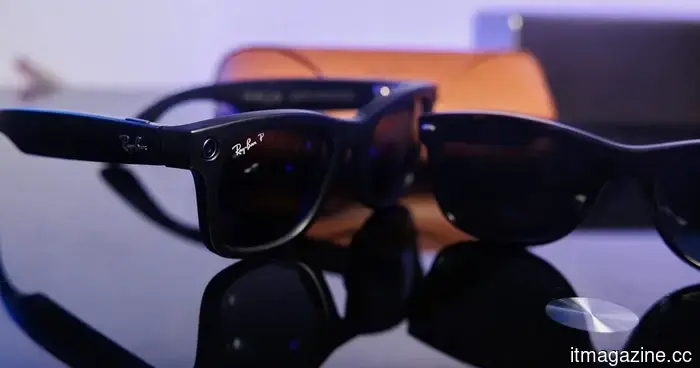 Meta may be developing smart glasses equipped with AI super sensing capabilities that would allow for constant visual and auditory perception.
Meta is said to be experimenting with "super sensing" AI glasses that will gather extensive information about your life and provide it to an AI assistant that will support you.
Meta may be developing smart glasses equipped with AI super sensing capabilities that would allow for constant visual and auditory perception.
Meta is said to be experimenting with "super sensing" AI glasses that will gather extensive information about your life and provide it to an AI assistant that will support you.
 Privacy concerns surrounding smart glasses: New York's ban confronts Meta's solution.
New York has prohibited smart glasses in all 1,240 courts as Meta secures its recording indicator, despite experimenting with always-on "super-sensing" eyewear.
Privacy concerns surrounding smart glasses: New York's ban confronts Meta's solution.
New York has prohibited smart glasses in all 1,240 courts as Meta secures its recording indicator, despite experimenting with always-on "super-sensing" eyewear.
 Android 17's new video standard addresses one of the major issues with HDR.
Android 17 introduces a new HDR standard named Eclipsa Video, which guarantees uniform and comfortable HDR playback on all screens.
Android 17's new video standard addresses one of the major issues with HDR.
Android 17 introduces a new HDR standard named Eclipsa Video, which guarantees uniform and comfortable HDR playback on all screens.
 Samsung intends to establish a floating AI data center by the year 2028.
Samsung Heavy Industries aims to create a dedicated, 50MW floating data center by 2028, as challenges such as limited land, water availability, and local resistance hinder AI initiatives on land.
Samsung intends to establish a floating AI data center by the year 2028.
Samsung Heavy Industries aims to create a dedicated, 50MW floating data center by 2028, as challenges such as limited land, water availability, and local resistance hinder AI initiatives on land.
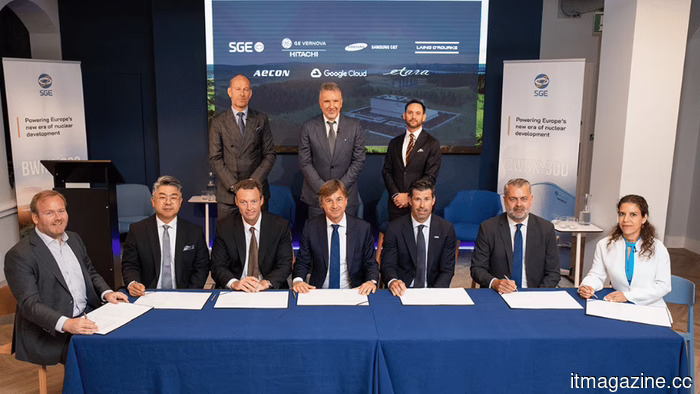 A £35 billion scheme to construct 14 small nuclear reactors in the UK.
Michał Sołowow's SGE intends to install 14 GE Vernova Hitachi BWRX-300 small modular reactors at three locations in the UK, representing a £35 billion investment in power for the AI era, to be completed by 2034.
A £35 billion scheme to construct 14 small nuclear reactors in the UK.
Michał Sołowow's SGE intends to install 14 GE Vernova Hitachi BWRX-300 small modular reactors at three locations in the UK, representing a £35 billion investment in power for the AI era, to be completed by 2034.
 Nvidia collaborates with chip competitor d-Matrix on inference technology.
Nvidia is partnering its GPUs with d-Matrix's inference chips in a collaborative system, marking the latest indication that it prefers to ally with chip competitors rather than oppose them.
Nvidia collaborates with chip competitor d-Matrix on inference technology.
Nvidia is partnering its GPUs with d-Matrix's inference chips in a collaborative system, marking the latest indication that it prefers to ally with chip competitors rather than oppose them.
Fi places Starlink satellites inside a dog collar.
Fi's latest product, the Fi Ultra, is the inaugural dog collar that utilizes Starlink's direct-to-cell satellites, allowing for pet tracking beyond the reach of mobile towers, according to Fortune.