

Only 6% of managers in the UK believe that Gen Z is prepared for the workforce.
Young employees and their supervisors have differing perspectives. Nearly half of those aged 18 to 24, specifically 45 percent, feel that they have the necessary skills to thrive in the workplace. Conversely, only 6 percent of managers in the UK share this belief, as reported by the Chartered Management Institute.
The organization surveyed over 1,000 managers and 514 young individuals for this report, which was released during Youth Employment Week. The findings come at a time when artificial intelligence is transforming the early stages of careers and the broader conversation about employment is intensifying.
What managers perceive
Sixty-one percent of managers believe that younger employees are more likely than those from other age groups to lack resilience, professionalism, and communication abilities, as well as to have difficulty responding to feedback. Over 91 percent of supervisors say that this perceived gap negatively impacts their team’s performance. Only 12 percent report that young recruits advance as expected.
When new hires do not progress or fail their probationary periods, managers attribute this to a lack of motivation (40 percent), insufficient resilience (38 percent), poor workplace manners (34 percent), and inadequate timekeeping (32 percent).
The other side of the issue
The report does not solely address Gen Z; it also critiques their managers. Earlier CMI research revealed that 82 percent of UK managers are “accidental managers,” having been promoted without formal training. Therefore, those tasked with mentoring young employees often lack coaching experience themselves.
Addressing the issue requires action from both sides. Nearly 86 percent of young workers desire training for line managers to help support them in their early careers. Meanwhile, 89 percent of managers who received training claim it has enhanced their ability to guide junior staff. Investing in training typically yields positive results.
Ambition is not lacking
The data counteracts the notion that young people lack ambition. Almost two-thirds (64 percent) aspire to attain management or leadership positions. Additionally, more than 83 percent believe that having a mentor or being associated with a professional organization would significantly boost their confidence. Furthermore, 78 percent feel that their education has focused too much on theory rather than practical skills. However, they face a diminishing number of entry-level positions, as firms that are adept with AI have begun to hire fewer juniors.
The significance of these findings
The timing heightens the implications. AI has already reduced the availability of entry-level job postings, and some experts caution that eliminating the junior tier could be misguided. “It’s time we started asking whether work is ready for young people,” stated CMI chief Ann Francke. If companies continue to reduce entry-level opportunities while leaving managers untrained, the skills gap will only expand. The talent is present and eager; the workplace, according to this evidence, has not yet adapted.
Other articles
 Mark Cuban: Lovable and Replit have the potential to endure beyond the AI labs.
During the RAISE Summit, Mark Cuban contended that vibe-coding tools such as Lovable and Replit can endure against Anthropic and OpenAI by taking control of the workflow rather than merely the code.
Mark Cuban: Lovable and Replit have the potential to endure beyond the AI labs.
During the RAISE Summit, Mark Cuban contended that vibe-coding tools such as Lovable and Replit can endure against Anthropic and OpenAI by taking control of the workflow rather than merely the code.
 Perplexity is discreetly developing an AI coding tool.
Perplexity has developed an internal coding tool referred to as "Teammate," which may compete with Cursor and Claude Code, according to a report from Business Insider. There is no confirmation regarding a launch.
Perplexity is discreetly developing an AI coding tool.
Perplexity has developed an internal coding tool referred to as "Teammate," which may compete with Cursor and Claude Code, according to a report from Business Insider. There is no confirmation regarding a launch.
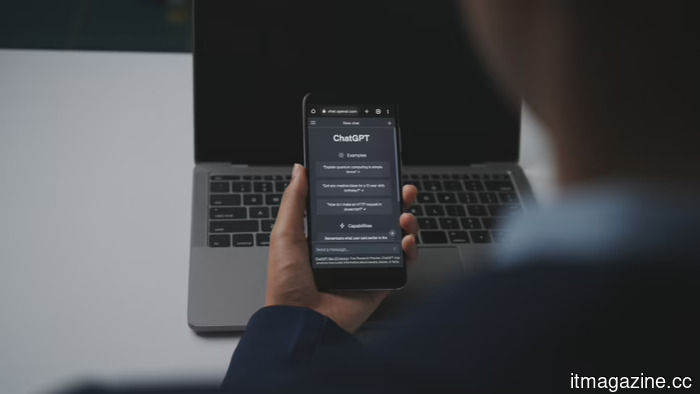 Gartner has found that customers favor ChatGPT over company chatbots.
According to Gartner, customers are three times more likely to utilize third-party generative AI such as ChatGPT for support compared to company chatbots, as the returns on AI investments are slower than the expenditures.
Gartner has found that customers favor ChatGPT over company chatbots.
According to Gartner, customers are three times more likely to utilize third-party generative AI such as ChatGPT for support compared to company chatbots, as the returns on AI investments are slower than the expenditures.
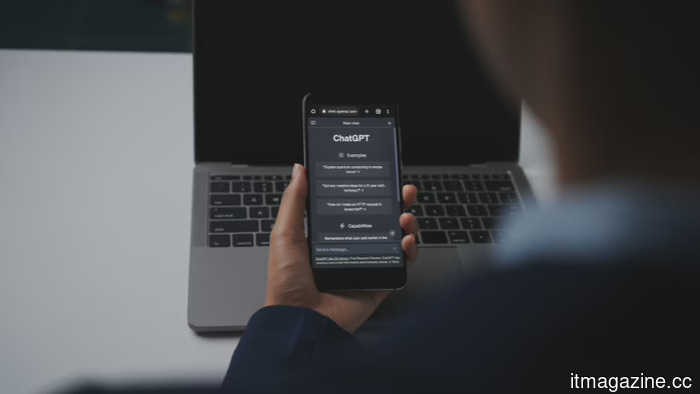 According to Gartner, customers favor ChatGPT over company chatbots.
According to Gartner, customers are three times more inclined to utilize third-party Generative AI tools like ChatGPT instead of company chatbots for support, as the returns on AI investments are delayed compared to the expenditures.
According to Gartner, customers favor ChatGPT over company chatbots.
According to Gartner, customers are three times more inclined to utilize third-party Generative AI tools like ChatGPT instead of company chatbots for support, as the returns on AI investments are delayed compared to the expenditures.
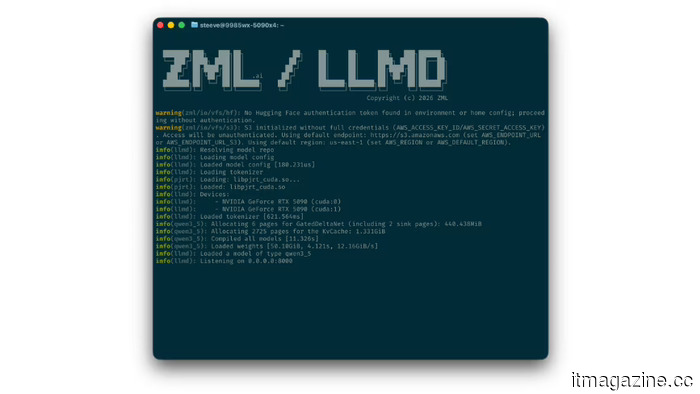 ZML's complimentary AI server operates on all major chipsets.
France's ZML has launched ZML/LLMD, a free inference server that operates open-source AI at high speed on Nvidia, AMD, Google, Intel, and Apple processors.
ZML's complimentary AI server operates on all major chipsets.
France's ZML has launched ZML/LLMD, a free inference server that operates open-source AI at high speed on Nvidia, AMD, Google, Intel, and Apple processors.
 Perplexity is discreetly developing a coding tool powered by AI.
Perplexity has developed an internal coding tool referred to as "Teammate," which may compete with Cursor and Claude Code, according to Business Insider. The launch has not yet been confirmed.
Perplexity is discreetly developing a coding tool powered by AI.
Perplexity has developed an internal coding tool referred to as "Teammate," which may compete with Cursor and Claude Code, according to Business Insider. The launch has not yet been confirmed.
Only 6% of managers in the UK believe that Gen Z is prepared for the workforce.
A CMI report reveals that 45% of UK Gen Z believe they are prepared for the workforce, while only 6% of managers concur. Furthermore, 82% of these managers were promoted without any training.